Most "Chinese culture facts" articles tell you that China invented paper and has a long history. Both true. Neither particularly illuminating.
This is a different list. These are facts about Chinese culture — ancient and contemporary, historical and linguistic, food and philosophy and social life — that tend to genuinely surprise people. Including people who've been studying Chinese for years.
Each one also has something a language learner can take away from it.
1. Chinese Has No Word for "Yes" or "No"
There's no single word in Mandarin that functions as a universal "yes" or "no." Instead, Chinese confirms or denies by echoing the verb from the question.
"Did you eat?" — 吃了 (chī le, ate) for yes, 没吃 (méi chī, didn't eat) for no. "Are you a student?" — 是 (shì, am) for yes, 不是 (bú shì, am not) for no.
This means that technically correct answers like 是的 (shì de) or 对 (duì, correct) only work in specific contexts — they're not universal yeses. The complete guide to yes and no in Chinese explains all the patterns, including the indirect ways Chinese speakers say no without ever saying no — which is a whole cultural topic in itself.
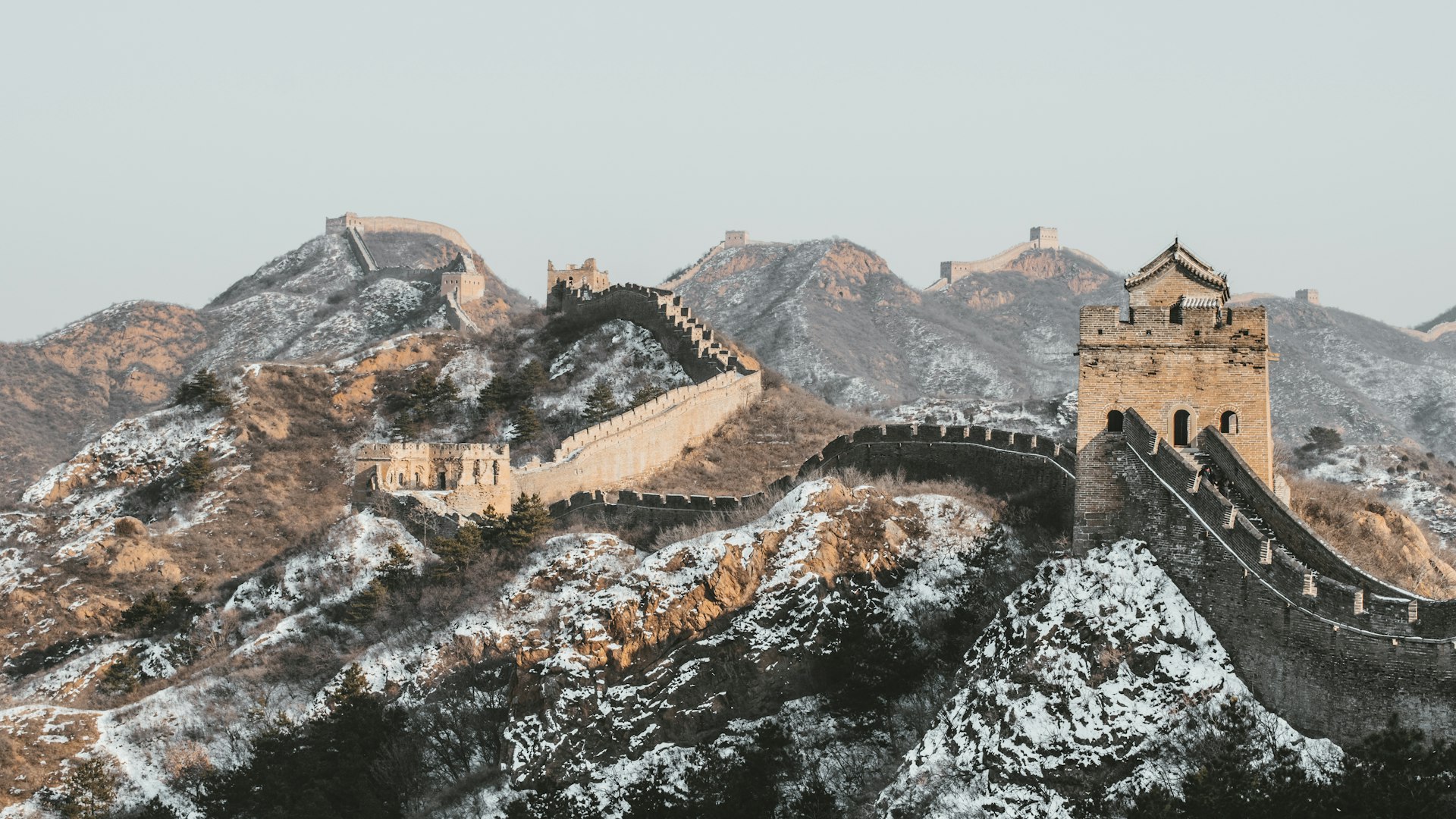
2. The Great Wall Cannot Be Seen from Space
This one needs correcting because it appears in so many "China facts" lists, including the article this one is improving upon. The Great Wall (万里长城, Wànlǐ Chángchéng, "ten-thousand-li great wall") is typically only 4–5 metres wide — far too narrow to be visible from low Earth orbit with the naked eye. Chinese astronaut Yang Liwei confirmed after his 2003 spaceflight that he could not see it.
What is remarkable about the wall: it stretches over 21,000 kilometres, was built across multiple dynasties over roughly 2,000 years, and the Ming dynasty section (which most visitors see) was constructed largely in the 15th and 16th centuries. The wall that exists today is a composite of many walls built by different rulers for different purposes — it was never one single continuous barrier.
3. "Have You Eaten?" Is How Chinese People Say Hello
One of the most genuinely surprising cultural facts for beginners: the casual greeting 吃了吗?(chī le ma?, "have you eaten?") functions like "how are you?" in Chinese.
It comes from a time when food scarcity was real and asking whether someone had eaten was a genuine expression of care. The question survived as a cultural habit long after the necessity faded. It's used more by older generations and in certain regional contexts, but it's widely understood everywhere.
The appropriate response is 吃了,你呢?(chī le, nǐ ne?, "yes, I've eaten — and you?") — not a detailed account of your most recent meal.
This is one of those Chinese expressions with no English equivalent — it carries warmth and care in a way that a translation can't fully convey. It also appears in our complete guide to Chinese greetings.
4. Chinese Has a Word for "Fateful Connection" That English Doesn't
缘分 (yuánfèn) describes a bond between two people brought together by forces beyond coincidence — a fateful meeting, a relationship that was somehow meant to be. It comes from Buddhist thought about the causes and conditions that connect people across lifetimes.
English gets closest with "fate" or "destiny," but neither captures the relational quality of 缘分 — the idea that the connection itself, not just the outcome, is meaningful. When Chinese speakers use it about a friendship or a relationship, they're saying something about the texture of the bond, not just the fact of it.
It's one of ten Chinese words with no English equivalent that reveal the most about how Chinese culture understands experience.
5. China Has 56 Official Ethnic Groups
The Han Chinese make up about 91.6% of China's population — but China officially recognises 56 ethnic groups (民族, mínzú), each with distinct languages, customs, and cultural traditions. The 55 non-Han groups include:
- The Zhuang (壮族, Zhuàngzú) in Guangxi — the largest minority group, with around 18 million people
- The Tibetan (藏族, Zàngzú) in Tibet and surrounding provinces
- The Uyghur (维吾尔族, Wéiwú'ěrzú) in Xinjiang
- The Mongolian (蒙古族, Měnggǔzú) in Inner Mongolia
- The Hui (回族, Huízú), Muslim Chinese communities distributed across the country
Many of these groups speak languages entirely unrelated to Mandarin Chinese. The minority languages of China include Tibetan, Uyghur (a Turkic language), Mongolian, Zhuang, and dozens of others. When people discuss "learning Chinese," they almost always mean learning Mandarin — but the linguistic reality of the country is far more diverse than that single language suggests.
New to Chinese? Start Here.
The no-fluff roadmap for absolute beginners — what to learn first, what to skip, and how to actually stick with it past week two.
6. The Dragon Is Completely Different From What Westerners Think
In Western mythology, dragons breathe fire, guard treasure, and get slain by heroes. In Chinese culture, the dragon (龙, lóng) is associated with imperial power, rain, water, good fortune, and the emperor himself. Imperial dragons had five claws — a four-clawed dragon signified high nobility, three claws meant lower rank. Only the emperor's dragon had five.
The complete guide to the dragon in Chinese culture explains all the symbolism, the nine types of dragon children found in Chinese architecture, the colour meanings (gold for imperial, red for luck, black for storms), and why China chose not to use the dragon as their 2008 Olympics mascot — specifically because of how different the Western interpretation would be.
7. Red Means Almost the Opposite of What It Means in the West
In Western contexts, red signals danger, warning, aggression, or loss (red ink on a graded paper, red in financial statements meaning deficit). In Chinese culture, red (红色, hóngsè) is the colour of luck, celebration, prosperity, and life.
Red envelopes (红包, hóngbāo) contain cash gifts at Chinese New Year and weddings. Brides traditionally wear red. Newborns receive red clothes. Festival decorations are overwhelmingly red. The national flag is red.
The cultural depth of red in China — its historical roots in ancient ritual, its connection to fire and vitality, its modern digital incarnation as the WeChat red envelope — is covered in detail in why red is important in Chinese culture.
8. The Number 4 Is So Unlucky That Buildings Remove It
四 (sì, four) sounds like 死 (sǐ, death). The result: in hospitals, hotels, and residential buildings across China, floors 4, 14, 24, and 44 are routinely missing from the elevator buttons. Phone numbers and license plates with 4 are less desirable. Some people avoid giving gifts of four items.
Eight (八, bā), on the other hand, sounds like 发 (fā, prosper) — making it the luckiest number in Chinese commercial culture. The Beijing Olympics opening ceremony was scheduled for 8:08pm on 08/08/2008 specifically for this reason. Phone numbers with multiple 8s sell for significant premiums.
The dedicated article on why 4 is unlucky in China covers the full cultural and linguistic roots of this.
9. Chinese Has Been Written Continuously for Over 3,000 Years
The oldest confirmed written Chinese are oracle bone inscriptions (甲骨文, jiǎgǔwén) from the Shang dynasty — around 1200 BCE. Priests would carve questions onto tortoise shells and ox bones, apply heat until the shell cracked, then read the cracks to divine the answer.
What's remarkable is the continuity: a scholar trained in classical Chinese can read those 3,200-year-old inscriptions. No other writing system in current use has anything close to this unbroken literary tradition.
The history of Chinese characters — from oracle bones through seal script, clerical script, and eventual Simplified reform — is covered in the Unlocking Chinese Characters guide ($18), which traces how each era of Chinese history left its mark on the writing system that learners study today.
10. Chinese Invented Paper, Printing, the Compass, and Gunpowder — And That's Just the Start
The Four Great Inventions (四大发明, sì dà fāmíng) are paper, printing, gunpowder, and the compass. All Chinese, all transformative for global civilisation. But the list of Chinese technological firsts goes considerably further:
- Cast iron: Chinese iron-casting was 1,500 years ahead of Europe
- Mechanical clock: first escapement clock mechanism, 723 CE
- Paper money: first used during the Tang dynasty
- Porcelain: so associated with China that English uses the country's name for it
- Silk: China held the monopoly for centuries and executed anyone who revealed the secret of silk production
The phrase 中华文明 (Zhōnghuá wénmíng, Chinese civilisation) encompasses one of the longest continuous cultural traditions on earth — not a boast but a genuinely remarkable historical fact.
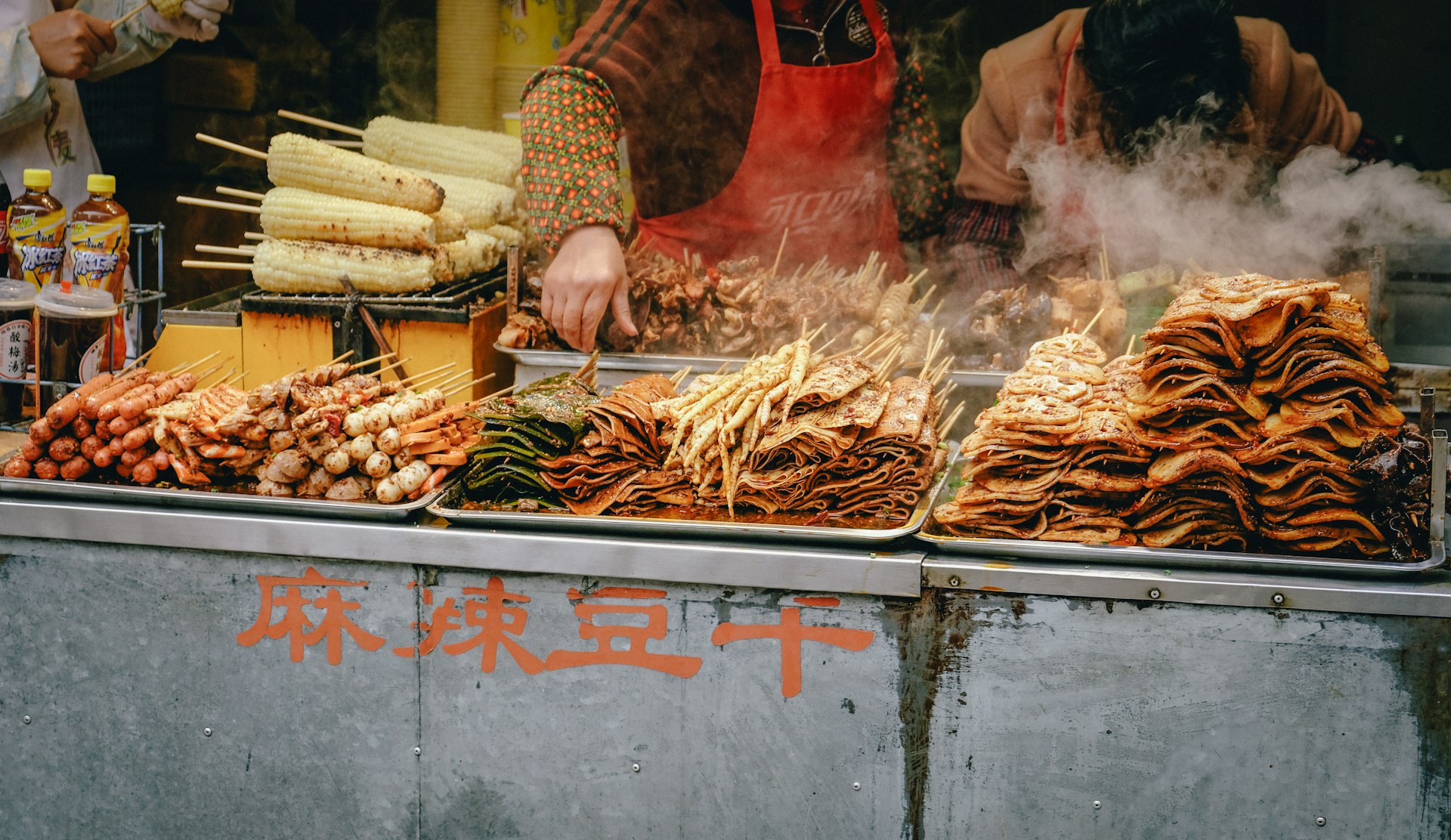
11. Chinese Food Is Classified Into Eight Regional Cuisines
"Chinese food" is not one thing. China's eight regional culinary traditions (八大菜系, bā dà càixì) are as different from each other as French cuisine is from Spanish.
The most well-known outside China:
川菜 (Chuāncài) — Sichuan cuisine: Famous for the numbing heat of Sichuan peppercorns (花椒, huājiāo) combined with chilli. The sensation is called 麻辣 (málà, numbing-spicy) — two separate sensations happening simultaneously.
粤菜 (Yuècài) — Cantonese cuisine: Emphasises freshness and natural flavour over heavy seasoning. Dim sum (点心, diǎnxīn, "touch the heart") is a Cantonese tradition. The principle: let the ingredients speak.
鲁菜 (Lǔcài) — Shandong cuisine: Often considered the foundation of northern Chinese cooking. Heavy, hearty, wheat-based (dumplings, noodles, pancakes). The cuisine of Confucius's homeland.
淮扬菜 (Huáiyáng cài) — Jiangsu/Huaiyang cuisine: Delicate, elegant, seasonal. The cuisine served at Chinese state banquets.
The word for delicious — 好吃 (hǎochī, "good eat") — is one of the first expressions any learner picks up and one of the most reliable openers for any food conversation in China.
12. Mahjong Is Not a Casual Game — It's a Social Institution
Mahjong (麻将, májiàng) is played by four players, involves 144 tiles, and has a vocabulary entirely its own. The shuffling sound — 洗牌 (xǐpái, "washing the tiles") — is one of the most evocative sounds of Chinese family life.
At Chinese New Year gatherings, around hospital waiting rooms, in parks on weekday mornings with older players sitting outside — mahjong is where Chinese social life happens. Victory is announced with 胡了 (hú le), one of the most satisfying calls in any game.
The vocabulary of learning Chinese through mahjong is genuinely practical — numbers, directions, wind terms, action verbs — and playing even once with native speakers produces more natural vocabulary exposure than many hours of textbook study.
13. Chinese Tea Culture Has a 5,000-Year History and Its Own Philosophical Tradition
Tea (茶, chá) arrived in China before it arrived anywhere else — legendary accounts trace it to Shennong, the divine farmer, tasting a leaf that fell into boiling water around 2737 BCE. Whether the story is literally true, tea has been central to Chinese culture, medicine, philosophy, and social life for millennia.
The Chinese tea ceremony (茶道, chádào, "the way of tea") is a practice of mindfulness, hospitality, and appreciation — showing a guest you value them through careful preparation and service of tea. Specific gestures signal gratitude: tapping two fingers on the table when someone pours for you is a small bow — a gesture that originated when a Qing emperor disguised himself as a commoner and poured tea for his servants, who couldn't bow without revealing his identity.
The varieties: 绿茶 (lǜchá, green tea), 红茶 (hóngchá, red tea — what English calls "black tea"), 乌龙茶 (wūlóngchá, oolong), 白茶 (báichá, white tea), 普洱 (pǔ'ěr, pu-erh, an aged fermented tea that can cost thousands of dollars per cake).
![hills covered with green plants \]](/unsplash/ySQXoZLAsmc/4140/chinese%20tea.jpg?unique=5961bf9a?access_token=7b2cfa14-00d6-48a5-bad4-1dcd1e90de3e)
14. Chinese Family Names Are Extremely Concentrated
42.9% of Chinese people share just 10 family names. The most common, 王 (Wáng, king), is carried by roughly 100 million people — making it the most common surname on earth.
The reason: Chinese surnames derive from a small pool of sources — ancient state names, imperial grants, clan affiliations — and once distributed across China's enormous population, stayed concentrated. The entire surname pool is roughly 4,000 names, compared to over 6 million in the United States.
The complete guide to the 100 most common Chinese surnames covers meanings, origins, and the historical stories behind names like 曹 (Cao Cao), 孔 (Confucius), and 李 (the Tang dynasty imperial name). Also explains why the same surname looks different in English depending on whether the family is from Hong Kong, Taiwan, or the mainland.
15. Chinese Internet Culture Has Produced Its Own Philosophy of Resignation
躺平 (tǎng píng, "lying flat") emerged around 2021 as young Chinese workers — facing relentless competition, rising housing costs, and diminishing returns on overwork — began describing a deliberate withdrawal from the race. Not laziness: a philosophical stance.
The lineage back to Daoist non-striving is direct. And it's not the only example: 内卷 (nèi juǎn, "involution") describes the exhausting zero-sum competition that produces no real collective progress. 佛系 (fó xì, "Buddha-like") describes detached acceptance of outcomes beyond your control.
These untranslatable Chinese words aren't just slang — they're the continuation of a 2,000-year Chinese tradition of compressing complex philosophical stances into a few characters. The same language that produced 塞翁失马 and 水到渠成 is still generating new expressions for new problems.
16. The Chinese Calendar Is Lunisolar, Not Lunar
Chinese New Year (春节, Chūnjié, Spring Festival) falls on a different Gregorian date each year — usually between January 21 and February 20 — because it follows the Chinese lunisolar calendar (农历, nónglì).
"Lunar" isn't quite accurate: the Chinese calendar combines lunar cycles (months follow moon phases) with solar terms (the year is calibrated to the sun's position), making it lunisolar. This is why traditional Chinese festivals — Qingming, Dragon Boat Festival, Mid-Autumn Festival — fall on different Gregorian dates each year but always on the same position in the lunisolar cycle.
The Dragon Boat Festival always falls on the 5th day of the 5th lunar month. The Mid-Autumn Festival always falls on the 15th day of the 8th lunar month — the full moon. The calendar is precise; only the Gregorian translation varies.
17. Chinese Calligraphy Is Considered a Fine Art Equal to Painting
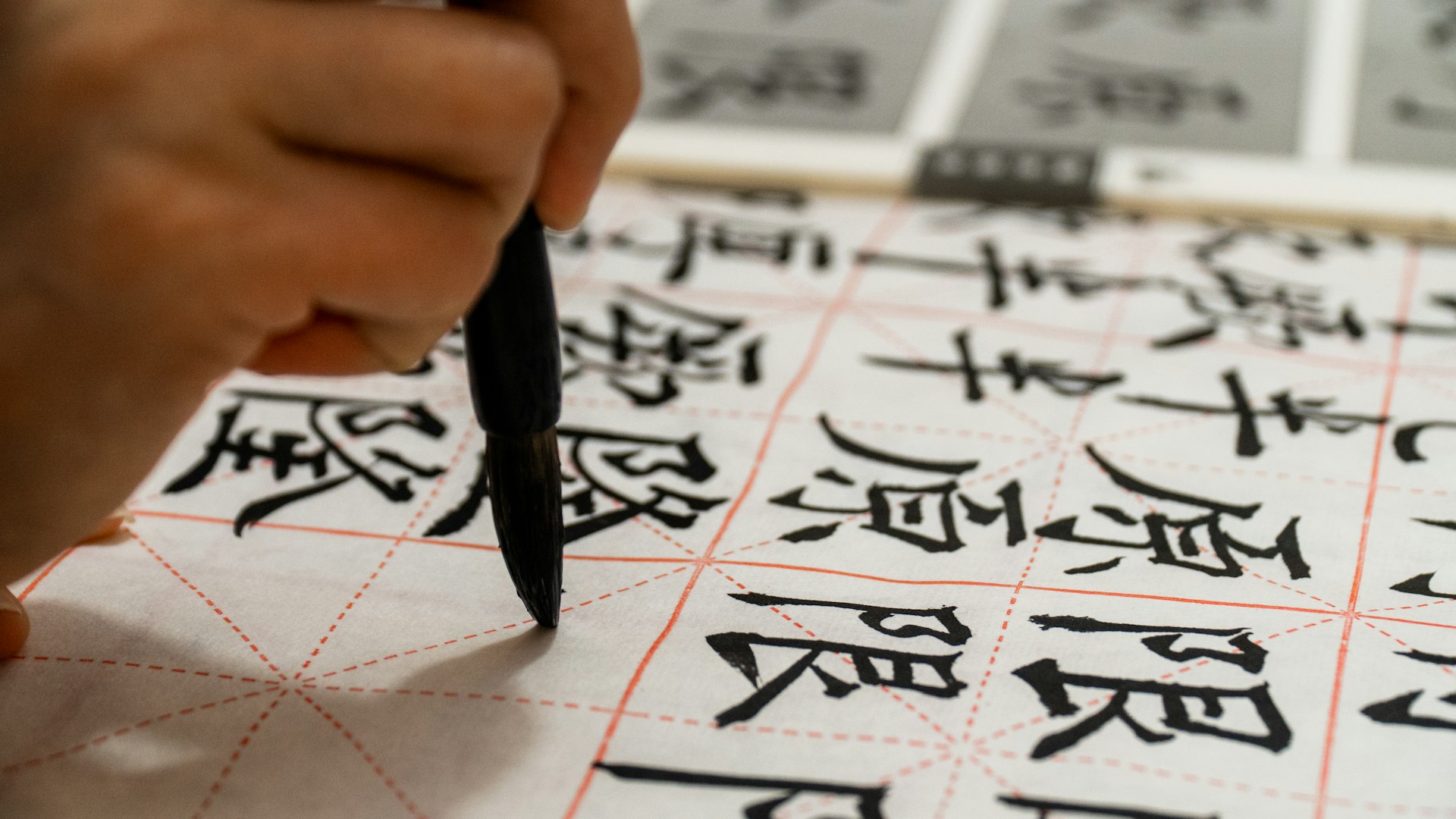
书法 (shūfǎ, calligraphy — literally "the method of writing") has been one of China's highest art forms for over 2,000 years. The great calligraphers were as revered as painters or poets. Wang Xizhi (王羲之, 4th century CE) is called the "Sage of Calligraphy" — his Preface to the Orchid Pavilion Collection is considered the greatest Chinese calligraphic work ever produced.
The reason calligraphy became art rather than just writing: every character requires the same four elements — brush, ink, paper, ink stone — and the quality of a line reveals the writer's qi (气, qì, vital force), composure, and cultivation in ways that typefaces and ballpoint pens cannot. The stroke is irreversible. There is no delete button.
This is one reason learning correct stroke order matters even for beginners who will never practise calligraphy — the stroke order follows the same logic that calligraphers have used for millennia, and writing characters in the correct sequence is the beginning of understanding how the writing system works.
18. China Has More Speakers of English as a Second Language Than the United States Has Native English Speakers
Estimates suggest over 300 million Chinese people are learning or have learned English — roughly comparable to the entire population of the United States. English instruction is mandatory from primary school across China.
The flip side: the vast majority of communication within China happens in Mandarin, and anyone who wants to navigate China beyond tourist infrastructure needs Mandarin. The self-study roadmap is the starting point for anyone who's made that decision.
19. Chinese Idioms (Chengyu) Are Compressed Stories
成语 (chéngyǔ, chengyu) are four-character idioms that compress entire philosophical stories into four syllables. When someone says 塞翁失马 (sài wēng shī mǎ, "the old man lost his horse"), they're invoking a 2,200-year-old story about how apparent misfortune can become fortune — and implicitly advising the listener not to overreact to setbacks.
These aren't decorative. Native speakers use them constantly in conversation, writing, and media. Knowing even 20 common chengyu transforms how much of authentic Chinese you can understand and how you're perceived by native speakers.
The guide to 20 essential chengyu every learner should know covers the stories, the meanings, and the contexts — far more useful than a bare translation. For a deeper exploration of how these expressions carry philosophy, Words That Hold the Sky explores 100 Chinese expressions and the emotional and cultural worlds they carry.
Join the Mandarin Zest Club
Join the Mandarin Zest Club and become part of a welcoming international community of Chinese learners from all over the world. Practice together, stay motivated, and connect with people who share your goals for learning Mandarin.
20. Chinese People Typically Don't Say "I Love You"
我爱你 (wǒ ài nǐ, I love you) exists and is understood. But Chinese culture expresses love primarily through action rather than declaration. The concept of 含蓄 (hánxù, emotional restraint) means that direct declarations of feeling — particularly positive ones — can feel exposing or even performative.
Love is expressed through 吃了吗?(have you eaten?), through 路上小心 (be careful on the way home), through 辛苦了 (you've worked hard) — practical, care-encoded expressions that carry emotional weight without requiring emotional vulnerability.
The full exploration of why Chinese people don't say I love you covers all the alternative expressions, the cultural roots in Confucian restraint, and why this difference reveals something fundamental about how Chinese culture handles intimacy.
21. Face (面子) Governs More Than You Think
面子 (miànzì, face) is one of the most important concepts for understanding Chinese social interaction — and one of the most misunderstood by outsiders.
It's not simply "reputation." It's specifically the public dimension of social standing — the respect others visibly accord you, the acknowledgement of your status and worth in a group setting. It's actively given, carefully maintained, and painfully lost. Publicly contradicting someone, refusing a toast, failing to acknowledge someone's status, or criticising someone in front of others — all of these cause face loss.
Understanding face explains many things that otherwise seem inexplicable: why direct disagreement is rare in Chinese business meetings, why hosts insist on paying even when the guest offers, why receiving a gift requires a performance of refusal before acceptance. It's social navigation with invisible rules — and knowing the rules makes everything make more sense.
22. WeChat Has Made Paper Money Nearly Obsolete in Chinese Cities
In major Chinese cities, cash transactions are increasingly rare. Most people pay for everything — groceries, street food, taxis, doctor's bills, utility payments — through WeChat Pay (微信支付, Wēixìn zhīfù) or Alipay (支付宝, Zhīfùbǎo) by scanning a QR code.
Some vendors in major cities no longer carry change because they don't expect cash transactions. Street food stalls, small restaurants, and independent shops often prefer QR payment over both cash and cards.
For anyone visiting China, setting up a payment app before arrival is now essentially mandatory — particularly since the complete China apps guide covers not just WeChat Pay and Alipay but every digital tool you'll need from navigation to food delivery.
23. The Chinese Writing System Is Shared Across Mutually Unintelligible Languages
A Cantonese speaker from Hong Kong and a Mandarin speaker from Beijing cannot understand each other in conversation. But both can read a Chinese newspaper. The writing system serves as a shared script across varieties of Chinese that are linguistically as different as Spanish and Romanian.
This is because written Chinese represents meaning rather than sound — a character like 马 (mǎ in Mandarin, maa in Cantonese) means "horse" regardless of how it's pronounced. The writing bridges the spoken divide.
This also explains the Simplified vs Traditional debate: both systems represent the same meanings, but the character forms diverge, creating a visible marker of political and cultural identity that a shared spoken language would not.
24. China Is the World's Largest Publisher of Books
China publishes more books annually than any other country — over 500,000 new titles per year as of recent counts. Reading culture in China is strong, particularly among older generations, and the country has a deep tradition of valuing literary education. The imperial examination system (科举, kējǔ), which shaped Chinese society for over 1,300 years, was based entirely on literary knowledge — candidates were expected to have memorised classical texts and demonstrate mastery of classical composition.
This literary tradition connects directly to why graded readers in Chinese are such an effective learning tool — reading is genuinely central to Chinese cultural life, and learners who read Chinese consistently integrate into that tradition in a way that app-users don't.
25. The Chinese Zodiac Is the Only One With a Mythical Animal
Of the twelve animals in the Chinese zodiac (生肖, shēngxiào), eleven are real. Only one — the dragon — is mythical. That the only fictional creature in the zodiac is also the most auspicious, the most powerful, and the animal associated with imperial authority says something about the place of the dragon in Chinese imagination.
The story of how the animals got their zodiac positions — the Great Race across a river, with the cunning rat arriving first and the honest ox second — is one of the most beloved stories in Chinese culture. The complete guide to all 12 zodiac animals covers every animal, the race story, the Five Elements layer, compatibility, and the vocabulary for discussing your own sign.
Our Materials
Check out our dedicated materials, designed by teachers for learners.
Chinese Vocabulary From This Article
| Chinese | Pinyin | Meaning |
|---|---|---|
| 文化 | wénhuà | culture |
| 历史 | lìshǐ | history |
| 传统 | chuántǒng | tradition |
| 民族 | mínzú | ethnic group / nationality |
| 汉字 | hànzì | Chinese characters |
| 成语 | chéngyǔ | four-character idiom |
| 茶道 | chádào | way of tea |
| 面子 | miànzi | face (social standing) |
| 农历 | nónglì | lunar calendar |
| 生肖 | shēngxiào | Chinese zodiac |
| 四大发明 | sì dà fāmíng | the four great inventions |
| 书法 | shūfǎ | calligraphy |
| 万里长城 | Wànlǐ Chángchéng | the Great Wall |
| 春节 | Chūnjié | Spring Festival |
| 含蓄 | hánxù | emotional restraint |
| 躺平 | tǎng píng | lying flat |
| 缘分 | yuánfèn | fateful connection |