Here's the number that stops people in their tracks when they start learning Mandarin: there are somewhere between 70,000 and 100,000 Chinese characters in existence.
Here's the number that should actually matter to you: somewhere between 2,000 and 3,500.
The gap between those two figures is the gap between the anxiety and the reality of learning to read Chinese. Most characters in existence are archaic, obsolete, or so specialised that even highly educated native speakers have never seen them. The characters you need for everyday literacy — reading menus, news articles, text messages, street signs, and eventually novels — are a far smaller and more manageable set. This guide covers what those numbers actually mean, how the frequency distribution works, and how to approach character learning in a way that makes the target feel achievable rather than overwhelming.
The Total Number Is Irrelevant
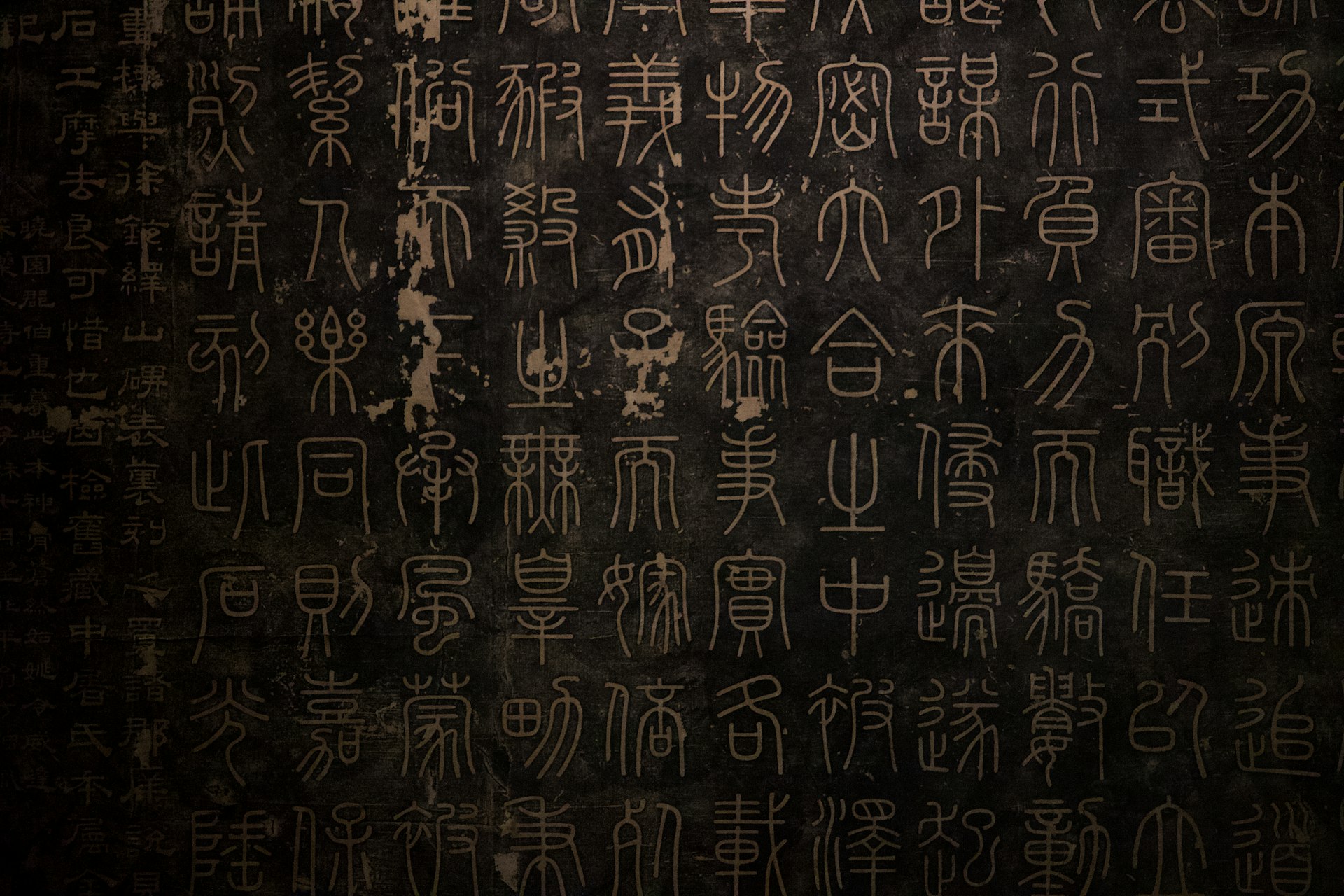
The 70,000-100,000 figure comes from large historical dictionaries that include characters from classical texts, historical documents, and specialist technical vocabularies going back thousands of years. The 康熙字典 (Kāngxī Zìdiǎn, the Kangxi Dictionary of 1716) — the most comprehensive classical Chinese dictionary — contains around 47,035 entries. More recent comprehensive dictionaries go higher.
Almost none of these are in active use. A character that appears in a Han dynasty poem and nowhere else in the last thousand years of written Chinese is technically "existing" but is not a character anyone needs to learn. The question isn't how many characters Chinese has ever had. It's how many are used in modern written Chinese — and how many of those you need to read comfortably.
Learn Chinese Characters the right way!
Chinese characters are often seen as one of the most intimidating parts of learning Mandarin. This guide was created to change that.
The Frequency Curve: Where the Real Numbers Are
This is the insight that makes character learning feel manageable, and most guides don't explain it clearly enough.
Chinese character usage follows a steep frequency distribution — a small number of characters appear with extraordinary regularity, and then the curve drops off sharply. The practical implications are dramatic:
- The 100 most common characters cover approximately 42% of all written Chinese text
- The 500 most common characters cover approximately 75%
- The 1,000 most common characters cover approximately 89%
- The 2,000 most common characters cover approximately 97%
- The 3,000 most common characters cover approximately 99%
This means that learning your first 100 characters well gets you almost halfway through any given page of Chinese text. Every additional character you learn has diminishing returns in terms of text coverage — but the returns are still significant up to around 2,000-3,000 characters, after which new characters you encounter will be genuinely rare.
The 100 most common Chinese characters are on the Mandarin Zest blog as a free resource — and they're the most efficient possible starting point for character learning, because every one of them pays dividends immediately.
Characters vs Words: The Distinction That Matters
This is the part the Chill Chinese article handles well and is worth explaining carefully, because learners often conflate the two.
A character (字, zì) is a single logographic unit — one character, one syllable, usually one meaning component. 爱 (ài), 人 (rén), 好 (hǎo).
A word (词, cí) is typically two or more characters combined. 爱人 (àirén, spouse/beloved), 好人 (hǎorén, good person), 人民 (rénmín, the people).
Chinese words are overwhelmingly two characters. Three and four character combinations exist but two is the norm. What this means in practice:
A vocabulary of 1,000 characters can generate several thousand words depending on how they combine. Learning characters gives you building blocks; learning words gives you vocabulary. Both are necessary. Neither alone is sufficient.
The New HSK vocabulary framework reflects this distinction in its structure:
| HSK Level | Characters | Words |
|---|---|---|
| HSK 1 | 300 | 500 |
| HSK 2 | 600 | 1,272 |
| HSK 3 | 900 | 2,245 |
| HSK 4 | 1,200 | 3,245 |
| HSK 5 | 1,500 | 4,316 |
| HSK 6 | 1,800 | 5,456 |
| HSK 7-9 | 3,000 | 11,092 |
HSK 2 has 600 characters but 1,272 words — because those 600 characters combine into more than twice as many word combinations. By HSK 5, you know 1,500 characters but over 4,000 words. The characters are the alphabet; the words are the vocabulary built from that alphabet.
The complete guide to what the HSK levels mean and what changed in the New HSK system are both worth reading alongside this if you're planning your study around exam targets.
What Different Character Counts Actually Let You Do
300-500 characters (HSK 1): Functional basics
You can read pinyin fluently and recognise a meaningful set of basic characters. Menus in simple restaurants, basic signs, greetings in text messages. You cannot yet read a Chinese news article or follow most written Chinese content.
600-900 characters (HSK 2-3): Beginner literacy
You start to be able to follow simple texts with occasional dictionary assistance. Short social media posts become readable. You're starting to see character combinations — understanding 好 and 人 separately means you can guess 好人 from context.
1,200-1,500 characters (HSK 4-5): Functional literacy
This is where everyday Chinese starts to become navigable. Menus, most social media, text messages, and simple articles are within reach. You'll still encounter unknown characters regularly, but the overall meaning of most texts becomes accessible. Conversation in written form — WeChat messages, comments, brief articles — is increasingly manageable.
2,000 characters: The practical literacy threshold
For daily reading and basic literacy, such as menus and street signs, knowing around 1,000-2,000 characters will serve you quite well. At 2,000 characters you're in the region where most everyday written Chinese — not literary or specialist content, but the practical Chinese of daily life — is within reach.
3,000-4,000 characters: Native literacy territory
To dive into more complex texts, novels, news articles, and official documents, you'll want to aim for around 3,000-4,000 characters. With this arsenal, you can understand about 98% of the content in most written materials. 3,000-4,000 characters is also what the average Chinese person knows.
This is a realistic target for advanced learners. It's also a long-term goal — not something achieved in months, but in years of consistent study.
The Radical System: Why This Changes Everything
Most people who find character learning overwhelming are approaching it the wrong way — trying to memorise thousands of arbitrary shapes. This is genuinely hard and genuinely unnecessary.
Chinese characters are not arbitrary. The vast majority are built from recurring components called radicals (部首, bùshǒu) — 214 of them in the traditional system. Each radical carries meaning or phonetic information. Once you know them, characters become decomposable rather than arbitrary.
Examples:
- 氵 (water radical) appears in 海 (sea), 河 (river), 洗 (wash), 汤 (soup), 游 (swim) — anything involving water
- 女 (woman radical) appears in 妈 (mother), 姐 (elder sister), 婚 (marriage), 妹 (younger sister)
- 口 (mouth radical) appears in 吃 (eat), 喝 (drink), 说 (speak), 唱 (sing)
When you learn a new character and you can identify its radical, you've instantly connected it to a semantic family. When you learn 汤 (soup), you know it involves liquid because of 氵. When you see an unfamiliar character with 氵, you can guess it probably relates to water or liquids.
The 214 Chinese radicals are all listed freely on Mandarin Zest — and learning the most frequent 50-100 of them is one of the highest-leverage investments you can make in character study. The character learning guide explains how to use this approach systematically.
Simplified vs Traditional: Why This Matters for Your Target
You might have to learn a character multiple times if you want to learn both traditional and simplified Chinese characters.
This is worth understanding properly. Mainland China uses Simplified Chinese (简体字, jiǎntǐzì) — introduced in the 1950s, with reduced stroke counts for many characters. Taiwan, Hong Kong, and Macau use Traditional Chinese (繁體字, fántǐzì) — the older, more complex forms.
The same character in Traditional is often significantly more complex:
- Dragon: 龙 (Simplified, 5 strokes) vs 龍 (Traditional, 16 strokes)
- Love: 爱 (Simplified, 10 strokes) vs 愛 (Traditional, 13 strokes)
- Body: 体 (Simplified, 7 strokes) vs 體 (Traditional, 23 strokes)
If your target is mainland China or the HSK exam, learn Simplified. If your target is Taiwan or classical Chinese texts, learn Traditional. If you eventually want both, Simplified first makes more sense — the path from Simplified to Traditional is easier than the reverse.
The full comparison helps you make this decision based on your actual goals.
The Contracted Text Problem: What Nobody Warns You About
Another hurdle, specifically when reading newspapers or more formal texts, is how a lot of words get contracted. It sometimes seems as if someone wrote a sentence and then only kept the first character of each word. That makes understanding the sentence hard, even if you know all the characters and the words in it.
This is a genuine and underappreciated challenge. Chinese written Chinese — particularly in headlines, official documents, and formal registers — frequently uses abbreviated forms that compress multi-character phrases into single characters or two-character combinations that only work if you know the full expression.
Example: 反腐 (fǎnfǔ) is the compressed form of 反腐败 (fǎn fǔbài, anti-corruption). In a headline, you might see 反腐 and need to know it means anti-corruption, not figure it out from the characters alone. 国足 (guózú) means the national football team (from 国家足球队). 高考 (gāokǎo) means the national college entrance examination (from 高中升学考试).
These contractions are essentially a parallel vocabulary of abbreviations that operates on top of the regular character vocabulary. They're learned through exposure to actual Chinese media rather than from textbooks — which is one reason that reading graded content regularly is so important. Graded readers introduce vocabulary in context; authentic media introduces the compression patterns that advanced literacy requires.
A Practical Approach: How to Actually Get There
Knowing how many characters you need is useful. Knowing how to acquire them is more useful.
Start with the most frequent. The 100 most common characters pay immediate dividends in text comprehension. Learn these first. Then the next hundred. Frequency matters more than any other ordering principle at the beginning.
Learn radicals alongside characters. Every character you learn should be associated with its radical. This isn't extra work — it's the work that makes every subsequent character faster to learn. The 214 radicals are the foundation.
Write characters, don't just recognise them. Screen recognition is easier to develop than production, but production builds far deeper memory traces. The HSK 1 Character Writing Practice Book covers all HSK 1 characters with stroke order and practice grids. The Chinese Handwriting Practice Sheets extend this further.
Use spaced repetition to stop forgetting. Characters fade without review. Anki (free) is the most effective review tool — it schedules reviews at the optimal interval to maintain long-term retention without excessive repetition. The Anki guide for Chinese learners covers how to set it up properly for Chinese.
Read at your level continuously. Character recognition in isolation is different from character recognition at reading speed, in context, in combination with unfamiliar words. Graded readers provide reading material calibrated to your current character knowledge — the most effective way to build reading fluency without frustration.
Track your progress. The Quick HSK Level Test is free and gives you an instant read on where you are in the HSK framework — useful for calibrating which vocabulary and character targets to focus on next.
Join the Mandarin Zest Club
Join the Mandarin Zest Club and become part of a welcoming international community of Chinese learners from all over the world. Practice together, stay motivated, and connect with people who share your goals for learning Mandarin.

The Realistic Timeline
How long does it take to reach different character thresholds? At a pace of 10 new characters per day with daily review:
- 300 characters (HSK 1 level): ~1 month
- 600 characters (HSK 2 level): ~2 months
- 1,500 characters (HSK 5 level): ~5 months
- 3,000 characters (native literacy): ~10 months
These are optimistic estimates — they assume consistent daily practice, proper use of spaced repetition, and effective study methods. In practice, most learners work at a slower pace, especially at higher levels where new characters are rarer in everyday text and require more context to consolidate.
How long it actually takes to learn Mandarin depends on total hours studied, study method effectiveness, and how much authentic Chinese you're reading alongside formal study. The character count is one milestone on a longer journey.
FAQ
The average educated Chinese adult knows around 3,000-4,000 characters — enough to read newspapers, novels, and most written material comfortably. University graduates and people who read widely tend toward the higher end.
Technically, yes — pinyin is used in some contexts (children's books, language learning materials). But most Chinese written content has no pinyin. Learning to read Chinese without characters means learning a writing system that doesn't appear in most of the content you'd want to read. It's a path to a dead end.
The radical system is the closest thing to a shortcut — it reduces the arbitrary memorisation load significantly. Beyond that, consistent daily practice with spaced repetition is more effective than any intensive short-term approach. There's no substitute for time and repetition, but there are significantly more and less efficient ways to spend that time.
If your goal is mainland China, the HSK exam, or reaching the most Chinese speakers — Simplified. If your goal is Taiwan, Hong Kong, or classical Chinese — Traditional. The full comparison covers the decision in detail.