China's relationship with sport is not what most Westerners expect. The country that dominates Olympic table tennis and has produced some of the world's most celebrated martial artists is also home to 300 million basketball players, a professional esports industry that generates billions annually, and several hundred million retired women who gather in public squares every morning to dance in synchronised formation.
This guide covers the full picture: the traditional sports embedded in Chinese culture for centuries, the modern sports that have swept the country in recent decades, the vocabulary you need to talk about all of it in Mandarin, and the genuinely surprising cultural details that most sports guides miss entirely.
First: The Grammar of Sport in Chinese
Before the sports themselves, a linguistic point that trips up almost every beginner: Chinese uses different verbs for different sports, and getting them wrong sounds immediately strange to native speakers.
The key distinction:
打 (dǎ, to hit/strike) — used for sports involving striking a ball with an implement or body part, and for racket sports:
- 打篮球 (dǎ lánqiú) — play basketball
- 打乒乓球 (dǎ pīngpāngqiú) — play table tennis
- 打羽毛球 (dǎ yǔmáoqiú) — play badminton
- 打网球 (dǎ wǎngqiú) — play tennis
- 打棒球 (dǎ bàngqiú) — play baseball
- 打拳 (dǎ quán) — do boxing/punch
踢 (tī, to kick) — used for sports where the foot contacts the ball:
- 踢足球 (tī zúqiú) — play football/soccer
- 踢毽子 (tī jiànzi) — play shuttlecock (traditional game)
游 (yóu, to swim/travel through water):
- 游泳 (yóuyǒng) — swim
跑 (pǎo, to run):
- 跑步 (pǎobù) — run, go running
骑 (qí, to ride):
- 骑自行车 (qí zìxíngchē) — ride a bicycle
- 骑马 (qí mǎ) — ride a horse
下 (xià, to put down/move) — used for board games:
- 下棋 (xià qí) — play chess (any variety)
- 下围棋 (xià wéiqí) — play Go
- 下象棋 (xià xiàngqí) — play Chinese chess
If you're learning grammar structures in Chinese, the verb-object compound structure that produces 打篮球, 踢足球, and 游泳 is one of the most productive patterns in everyday speech — it generates vocabulary naturally once you know the verb.
New to Chinese? Start Here.
The no-fluff roadmap for absolute beginners — what to learn first, what to skip, and how to actually stick with it past week two.
Core Sports Vocabulary
| Chinese | Pinyin | Meaning |
|---|---|---|
| 体育 | tǐyù | physical education, sport |
| 运动 | yùndòng | exercise, sport, movement |
| 球 | qiú | ball |
| 比赛 | bǐsài | competition, match |
| 冠军 | guànjūn | champion |
| 运动员 | yùndòngyuán | athlete |
| 教练 | jiàoliàn | coach, trainer |
| 体育馆 | tǐyùguǎn | gymnasium, sports hall |
| 操场 | cāochǎng | sports field, playground |
| 健身房 | jiànshēnfáng | gym, fitness centre |
| 奥运会 | Àoyùnhuì | Olympic Games |
| 金牌 | jīnpái | gold medal |
| 银牌 | yínpái | silver medal |
| 铜牌 | tóngpái | bronze medal |
| 胜利 | shènglì | victory |
| 失败 | shībài | defeat, failure |
乒乓球 (Pīngpāngqiú) — Table Tennis: The National Sport
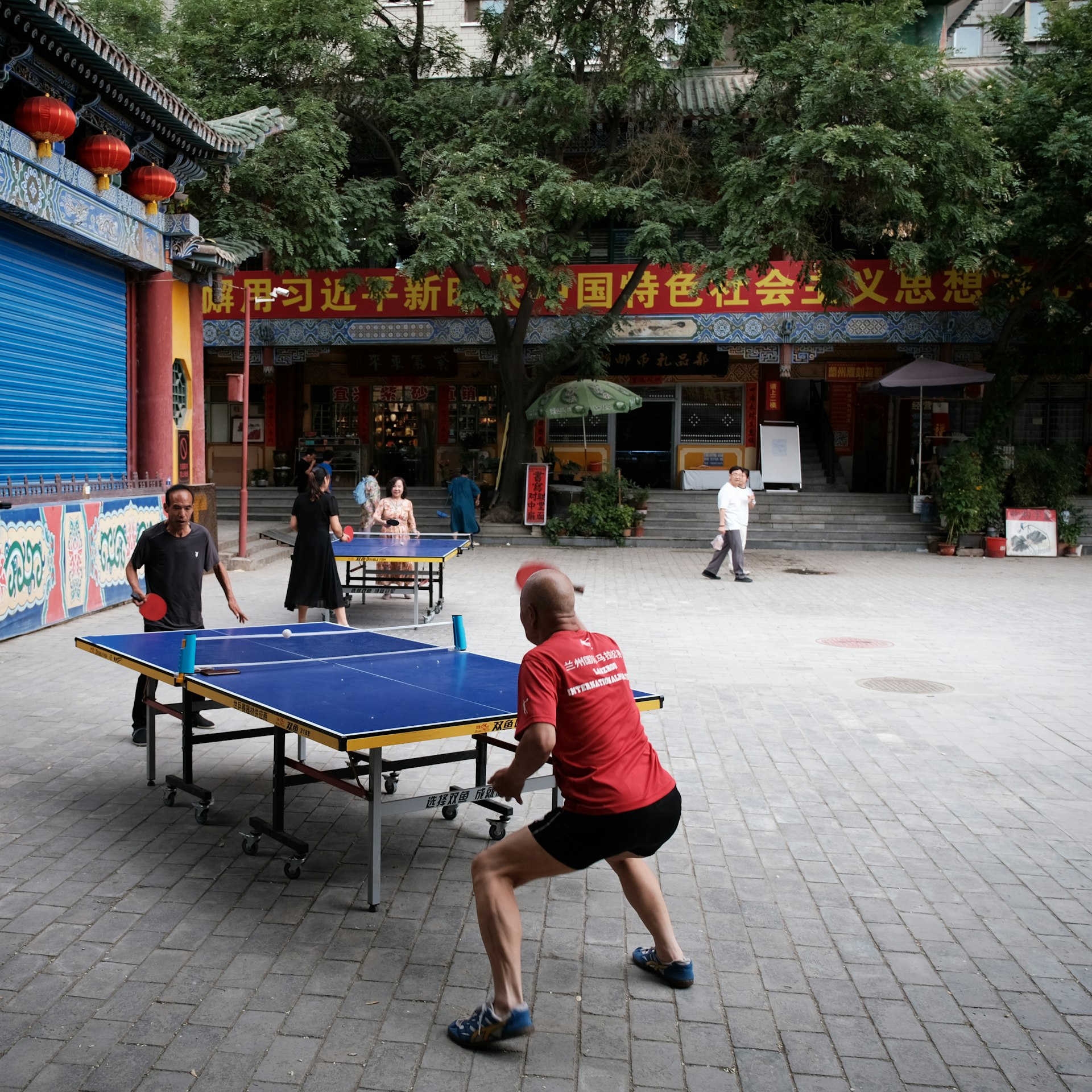
Table tennis is so ingrained in Chinese culture that you'll find makeshift tables in parks, schools, and even corporate lobbies across the country. China has won 28 Olympic gold medals in table tennis since 1988 — a dominance so complete that the sport effectively functions as a statement of national identity.
乒乓球 is onomatopoeic — the name mimics the sound of the ball hitting the table. The full name in English (table tennis) and the informal name (ping-pong) both derive from this sound; in Chinese, 乒乓 captured it first.
The sport's cultural significance goes beyond competition. <cite index="6-1">Known as the "national ball" (国球, guóqiú), table tennis is everywhere — in schools, parks, even office break rooms.</cite> It's egalitarian — playable in any courtyard, on any surface, requiring minimal equipment — which is part of why it spread so rapidly after the Communist Party promoted it as the people's sport in the 1950s.
Then there's 乒乓外交 (pīngpāng wàijiāo, ping-pong diplomacy) — the remarkable sequence of events in 1971 when a chance meeting between American and Chinese table tennis players at the World Championships in Japan led directly to Nixon's historic visit to China in 1972. Sport as geopolitics, compressed into a net and a 40mm ball.
Key vocabulary:
| Chinese | Pinyin | Meaning |
|---|---|---|
| 乒乓球 | pīngpāngqiú | table tennis / ping-pong |
| 国球 | guóqiú | national ball |
| 球拍 | qiúpāi | racket / paddle |
| 球台 | qiútái | table |
| 发球 | fāqiú | to serve |
篮球 (Lánqiú) — Basketball: The Largest Participation Sport
China's love affair with basketball is staggering — approximately 300 million people play or follow the sport. The NBA is extremely popular, with games broadcast simultaneously with the US.
The man most responsible for this is 姚明 (Yáo Míng), the 2.29-metre centre who played for the Houston Rockets from 2002 to 2011 and became the most famous Chinese athlete in the world. Before Yao, basketball was popular in China; after Yao, it was a passion. He is now the president of the Chinese Basketball Association.
篮球 is constructed logically: 篮 (lán, basket) + 球 (qiú, ball) = basketball. Most ball sports in Chinese follow this pattern: 足球 (foot-ball = football/soccer), 排球 (row-ball = volleyball), 羽毛球 (feather-ball = badminton). Once you know 球, you can decode the structure of every ball sport name.
Key vocabulary:
| Chinese | Pinyin | Meaning |
|---|---|---|
| 篮球 | lánqiú | basketball |
| 篮筐 | lánkuāng | basketball hoop |
| 投篮 | tóulán | to shoot (basketball) |
| 灌篮 | guànlán | dunk |
| 姚明 | Yáo Míng | Yao Ming |
足球 (Zúqiú) — Football/Soccer: The Complicated One
足球 is arguably China's most emotionally complex sport. Soccer has seen a surge in interest in recent years, with the Chinese government investing heavily in the development of the sport.
The national team's consistent underperformance relative to China's size and resources generates significant national frustration. There are more people in China than in any other country; the national football team consistently fails to qualify for major tournaments. This gap between scale and success is a running source of national self-examination.
Despite this, football fandom is enormous. The English Premier League, the Spanish La Liga, and the UEFA Champions League all have massive Chinese audiences. Every major European club has Chinese commercial partnerships. The sport's popularity as something to watch vastly outstrips its development as something China wins.
Key vocabulary:
| Chinese | Pinyin | Meaning |
|---|---|---|
| 足球 | zúqiú | football / soccer |
| 守门员 | shǒuményuán | goalkeeper |
| 射门 | shèmén | to shoot at goal |
| 进球 | jìnqiú | to score a goal |
| 越位 | yuèwèi | offside |
羽毛球 (Yǔmáoqiú) — Badminton: The Underrated Giant
Badminton is a favorite across China in a way that Western audiences rarely appreciate. The character breakdown tells you exactly what the Chinese think about this sport: 羽毛 (yǔmáo, feather) + 球 (qiú, ball) = the feather ball. Named for what the shuttlecock is made of.
China's badminton players dominate international competition almost as comprehensively as the table tennis team. Lin Dan (林丹, Lín Dān) — twice Olympic champion, five-time world champion — is considered by many the greatest badminton player in history.
Badminton courts fill rapidly at Chinese universities and residential communities. It's a sport accessible in almost any space large enough to hold a net — which makes it, like table tennis, genuinely classless in its Chinese popularity.
武术 (Wǔshù) / 功夫 (Gōngfu) — Martial Arts: The Cultural Tradition
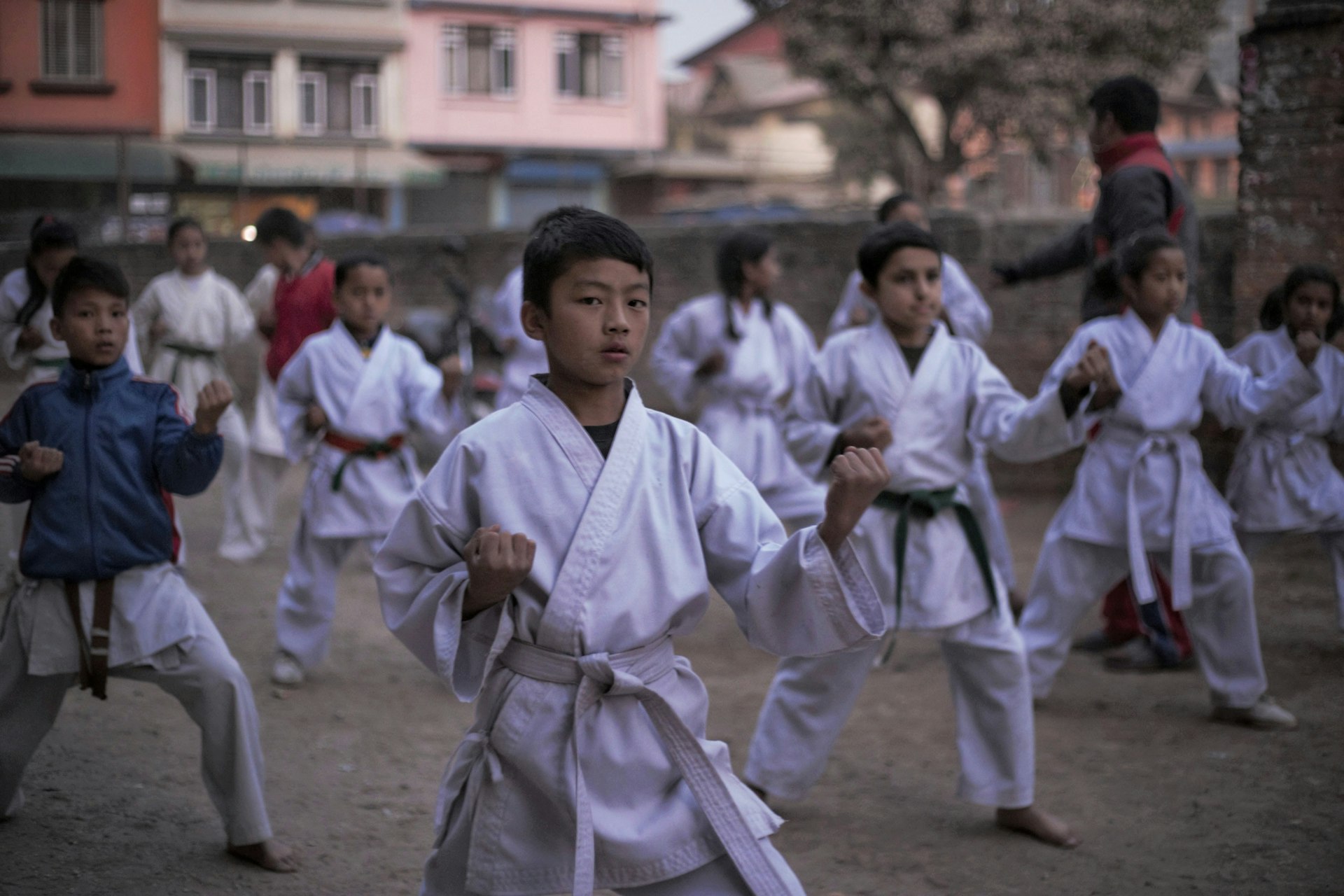
武术 (wǔshù, martial arts — literally "martial skill") is the umbrella term for China's traditional fighting disciplines. The word most Westerners know — 功夫 (gōngfu, kung fu) — literally means "skill acquired through effort" and originally applied to any skill developed through dedicated practice, not just martial arts. A master calligrapher or chef could be said to have 功夫.
The major disciplines:
太极拳 (Tàijíquán, Tai Chi) — the slow, flowing martial art practiced by millions in parks every morning. <cite index="12-1">Tai Chi, with its fluid and meditative movements, is practiced daily in public parks, symbolising the balance between body and mind.</cite> It's both a martial discipline (its techniques are genuinely effective in combat, contrary to its gentle appearance) and a health practice for older adults. The morning park is one of the defining images of Chinese public life.
散打 (Sǎndǎ) — Chinese kickboxing. Full-contact martial arts combining striking and throwing. Less known outside China but with a professional competition circuit.
武术套路 (Wǔshù Tàolù) — choreographed martial arts sequences, combining acrobatics, weapon handling, and athletic performance. The discipline that produces Chinese martial arts films.
气功 (Qìgōng) — cultivation of 气 (qì, vital energy) through breathing, movement, and meditation. Not strictly a martial art but closely related — and one of the most deeply embedded practices in Chinese traditional health culture.
Key vocabulary:
| Chinese | Pinyin | Meaning |
|---|---|---|
| 武术 | wǔshù | martial arts |
| 功夫 | gōngfu | kung fu / skill |
| 太极拳 | tàijíquán | Tai Chi |
| 气功 | qìgōng | Qigong |
| 师傅 | shīfu | master / instructor |
| 武道 | wǔdào | the martial way |
龙舟 (Lóngzhōu) — Dragon Boat Racing: Sport as Cultural Memory
Dragon boat racing is one of China's most ancient sports — over 2,000 years of history, originating from the same traditions that produced the Dragon Boat Festival. The boats are decorated with dragon heads, paddled by teams of rowers to the beat of a drum set in the bow.
The sport has spread globally — dragon boat clubs now operate in cities across Europe, North America, and Australia, making it one of the most internationally distributed Chinese cultural practices. In China, the races peak during the Dragon Boat Festival (端午节, Duānwǔ Jié) but continue through summer in regions with strong dragon boat traditions, particularly Guangdong province.
Key vocabulary:
| Chinese | Pinyin | Meaning |
|---|---|---|
| 龙舟 | lóngzhōu | dragon boat |
| 赛龙舟 | sài lóngzhōu | dragon boat racing |
| 桨 | jiǎng | paddle / oar |
| 鼓 | gǔ | drum |
| 端午节 | Duānwǔ Jié | Dragon Boat Festival |
广场舞 (Guǎngchǎng Wǔ) — Square Dancing: The Phenomenon Nobody Talks About
This is the one that most sports guides miss entirely, and it's arguably the most culturally distinctive exercise phenomenon in China.
广场舞 — literally "plaza dancing" — involves large groups of (predominantly older) women gathering in public squares, parks, and open spaces every morning and evening to perform synchronised dance routines to amplified music. It's estimated that over 100 million Chinese people participate regularly.
广场舞 has generated genuine social tension — the music is loud, the groups are large, and urban Chinese residents have complained extensively about noise. Some cities have attempted to regulate it. The dancers continue anyway.
It's also become a cultural touchstone — an activity that combines exercise, social connection, and community identity for a generation of Chinese women who have few other organised social activities. Understanding 广场舞 is understanding something important about how Chinese public space, older women's social lives, and informal community organising actually work.
Key vocabulary:
| Chinese | Pinyin | Meaning |
|---|---|---|
| 广场舞 | guǎngchǎng wǔ | square dancing |
| 广场 | guǎngchǎng | public square / plaza |
| 大妈 | dàmā | middle-aged/older woman (affectionate/slightly teasing term) |
| 跳舞 | tiàowǔ | to dance |
Join the Mandarin Zest Club
Join the Mandarin Zest Club and become part of a welcoming international community of Chinese learners from all over the world. Practice together, stay motivated, and connect with people who share your goals for learning Mandarin.

棋 (Qí) — Board Games: The Intellectual Sports
Board games occupy a different category in Chinese sport culture — they're competitive, taken seriously at high levels, and deeply embedded in Chinese intellectual tradition.
围棋 (Wéiqí, Go) — one of the oldest and most complex board games in existence, invented in China over 2,500 years ago. Two players place black and white stones on a 19×19 grid, attempting to surround more territory than the opponent. Despite the simple rules, the game's complexity is extraordinary — there are more possible game positions than atoms in the observable universe. Go is also intensely connected to Chinese philosophical thinking about strategy, patience, and long-term thinking.
象棋 (Xiàngqí, Chinese Chess) — similar structure to Western chess but with different pieces, rules, and strategic flavour. One of the most widely played games in the world by number of participants.
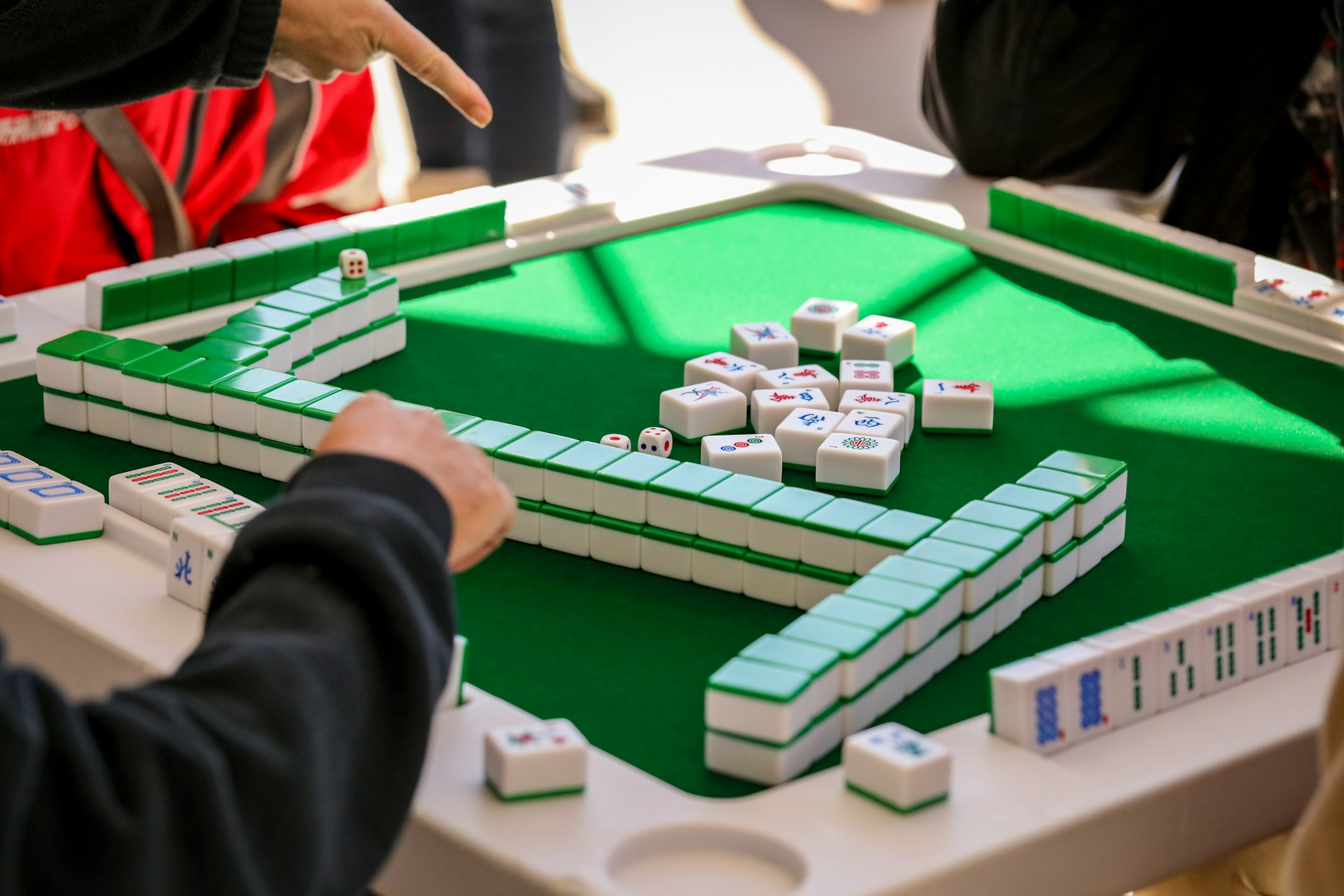
麻将 (Májiàng, Mahjong) — a tile-based game played by four players. Ancient sports like Chinese chess, Go, and traditional games maintain dedicated following. Mahjong is as much a social institution as a game — the complete mahjong vocabulary guide covers everything you'd need to actually sit at a table.
Key vocabulary:
| Chinese | Pinyin | Meaning |
|---|---|---|
| 棋 | qí | chess / board game |
| 围棋 | wéiqí | Go |
| 象棋 | xiàngqí | Chinese chess |
| 麻将 | májiàng | Mahjong |
| 下棋 | xià qí | to play chess / board games |
电子竞技 (Diànzǐ Jìngjì) — Esports: China's Digital Sport
With its youthful population and rapidly developing tech industry, China is the perfect breeding ground for esports. Events like the League of Legends World Championship and players like Uzi have gained international fame, putting China at the forefront of this digital sporting revolution.
China's esports industry is enormous — multiple professional leagues, dedicated arenas, and players who are celebrities with the same cultural profile as professional athletes in other sports. The Chinese government has officially recognised esports as a profession, and Chinese university sports departments now offer esports scholarships.
Honor of Kings (王者荣耀, Wángzhě Róngyào) is China's most-played mobile game and one of the highest-grossing games globally. League of Legends, PUBG, and Dota 2 all have massive Chinese professional scenes.
Key vocabulary:
| Chinese | Pinyin | Meaning |
|---|---|---|
| 电子竞技 | diànzǐ jìngjì | esports |
| 游戏 | yóuxì | game |
| 玩家 | wánjiā | player / gamer |
| 职业选手 | zhíyè xuǎnshǒu | professional player |
| 王者荣耀 | Wángzhě Róngyào | Honor of Kings |
Talking About Sport in Chinese: Useful Phrases
| Chinese | Pinyin | Meaning |
|---|---|---|
| 你喜欢什么运动? | nǐ xǐhuān shénme yùndòng? | What sports do you like? |
| 我喜欢打篮球。 | wǒ xǐhuān dǎ lánqiú. | I like playing basketball. |
| 你会打乒乓球吗? | nǐ huì dǎ pīngpāngqiú ma? | Can you play table tennis? |
| 我们去踢球吧! | wǒmen qù tī qiú ba! | Let's go play football! |
| 你支持哪支球队? | nǐ zhīchí nǎ zhī qiúduì? | Which team do you support? |
| 昨天的比赛怎么样? | zuótiān de bǐsài zěnme yàng? | How was yesterday's match? |
| 我每天早上跑步。 | wǒ měitiān zǎoshang pǎobù. | I run every morning. |
| 太极拳对健康很好。 | tàijíquán duì jiànkāng hěn hǎo. | Tai Chi is very good for health. |
How Sports Vocabulary Connects to Your Chinese Study
Sports vocabulary isn't isolated from everyday Chinese — it's one of the most practically useful topic areas because it's a reliable conversation opener in any Chinese social context.
The verb 打 (dǎ) that you use for basketball also appears in 打电话 (dǎ diànhuà, make a phone call), 打扫 (dǎsǎo, clean/sweep), and 打折 (dǎzhé, give a discount). The 球 (qiú, ball) in 篮球 appears in dozens of sport names. Learning these words in context gives you a vocabulary hook that extends into everyday language.
All the sports vocabulary in this article connects to the New HSK vocabulary lists — 运动, 打, 踢, 球, 比赛 all appear in HSK 1–2. For building this vocabulary systematically with spaced repetition, the Anki guide for Chinese learners covers how to set up an efficient review system.
If you want to practise this vocabulary in conversation — using sports as a discussion topic in actual Mandarin — the Mandarin Zest Club runs thematic group study sessions where topics like sport, culture, and everyday life provide the content for speaking practice. It's the difference between studying words and actually using them.
Quick Reference: Sports Vocabulary Summary
| Sport | Chinese | Pinyin | Verb to use |
|---|---|---|---|
| Table tennis | 乒乓球 | pīngpāngqiú | 打 |
| Basketball | 篮球 | lánqiú | 打 |
| Football/Soccer | 足球 | zúqiú | 踢 |
| Badminton | 羽毛球 | yǔmáoqiú | 打 |
| Tennis | 网球 | wǎngqiú | 打 |
| Swimming | 游泳 | yóuyǒng | 游 |
| Running | 跑步 | pǎobù | 跑 |
| Cycling | 骑自行车 | qí zìxíngchē | 骑 |
| Tai Chi | 太极拳 | tàijíquán | 打/练 |
| Martial arts | 武术 | wǔshù | 练/打 |
| Go | 围棋 | wéiqí | 下 |
| Chinese chess | 象棋 | xiàngqí | 下 |
| Mahjong | 麻将 | májiàng | 打 |
| Dragon boat racing | 赛龙舟 | sài lóngzhōu | 赛/划 |
| Esports | 电子竞技 | diànzǐ jìngjì | 打 |
| Square dancing | 广场舞 | guǎngchǎng wǔ | 跳 |
Our Materials
Check out our dedicated materials, designed by teachers for learners.