
China has one of the oldest drinking cultures on earth. Archaeologists have found evidence of fermented rice beverages dating back 9,000 years. Poets wrote about wine with the same reverence they gave to mountains and rivers. And today, in offices, restaurants, and family kitchens across the country, alcohol remains one of the primary vehicles for building relationships, expressing hospitality, and navigating the complex social landscape of Chinese life.
This guide covers the drinks themselves — what they are, how they taste, what they're made from — but also the things most articles skip: what to say, what the customs are, and what happens when someone fills your glass with something that smells like jet fuel and looks at you expectantly.
First: The Word for Alcohol
酒 (jiǔ) is the Chinese word for alcohol — or more specifically, for any alcoholic beverage. It appears in almost every drink name: 米酒, 白酒, 黄酒, 啤酒. Once you know 酒, you can spot a drink name in Chinese text immediately.
This matters for learners because recognising these characters in context — on a menu, on a bottle, on a restaurant sign — is exactly the kind of practical reading skill the HSK 1–2 vocabulary builds from the ground up.
1. 白酒 (báijiǔ) — Baijiu
Alcohol content: 40–60%+ Base ingredient: Primarily sorghum; sometimes wheat, rice, or corn Flavour: Intensely strong, often described as medicinal, smoky, or almost petrol-like to the uninitiated
If there is one Chinese drink you need to know about, it is baijiu. 白酒 literally means "white liquor," and it is the most consumed spirit in the world by volume — more than vodka, whisky, and rum combined. China produces and drinks an extraordinary amount of it.
Most Westerners encounter baijiu for the first time at a business dinner in China, when a host pours a small glass and the room pivots expectantly. The experience is often described in terms ranging from "surprisingly complex" to "I thought something had gone wrong." The truth is somewhere in between: baijiu is genuinely difficult for palates trained on Western spirits, but it rewards patience. The most expensive varieties — the kind served at state banquets and senior business meetings — are extraordinarily refined.
The five aroma types: The industry classifies baijiu by fragrance profile.
Sauce aroma (酱香, jiàngxiāng): the most prestigious and complex. Named for its resemblance to fermented soy sauce. Moutai (茅台, Máotái) is the famous example — the spirit poured at diplomatic dinners and state banquets, a bottle of which can cost thousands of dollars.
Strong aroma (浓香, nóngxiāng): the most widely drunk in China. Rich, sweet, full-bodied. Wuliangye (五粮液) is the most recognisable brand.
Light aroma (清香, qīngxiāng): cleaner and more delicate. 二锅头 (Èrguōtóu) from Beijing falls here — a working-man's baijiu, inexpensive, reliable, and sold in small green bottles at convenience stores everywhere.
Rice aroma (米香, mǐxiāng): lighter and somewhat sweet, common in the south.
Mixed aroma (兼香, jiānxiāng): combinations of the above, sometimes across multiple fermentation styles.
A cultural note: Baijiu is inseparable from Chinese business culture. Being poured a glass is an act of hospitality; how you handle it matters. More on that in the drinking customs section below.
2. 黄酒 (huángjiǔ) — Huangjiu
Alcohol content: 8–20% Base ingredient: Rice, glutinous rice, or millet Flavour: Mellow, mildly sour, slightly sweet, earthy
黄酒 means "yellow wine," named for the amber colour that develops during brewing. Unlike baijiu, it's brewed rather than distilled, which keeps the alcohol content comparatively low and the flavour considerably more nuanced.
Shaoxing wine (绍兴酒, Shàoxīngjiǔ) from Zhejiang province is the most famous variety and the one most likely to appear in a Western kitchen — it's the wine used in countless Chinese cooking recipes for red-braised pork, drunken chicken, and lion's head meatballs. At the table, it's served warm, often in small ceramic cups, which brings out its depth.
Huangjiu is one of China's oldest beverages with a documented history of over 2,500 years. References to 黄酒 appear in classical poetry — it's the drink associated with scholars, artists, and the contemplative life. There's a warmth and approachability to it that baijiu often lacks for newcomers.
3. 米酒 (mǐjiǔ) — Rice Wine / Mijiu
Alcohol content: 5–15% Base ingredient: Fermented rice Flavour: Mildly sweet, slightly tangy, very drinkable
米 means rice. 酒 means alcohol. Rice wine — simple, accurate, exactly what it is. Mǐjiǔ is one of the most ancient fermented beverages in Chinese history, appearing in historical records going back over 4,000 years.
It's the most approachable drink on this list, mild enough that it's served at family dinners, offered to guests who don't usually drink, and used in cooking across southern Chinese cuisine. In some regions it's believed to have health properties and is given to women after childbirth as a warming, nourishing drink — a tradition that persists in Chinese diaspora communities worldwide.
Don't confuse mǐjiǔ with Japanese sake, though they share a production method. The flavour profiles diverge, and the cultural contexts are entirely different.
4. 马奶酒 (mǎnǎijiǔ) — Kumis
Alcohol content: 1–16% Base ingredient: Fermented mare's milk Flavour: Mildly sour, creamy, slightly tangy
马奶酒 literally means "horse milk wine." It's made by fermenting mare's milk and is a traditional drink of the Mongolian people of Inner Mongolia — an ethnic minority with their own food culture, pastoral lifestyle, and drinking traditions that sit quite separately from Han Chinese culture.
Kumis is genuinely unlike anything else on this list. It's fermented rather than distilled, somewhat similar to a sour, alcoholic kefir, and drunk from bowls rather than glasses. It's not something most visitors to mainland China will encounter unless they specifically travel to Inner Mongolia.
The character for horse, 马 (mǎ), is one of the most culturally rich in Chinese — it's the same 马 in 马到成功 (immediate success), 马年 (Year of the Horse in the Chinese zodiac), and countless other expressions.
5. 桂花酒 (guìhuājiǔ) — Osmanthus Wine
Alcohol content: 10–15% Base ingredient: Weak baijiu or rice wine, infused with osmanthus flowers Flavour: Gently sweet, intensely floral, aromatic
桂花 (guìhuā) is the osmanthus flower — one of the ten traditional flowers of China, associated with the Moon Festival and with the classical imagery of autumn. The scent of osmanthus is considered one of the most beautiful in the natural world in Chinese aesthetic tradition, and 桂花酒 carries that scent into drinkable form.
It's a wine that comes with context: it's referenced in classical poetry, associated with the moon palace in Chinese mythology (where a solitary figure called Wu Gang chops endlessly at an osmanthus tree), and drunk during the Mid-Autumn Festival in certain regional traditions. This is the kind of drink that carries philosophy and cultural memory in a way that very few Western alcoholic beverages do.
6. 啤酒 (píjiǔ) — Beer
Alcohol content: 3–5% Base ingredient: Barley, hops, water Flavour: Light, refreshing, mildly bitter
啤 (pí) is a phonetic borrowing — it approximates the sound of the English/German "beer." 酒 is still there at the end. The result: a sensible, transparent name for a drink that arrived in China relatively recently (the late 19th century, introduced via German colonial presence in Qingdao).
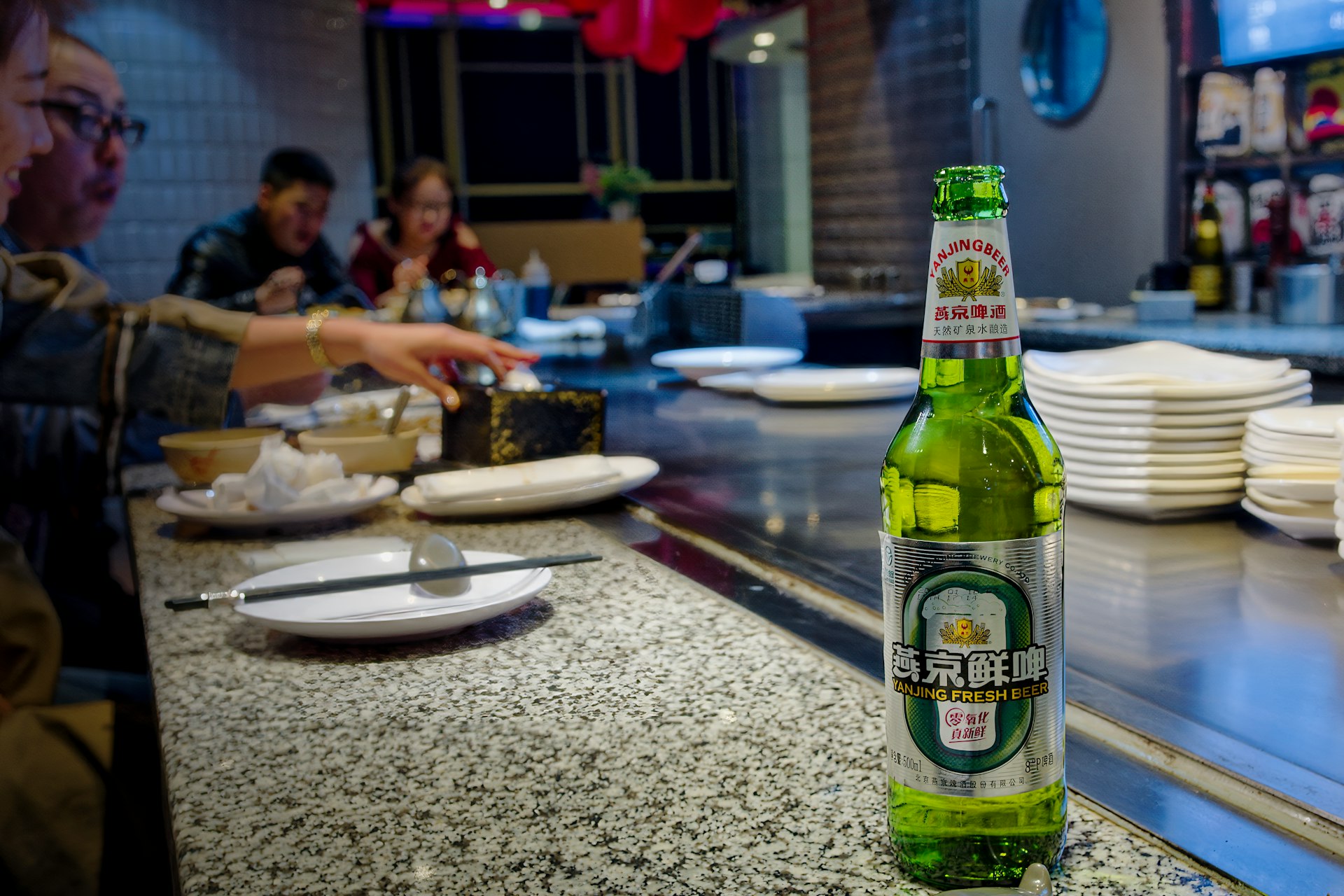
Tsingtao (青岛啤酒, Qīngdǎo píjiǔ) is the brand most people outside China will recognise — still brewed in Qingdao with a German brewing heritage that shows in the clean, European lager style. Inside China, Snow Beer (雪花, Xuěhuā) is actually the biggest brand by volume. Yanjing (燕京) is Beijing's local beer. Most Chinese beer is designed to be approachable and refreshing rather than complex — ideal for washing down intensely flavoured food.
At a Chinese dinner table, beer is often the safe middle ground that allows everyone to participate in toasting without the intensity of a baijiu round. Ordering a 大瓶啤酒 (dà píng píjiǔ, "big bottle of beer") at a restaurant is an entirely normal thing to do and one of the more useful phrases for eating out in China.
7. 葡萄酒 (pútáojiǔ) — Wine
Alcohol content: 11–15% Base ingredient: Fermented grapes Flavour: Varies widely
葡萄 (pútáo) means grapes. 葡萄酒 is therefore grape wine — as distinct from 米酒 (rice wine) or 黄酒, which are sometimes called wine in English but are technically something different.
Western-style wine has grown enormously in popularity in China over the past two decades, particularly among urban professionals and the emerging middle class. China now has its own wine regions — Ningxia in the northwest is producing wines that have won international awards, and the Yantai region in Shandong has a long established wine history.
Red wine (红酒, hóngjiǔ, or more formally 红葡萄酒) is considerably more popular than white in China. This is partly cultural — red is auspicious — and partly because 红 (hóng) as a colour carries so much positive meaning in Chinese culture that a red drink feels appropriate for celebratory contexts.
Join the Mandarin Zest Club
Join the Mandarin Zest Club and become part of a welcoming international community of Chinese learners from all over the world. Practice together, stay motivated, and connect with people who share your goals for learning Mandarin.
Chinese Drinking Customs: What You Actually Need to Know
This is entirely absent from the That's Mandarin article, and it's arguably more important than the drinks themselves.
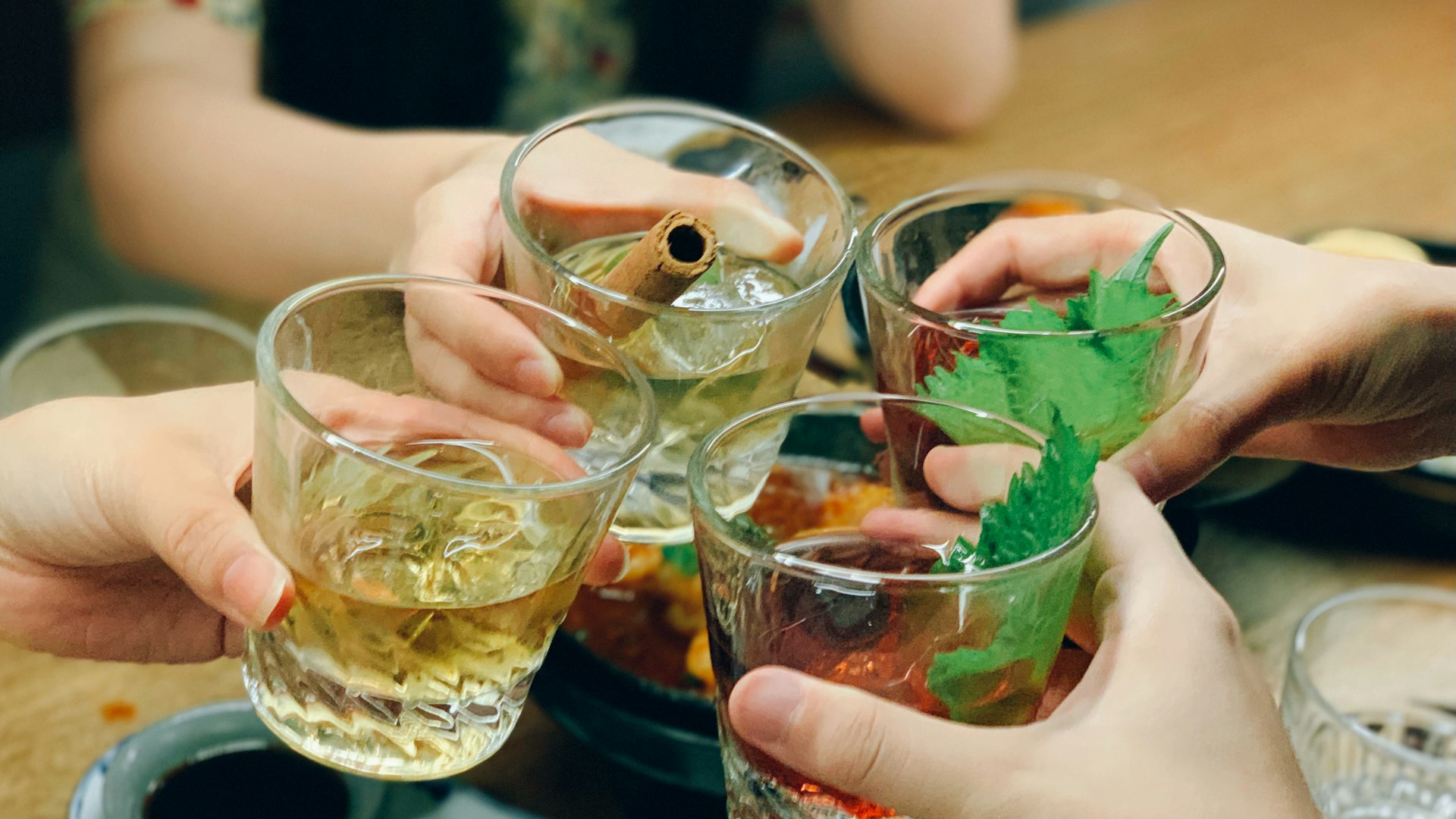
干杯 (gānbēi) means "dry cup" — the toast. When someone says 干杯, the expectation is that you drain your glass. This is not negotiable at business dinners hosted by senior Chinese colleagues. The protocol is: the most senior person present initiates the first toast, then toasts flow around the table in various combinations. Lower-ranking people toast upward; senior people may decline or toast everyone together.
劝酒 (quànjiǔ) is the act of pressing someone to drink — actively urging a guest or colleague to have more. This is considered hospitable behaviour, not harassment, and it's deeply embedded in Chinese drinking culture. Refusing repeatedly without a good excuse can read as social awkwardness or ingratitude.
How to decline gracefully: Say 我不能喝酒 (wǒ bù néng hē jiǔ, "I can't drink alcohol") with a health reason attached (I'm on medication, I'm driving, I have a condition) — this is universally accepted and loses no face for anyone. Simply saying "I don't want to" is harder to navigate gracefully. Medical reasons are unimpeachable.
随意 (suíyì) is your friend. It means "as you like" or "feel free" — said when you don't want to pressure someone to finish their glass. Using it shows cultural awareness.
The glass level matters: When pouring for someone else, fill to the brim. When pouring for yourself at a formal dinner, pour modestly. These small signals communicate respect and awareness.
Drinking Vocabulary
| Chinese | Pinyin | Meaning |
|---|---|---|
| 酒 | jiǔ | alcohol / any alcoholic drink |
| 白酒 | báijiǔ | baijiu / Chinese spirits |
| 黄酒 | huángjiǔ | huangjiu / yellow wine |
| 米酒 | mǐjiǔ | rice wine |
| 啤酒 | píjiǔ | beer |
| 葡萄酒 | pútáojiǔ | grape wine |
| 红酒 | hóngjiǔ | red wine (informal) |
| 干杯 | gānbēi | cheers / bottoms up |
| 随意 | suíyì | as you like / no need to finish |
| 我不能喝酒 | wǒ bù néng hē jiǔ | I can't drink alcohol |
| 再来一杯 | zài lái yī bēi | one more glass |
| 我够了 | wǒ gòu le | I've had enough |
| 这个酒很好喝 | zhège jiǔ hěn hǎohē | this drink is delicious |
| 劝酒 | quànjiǔ | to pressure someone to drink |
| 茅台 | Máotái | Maotai (premium baijiu brand) |
| 二锅头 | Èrguōtóu | Erguotou (Beijing baijiu) |
A Word About Tea
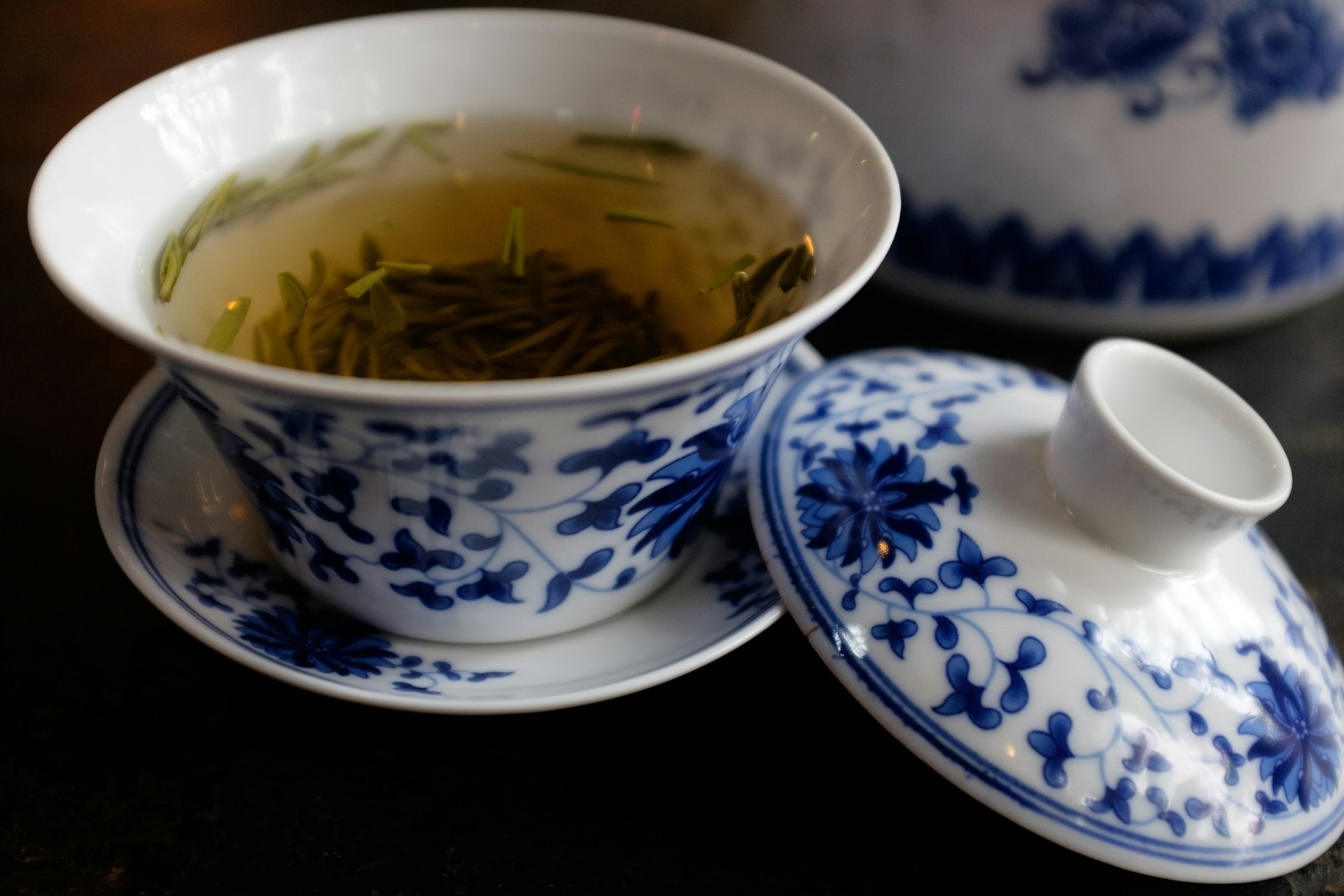
No guide to Chinese beverages is complete without acknowledging 茶 (chá). Tea is not alcohol, but it's woven into Chinese social and cultural life more deeply than any of the drinks above. It predates them all in cultural significance, and Chinese tea culture — the ceremony, the varieties, the regional traditions — is its own enormous topic.
The relevant point here: at a Chinese dinner where you don't drink alcohol, tea is the dignified alternative. Asking for 茶 rather than 酒 at a business meal is perfectly acceptable. The host may still press you with a baijiu, but holding a cup of tea is a social prop that makes navigating the table considerably easier.
FAQ
Baijiu is China's national spirit, distilled from sorghum and other grains to an alcohol content of 40–60%. The fermentation process uses a solid-state method with a specific mould culture called qu (曲, qū), which produces a complex range of flavour compounds — some of which are familiar to Western palates, many of which aren't. The petrol-like quality some people notice in cheaper varieties comes from specific esters produced during fermentation. Higher-end sauce-aroma baijiu (like Moutai) has significantly more complexity and is considerably less harsh, though it remains an acquired taste.
It requires careful handling, but it's not rude if done correctly. A medical or health reason is the most graceful exit — "I'm on medication" or "I have a condition that means I can't drink" will be respected immediately. Simply not wanting to drink can be navigated with 随意 and keeping your glass topped up with tea or juice. Reading the social dynamics of the specific situation matters — a formal banquet demands more caution than a casual dinner with close colleagues.
Premium Moutai (飞天茅台, the most coveted variety) costs between 1,500 and 2,000 RMB per bottle on the legitimate market — around $200–280 USD — and a great deal more on the secondary market where supply is constrained. It's used as a gift, an investment, and a status signal. Receiving a bottle of Moutai at a business meeting is a significant gesture.