If you’ve ever been to Taiwan, then I can guarantee that you’ve stumbled upon the island’s most famous pastry and beloved souvenir - pineapple cake (fèng lí sū, 凤梨酥 and 鳳梨酥 in traditional). They’re not hard to miss and can be found in bakeries, airports, train stations, supermarkets, and even Taipei 101! And if you somehow managed to miss them, you probably smelt them somewhere in Taiwan.
These treats might be on your gift list, but they’re also a symbol of Taiwanese food culture and good luck.
So, what are these golden pineapple pastries, and why is Taiwan so obsessed with them?
What Are Taiwanese Pineapple Cakes?
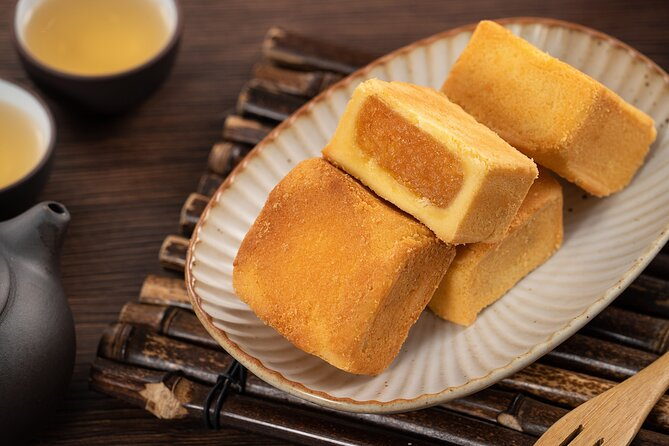
Pineapple cakes, although not as famous globally as boba tea (The Story of Bubble Tea: How The Taiwanese Drink Conquered The World), are a Taiwanese staple. They aren’t your usual soft, spongy cake; instead, they’re a buttery, crumbly treat, stuffed with a sweet, jam-like pineapple filling (the literal translation of their name is 凤梨 pineapple and 酥 flaky/crumbly pastry or shortbread). The cakes are often sold in gift boxes containing several individually wrapped servings.
To make these delicious treats, flour, eggs, butter and sugar are used to create the dough, which is then rolled out and pressed into square moulds (you can sometimes find round ones), where the pineapple jam is added before being baked in an oven.
Other varieties of pineapple cakes that you may be able to find can include fruit, nuts and salted egg yolk fillings.
The Rise of Pineapple Cakes and Their History
Pineapples were first introduced to Taiwan by Portuguese sailors who brought the fruit over during the sixteenth century, and the island’s tropical climate made it a perfect location for growing the fruit.
During Taiwan’s Japanese colonial rule (1895-1945), the Japanese government wanted to develop the pineapple industry, and many farms were established, but exportation was mainly limited to Japan and the Japanese-controlled Manchuria in Northeastern China. Following the end of Japanese colonialism, Taiwan had an abundance of pineapples, and chefs started experimenting with new recipes incorporating the tropical fruit, which gave way to the pineapple cake.
The rise in popularity of the pastry has led to the growth of high-end premium pineapple cakes, which can be found at award-winning bakeries and SOGO Department Stores. These luxury pineapple cakes differ from typical supermarket boxes in that they use no pesticides or preservatives in farming the fruit. Some brands even source their pineapples from Taiwanese Aboriginal farmers located in the mountains.
The Meaning Behind Pineapples in Taiwanese Culture
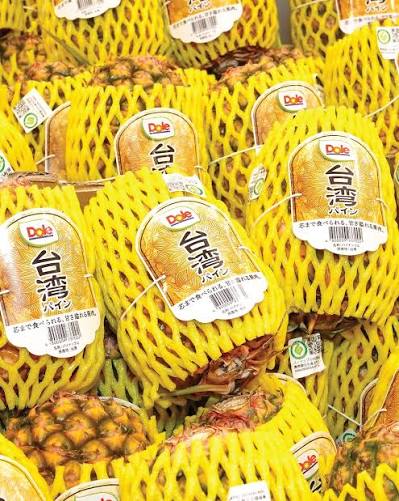
The word "pineapple” in Taiwanese Hokkien is ông-lâi (王梨), which sounds similar to the phrase “prosperity is coming”, making the fruit a symbol of good fortune and a popular gift. You can sometimes find pineapples in business settings where they are thought to attract wealth and customers.
Originally, pineapple cakes were much larger and were given as special wedding presents or were reserved for wealthy individuals and were more convenient than the actual fruit due to their shelf life. As the popularity and production of pineapples grew, they became more common and shrunk down in size. They are now so popular in Taiwan that they can even surpass the sales of mooncakes during the Mid-Autumn Festival!
People don’t typically buy pineapple cakes for themselves to eat; instead, they are gifts to family and friends or for special occasions. They are cakes that are individually wrapped and placed in pretty boxes, making them ideal for Taiwan’s gift-giving culture (bànshǒulǐ, 伴手礼, giving gifts from overseas - particularly a local speciality).
Fact: Pineapple cakes are supposed to bring business, but some workers/industries purposely don’t eat them, as certain professionals like firefighters, surgeons and rescue workers believe they bring bad luck and don’t want more customers!
Where to Find Pineapple Cakes in Taiwan
You can find pineapple cakes in most supermarkets, train stations, airports and bakeries. However, if you want to splurge on some high-end cakes, then you can find them in the basement of luxury department stores or at bespoke bakeries.
Premium pineapple cakes can be found in every city in Taiwan, but popular shops are SunnyHills and Chia Te Bakery Co.
You can also visit Taiwan’s very first pastry museum, Kuo Yuan Ye Museum of Cake and Pastry in Taipei, where you can bake the cakes, wrap them up for yourself and take them home. They offer classes in multiple languages and even have a shop if you don’t fancy making them yourself.
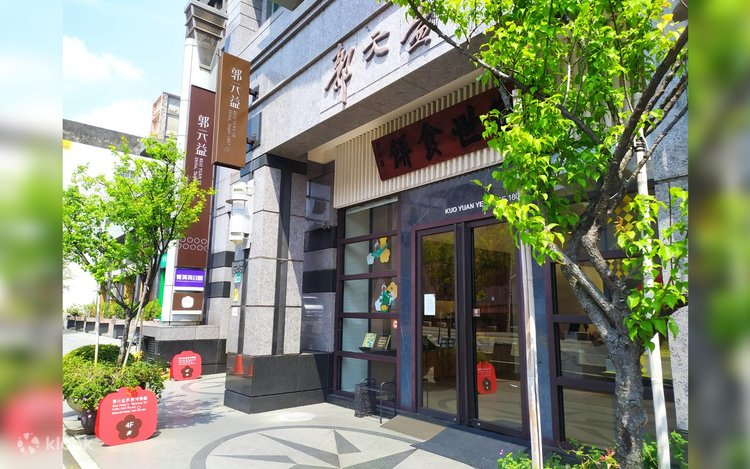
Kuo Yan Ye Museum of Cake and Pastry
No. 564, 4th floor, Wenlin Road, Shilin District, Taipei 11159
(Nearest stations are Shilin and Zhishan on the Tamsui-Xinyi Line (red).)
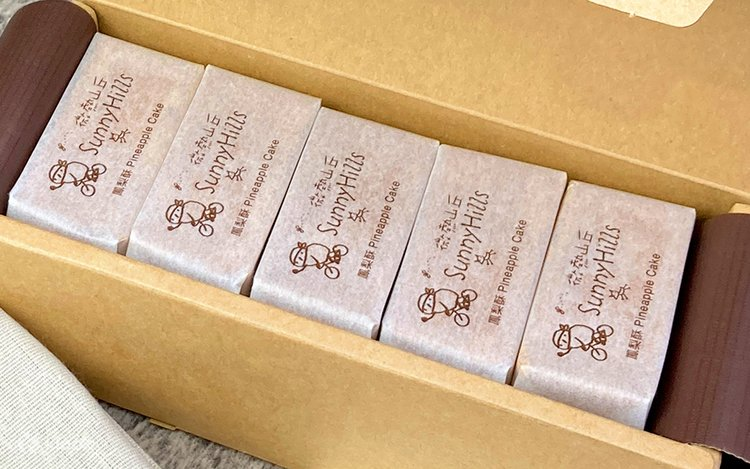
SunnyHills
105, Taiwan, Taipei City, Songshan District, Jieshou Village, Alley 4, Lane 36, Section 5, Minsheng E Rd, 1號1樓 (1st floor)
(SunnyHills offers a free welcome cake and cup of tea.)
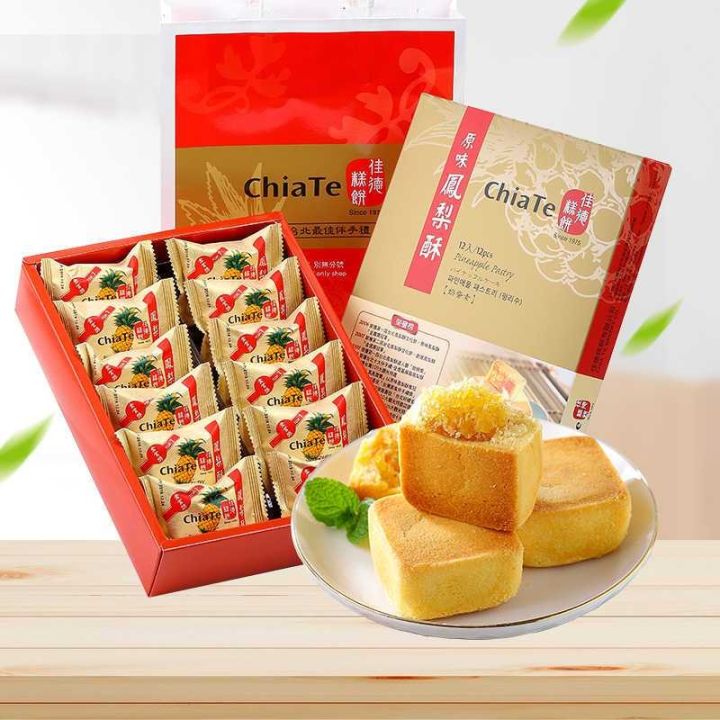
Chia Te Bakery Co.
No. 88號, Section 5, Nanjing E Rd, Jixiang Village, Songshan District, Taipei City, Taiwan 105
(Chia Te Bakery Co. has won multiple awards and received government endorsement. They can also be found in supermarkets, some convenience stores and HSR stations if you don’t want to go out of your way to visit their shop.
You can also try the airport, local supermarkets, convenience stores (Seven Eleven, Family Mart and Hi-Life), tourist shops, and department stores!
Pineapple Cake Vocabulary
| Chinese | Pinyin | English |
|---|---|---|
| 凤梨酥 | Fènglísū | Pineapple cake |
| 手制 | Shǒuzhì | Handmade, to make by hand |
| 伴手礼 | Bànshǒulǐ | Souvenir/gift brought back from travels, commonly used in Taiwan |
| 面包店 | Miànbāodiàn | Bakery |
| 传统 | Chuántǒng | Taditional |
| 冬瓜 | Dōngguā | Winter melon |
| 包装 | Bāozhuāng | Packing |
| 带回家 | Dài huí jiā | Bring home |
| 甜点 | Tiándiǎn | Dessert |
| 酸 | Suān | Sour, tart |
Join the Mandarin Zest Club
Join the Mandarin Zest Club and become part of a welcoming international community of Chinese learners from all over the world. Practice together, stay motivated, and connect with people who share your goals for learning Mandarin.

Useful Phrases For Buying Pineapple Cake
If you’re planning to go to a shop and buy some, here are some helpful phrases to use.
| Chinese | Pinyin | English |
|---|---|---|
| 我想买一盒凤梨酥 | Wǒ xiǎng mǎi yì hé fènglí sū | I’d like to buy a box of pineapple cakes |
| 这个多少钱 | Zhège duōshǎo qián? | How much is this? |
| 我可以刷卡吗? | Wǒ kěyǐ shuākǎ ma? | Can I pay by card? |
| 我可以试吃吗? | Wǒ kěyǐ shìchī ma? | Can I try one? |
| 你有大盒的吗? | Nǐ yǒu dà hé de ma? | Do you have a big box? |
| 你有小盒的吗 | Nǐ yǒu xiǎo hé de ma? | Do you have a small box? |
If you’re interested in learning more about food, why not check out The Eight Great Cuisines of China?
FAQ
Traditionally, pineapple cakes are made using pineapple and winter melon, but some places use varying amounts, so they can differ between brands.
There isn’t a particular or cultural reason why they are square; they just make an easy and convenient shape for moulds and packaging.
To find a good pineapple cake, you should keep an eye out for a buttery pastry (not dry or hard), a good pastry-to-filling ratio (not overly stuffed or too little), and the proportion of pineapple (premium cakes use more pineapple than winter melon).
Don’t worry if you aren’t going to Taiwan; you can often find them at your local Chinese supermarket, or you could bake them!

Alice O'Connor
Alice is a UK-based writer and University of Leeds graduate in Asia Pacific Studies and Chinese. From her time living and studying abroad in Taipei she combines her studies with firsthand experiences to cover contemporary Chinese culture, trends, and Mandarin learning. Through her writing and storytelling, Alice helps readers connect with Chinese related topics.