China's culinary map is as vast and varied as its geography. While there are dozens of distinct regional cooking traditions, Chinese food scholars have long grouped eight of them together as the country's most influential and fully developed styles — known as the "Eight Great Cuisines" (八大菜系, Bā Dà Càixì).
The classification took shape gradually through the Qing dynasty and was formalized in the 20th century, but the traditions themselves stretch back centuries, shaped by local climate, geography, trade routes, and available ingredients.
In love with the Chinese food? Join us as we rate the Chinese food available in my hometown of Krakow, Poland:
Broadly, the eight cuisines fall into a few regional patterns: the coastal cuisines of Shandong and Guangdong lean on fresh seafood; Sichuan and Hunan in the inland southwest are built around chili heat; Jiangsu and Zhejiang, in the fertile Yangtze delta, favor delicate, seasonal, and visually refined cooking; and Anhui and Fujian draw heavily on wild ingredients foraged from mountains and coastlines.
1. Cantonese Cuisine (粤菜, Yuècài)
Region: Guangdong Province, Hong Kong, Macau
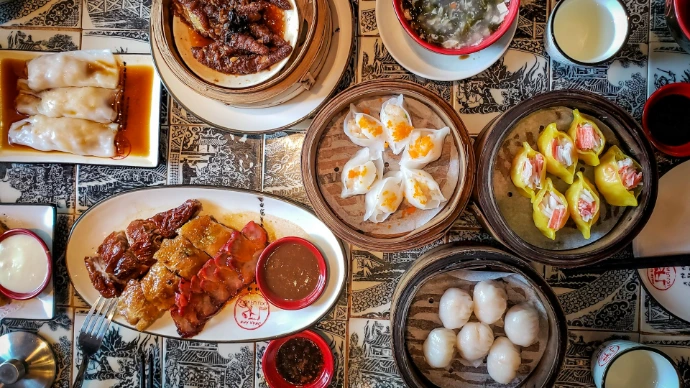
Cantonese food is the most internationally recognizable Chinese cuisine, thanks to generations of emigration from southern China. It favors quick cooking methods — steaming and stir-frying — that preserve the natural flavor and texture of ingredients, with light seasoning and only mild use of sauces.
Dim sum, roast meats (like char siu and roast goose), and delicate seafood dishes such as steamed fish with ginger and scallion are signature examples.
Cantonese cooks are also famous for their soups, often simmered for hours with herbs believed to have health benefits.
2. Sichuan Cuisine (川菜, Chuāncài)
Region: Sichuan Province and Chongqing
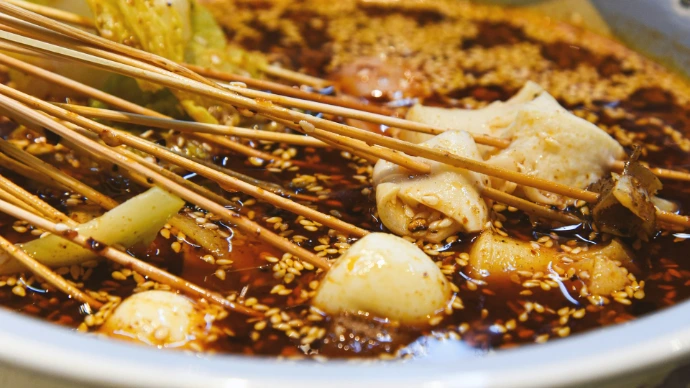
Sichuan cuisine is bold, aromatic, and famously spicy — but its real signature is málà (麻辣), the "numbing-spicy" sensation produced by combining chili with Sichuan peppercorn.
Garlic, ginger, fermented bean paste, and peanuts round out the flavor profile. Classic dishes include mapo tofu, kung pao chicken, and hotpot, which originated in Chongqing and has become one of China's most popular communal dining styles nationwide.
3. Jiangsu Cuisine (苏菜, Sūcài)
Region: Jiangsu Province and Shanghai
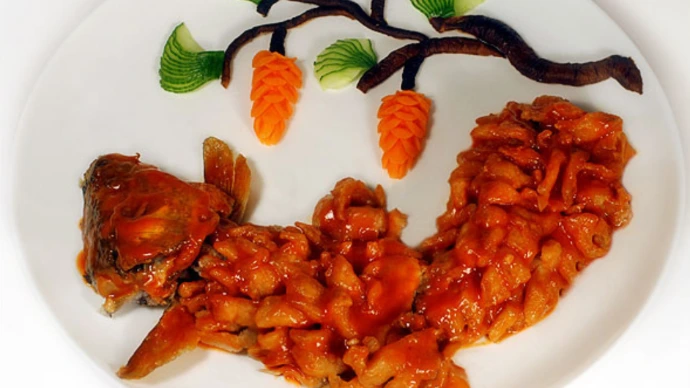
Jiangsu cuisine is known for its refinement — precise knife work, delicate flavor balancing, and elegant presentation, historically favored for imperial and government banquets.
Dishes tend to be fresh, only mildly salty or sweet, and often built around freshwater fish, seafood, and carefully clarified soups. Sweet and sour spare ribs and braised pork in soy sauce (hongshao rou-style preparations) are well-known examples.
4. Zhejiang Cuisine (浙菜, Zhècài)
Region: Zhejiang Province
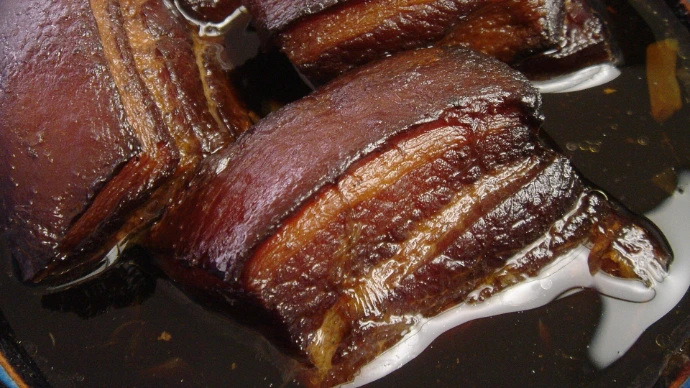
Bordering Jiangsu and sharing the Yangtze delta's abundance of fresh seafood and freshwater fish, Zhejiang cuisine is similar in spirit to Jiangsu's but less elaborate — favoring lighter, fresher, sometimes near-raw preparations that highlight seasonal ingredients.
Bamboo shoots are a common addition. Hangzhou's West Lake fish in vinegar sauce is one of the region's best-known dishes, while Ningbo's local cooking tends to be notably saltier than the rest of the province.
5. Fujian Cuisine (闽菜, Mǐncài)
Region: Fujian Province
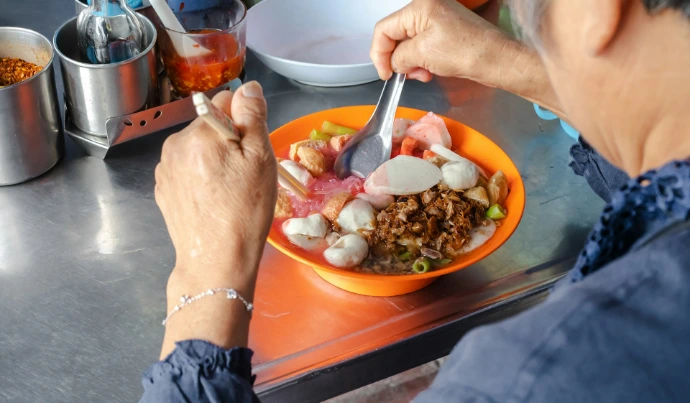
Fujian cuisine draws on both sea and mountain — seafood and soups feature heavily, seasoned with light, mildly sweet-and-sour flavors and unusual ingredients like fermented red rice wine sediment.
It's known for soups of striking complexity, including the elaborate "Buddha Jumps Over the Wall" (佛跳墙), a rich stew of seafood, poultry, and mountain delicacies simmered together.
6. Hunan Cuisine (湘菜, Xiāngcài)
Region: Hunan Province

Hunan food is, if anything, spicier than Sichuan — but without the numbing peppercorn, so the heat comes through more directly.
It relies on sautéing, stir-frying, steaming, and smoking, and draws on the region's rich agricultural output of vegetables and herbs. Chairman Mao's home province is famous for dishes like Mao's braised pork and smoked, cured meats.
7. Anhui Cuisine (徽菜, Huīcài)
Region: Anhui Province
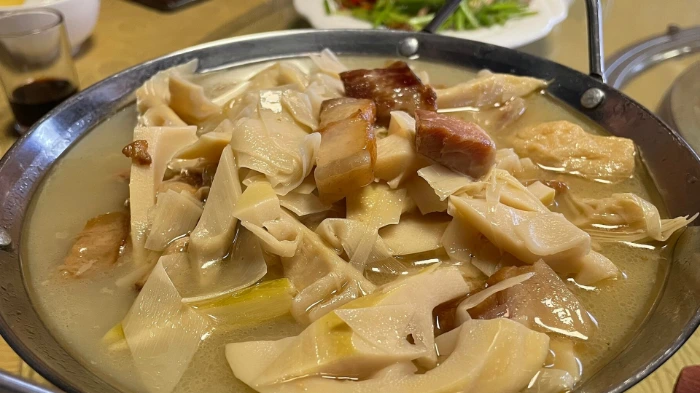
Anhui cuisine is rustic and mountain-driven, built around wild herbs, mushrooms, and game gathered from areas like the Yellow Mountains.
Stewing and braising, often with generous use of oil, are common techniques, and some dishes carry a subtle sweetness from added sugar. It's sometimes described as hearty peasant cooking elevated with unusual wild ingredients.
8. Shandong Cuisine (鲁菜, Lǔcài)
Region: Shandong Province
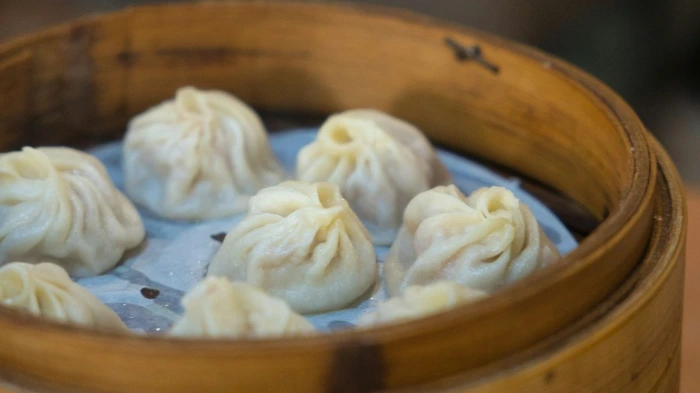
Shandong cuisine is considered the oldest of the eight and the foundation for much of northern Chinese cooking. With a long coastline, seafood is central, typically braised or prepared simply to preserve its natural flavor, with a notable use of vinegar and salt.
Unlike the rice-based cuisines of the south, Shandong food relies more heavily on wheat — noodles, dumplings, and buns are dietary staples here.
Here's a vocabulary table related to the Eight Great Cuisines to practice your Chinese:
| Chinese | Pinyin | English |
|---|---|---|
| 菜系 | càixì | culinary tradition / cuisine system |
| 八大菜系 | bā dà càixì | the Eight Great Cuisines |
| 粤菜 | Yuècài | Cantonese cuisine |
| 川菜 | Chuāncài | Sichuan cuisine |
| 苏菜 | Sūcài | Jiangsu cuisine |
| 浙菜 | Zhècài | Zhejiang cuisine |
| 闽菜 | Mǐncài | Fujian cuisine |
| 湘菜 | Xiāngcài | Hunan cuisine |
| 徽菜 | Huīcài | Anhui cuisine |
| 鲁菜 | Lǔcài | Shandong cuisine |
| 麻辣 | málà | numbing-spicy (chili + Sichuan peppercorn) |
| 花椒 | huājiāo | Sichuan peppercorn |
| 辣椒 | làjiāo | chili pepper |
| 清淡 | qīngdàn | light / mild (flavor) |
| 咸 | xián | salty |
| 甜 | tián | sweet |
| 酸 | suān | sour |
| 鲜 | xiān | fresh / umami |
| 炒 | chǎo | to stir-fry |
| 蒸 | zhēng | to steam |
| 炖 | dùn | to stew |
| 红烧 | hóngshāo | red-braising (soy-based braise) |
| 烤 | kǎo | to roast / grill |
| 火锅 | huǒguō | hotpot |
| 点心 | diǎnxīn | dim sum / snacks |
| 海鲜 | hǎixiān | seafood |
| 食材 | shícái | ingredients |
| 烹饪 | pēngrèn | cooking / culinary arts |
| 风味 | fēngwèi | (regional) flavor / style |
| 地方特色 | dìfāng tèsè | local specialty/characteristic |
The best Chinese materials!
Chinese doesn’t have to be complicated
with the right tools and structure, it actually makes sense.