Most articles about the "hardest Chinese characters" list a bunch of ancient characters nobody has used in two thousand years, call them impossibly complex, and leave you no wiser about the actual writing system. This one is different.
Yes, the extreme curiosities are here — the 64-stroke monsters, the noodle character that can't be typed on a computer, the ancient talisman with 172 strokes. But this article also covers the characters that are genuinely hard for learners right now, in HSK vocabulary, in everyday text. And for each one, you'll understand why it's complex and how to approach it — because "this character has 36 strokes, good luck" isn't actually useful.
Why Do Some Characters Have So Many Strokes?
Before the list, the mechanism — because it makes everything else make sense.
Chinese characters are not random shapes. Almost all of them follow one of a few structural patterns, and understanding the patterns is what separates learners who find characters manageable from those who find them overwhelming.
Semantic compounds combine meaning-carrying parts. 明 (míng, bright) = 日 (sun) + 月 (moon). 森 (sēn, forest) = 木 + 木 + 木 (three trees). The components tell you the meaning.
Phonetic-semantic compounds combine a meaning hint (radical) with a pronunciation hint (phonetic component). 妈 (mā, mother) = 女 (woman radical, semantic) + 马 (mǎ, horse, phonetic hint). About 80–90% of all Chinese characters follow this structure.
Quadruplicated characters are simply the same component written four times. These produce most of the extreme stroke counts on this list, and almost all of them are archaic — which is why the stroke count is so high.
Understanding how characters are built from radicals and components is the single most useful thing you can do before approaching complex characters. The 214 Chinese radicals appear across thousands of characters — once you know them, even intimidating characters become decomposable.
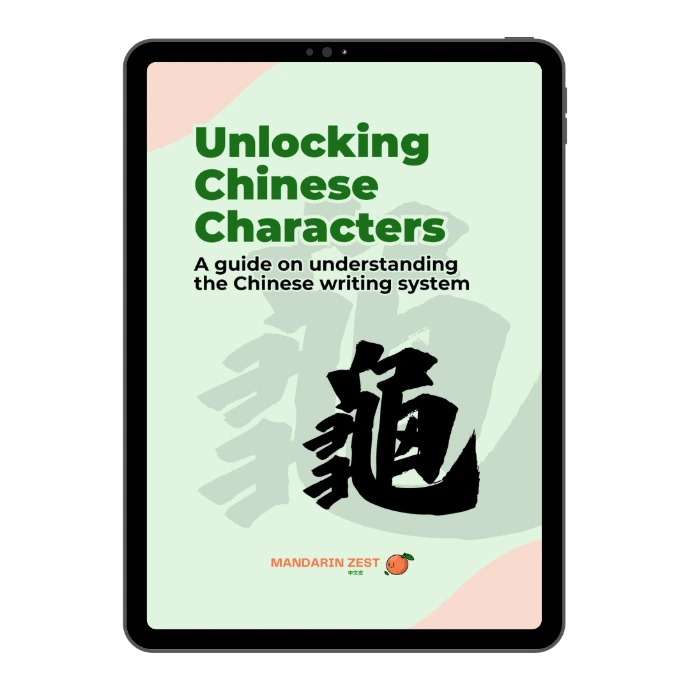
Learn Chinese Characters the right way!
Chinese characters are often seen as one of the most intimidating parts of learning Mandarin. This guide was created to change that.
Part 1: The Record Holders
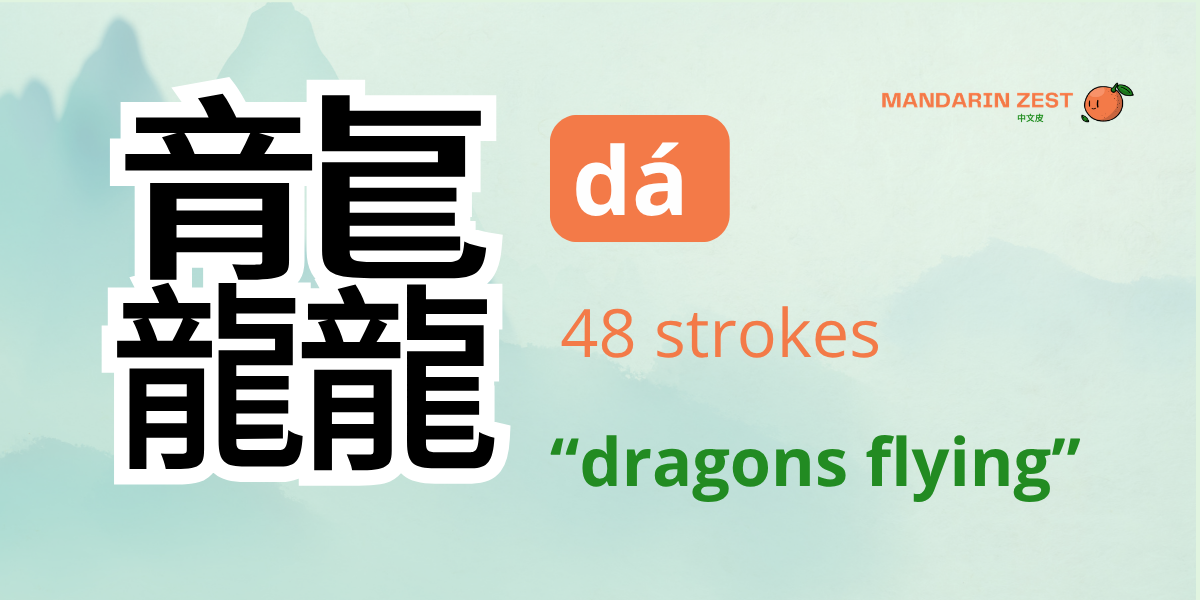
龘 (dá) — 48 strokes
Three instances of 龍, the traditional character for dragon. According to the Chinese Wikipedia entry, 龘 has 48 strokes and is the most stroke-heavy character in the Big5 encoding standard — making it the most stroke-heavy character in most standard Traditional Chinese dictionaries.
It means "dragons flying." It was used as the centrepiece of the 2024 CCTV Spring Festival Gala, whose theme was 龍行龘龘,欣欣家國 — "dragons soaring, the nation thriving." Far from being an archaic curiosity, 龘 had a significant moment of national visibility as recently as last year.
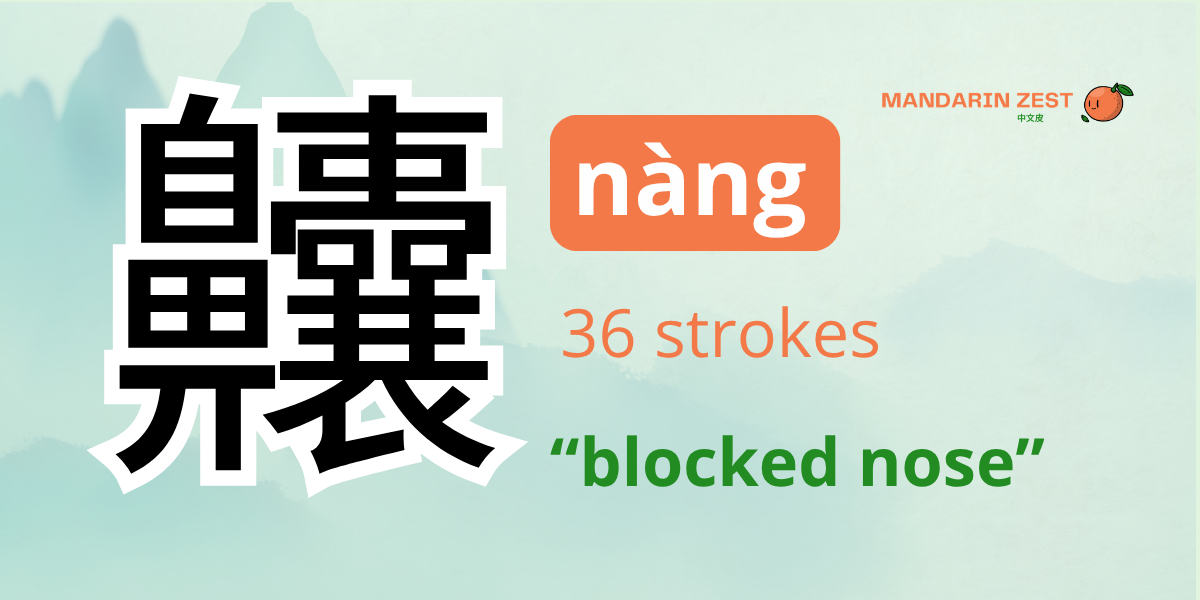
齉 (nàng) — 36 strokes
The most complex character in the Table of General Standard Chinese Characters — meaning it is part of modern standard Chinese, not a historical relic. It means "blocked nose" or "the nasal quality of speech when you have a cold."
The structure: 鼻 (bí, nose) appears on both sides, with characters for mouths and speaking in the centre. A character about nasal speech built from the character for nose surrounding the characters for mouths and speaking. The logic holds, as it almost always does.
Even most educated native speakers do not know this character — but it is real, in use, and its structure is entirely logical.
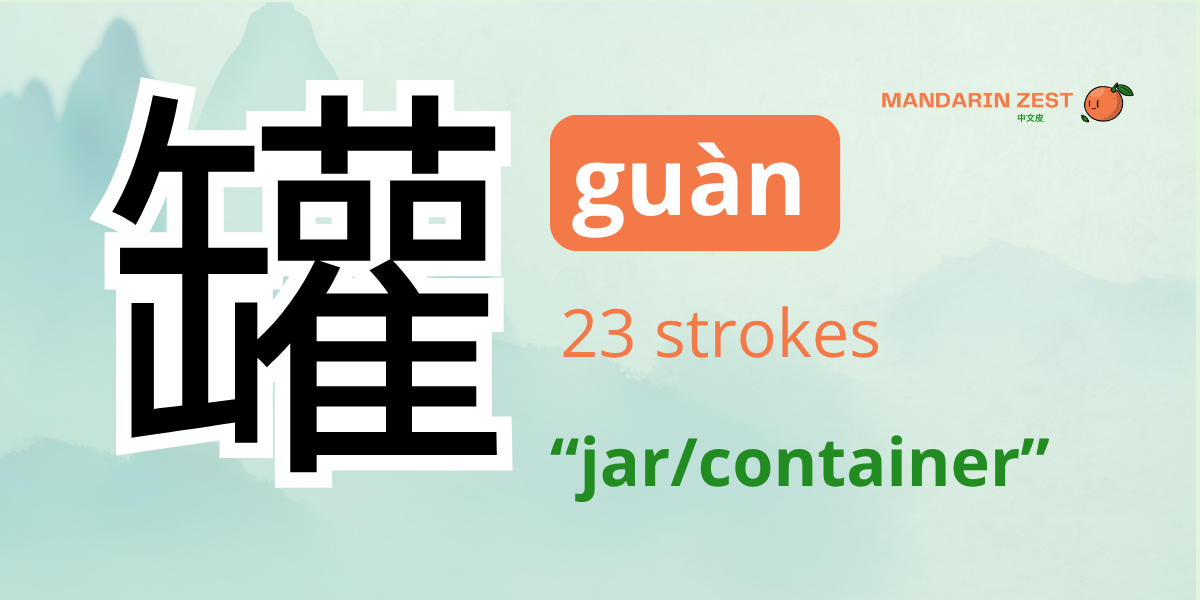
罐 (guàn) — 23 strokes
The most stroke-heavy character on the HSK vocabulary lists, appearing at HSK 6. Worth knowing in practice: 罐头 (guàntou, canned food) and 罐子 (guànzi, jar/container) appear in real modern usage. If you reach HSK 6, you will encounter it.
Part 2: The Famous Impostor — Biáng
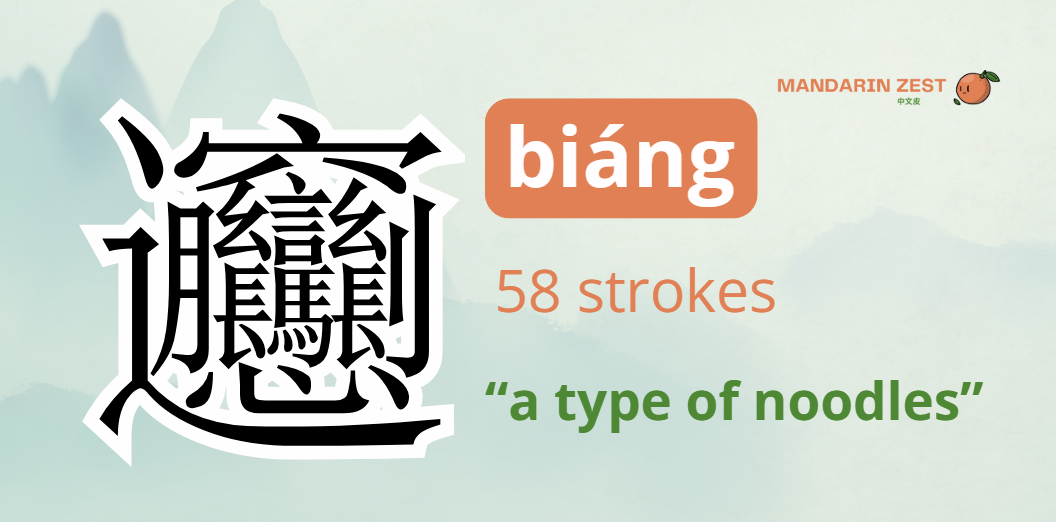
Biáng deserves its own section. It's the most famous complex Chinese character, and it's fascinating for reasons that go beyond its stroke count.
Biáng (42 strokes Simplified / 58 strokes Traditional) is used in one word: biángbiáng面 (biángbiáng miàn), the wide, hand-pulled belt noodles from Shaanxi province in northwestern China. The character is so complex that:
- It cannot be encoded in standard Unicode — you literally cannot type it on most computers
- Its stroke count is disputed: sources say 42, 57, 58, or 62 strokes for the Simplified version
- Even the Traditional version used on restaurant menus shows variation
- The word biángbiáng itself means the character doubled — so the full noodle name technically has 84–124 strokes
The character contains, among other components: sun, moon, knife, bow, horse, the character for speech, the character for return, and the walking radical. There's a famous mnemonic rhyme that schoolchildren in Shaanxi learn to memorise it — a poem that describes each component in sequence as a kind of story.
Whether biáng was invented by a Shaanxi noodle restaurant owner as marketing genius or has genuine historical roots is genuinely contested. What's certain is that it's the most famous character most Chinese people cannot write — and the one that demonstrates most vividly what the outer edges of Chinese complexity look like.
Part 3: Ancient and Traditional Chinese — The True Extreme
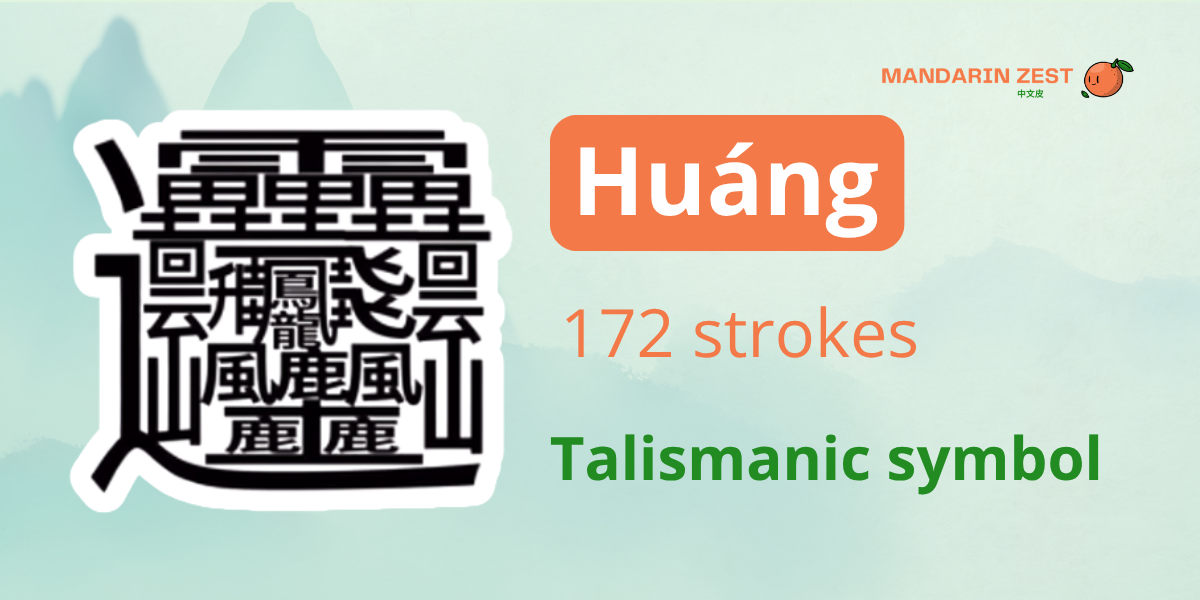
Huáng — 172 strokes
If biáng is the most famous complex character, Huáng is the most extreme. With 172 strokes, it holds the record for the most complex Chinese character ever documented.
Its origin and meaning are genuinely mysterious. Some scholars believe it was never a functional character at all — instead, an ancient Daoist talismanic symbol, the kind used in ritual magic to ward off evil or invoke spiritual forces. Ancient Daoist practitioners created elaborate written talismans by combining multiple characters in complex arrangements. Huáng may be one of these — not a word, but a spell.
The component breakdown reads like an incantation: start with 雨 (rain) at the top, then 田田田 (three fields), then 土土土土土 (five earths). Below that, 回 (return) and 云 (cloud) on the left and right, with 飞 (fly), 土 (earth), 鳳 (phoenix), and 龍 (dragon) between them. Then 風 (wind), 鹿 (deer), more winds, earths inside deers, and two 山 (mountains). All placed on the walking radical 辶.
You will never need to write this character. But knowing it exists says something important about the breadth of what Chinese characters can encompass.
Part 4: The Characters That Tell Stories
This is where it gets genuinely rewarding. Some of the most fascinating Chinese characters are complex not because of stroke count but because their components encode a story, a scene, or a philosophical insight. These are the characters that make learners stop mid-lesson and say "wait, that's what it means?"
矛盾 (máodùn) — Contradiction
矛 (máo) means spear. 盾 (dùn) means shield. Together they mean contradiction.
The story: a merchant selling spears boasted his weapons could pierce any shield. A merchant selling shields boasted his could stop any spear. Someone asked the obvious question — what happens when your invincible spear meets your impenetrable shield? The resulting logical impossibility became the Chinese word for contradiction. The etymology is the definition. You cannot forget this word once you know its origin.
竄 (cuàn) — To Flee
穴 (xué, hole or cave) at the top. 鼠 (shǔ, rat) at the bottom. A rat fleeing into a hole. The character doesn't just mean "to flee" — it shows you how. Visual, immediate, unforgettable.
囧 (jiǒng) — Embarrassment (Modern Internet Usage)
Strictly speaking, 囧 is an ancient character meaning "bright." In contemporary Chinese internet culture, it became one of the most beloved emoji-substitutes — the shape of the character, with its inner strokes, looks like a face with downturned eyes and an expression of mortification. It's used online to express embarrassment, awkwardness, or exasperated resignation. An ancient formal character repurposed as modern internet slang.
烦 (fán) — Irritated, Annoyed
火 (fire radical) + 页 (page/head). Fire in the head. The physical sensation of irritation made literal.
休 (xiū) — To Rest
人 (person radical) + 木 (tree). A person leaning against a tree. Rest. The entire meaning in two components, immediately visible.
家 (jiā) — Home, Family
宀 (roof radical) + 豕 (pig). A pig under a roof. In ancient agricultural China, keeping pigs inside the home compound was a sign of prosperity and a functioning household. Home was literally where the pig was. One of the most culturally resonant character etymologies in the language.
明 (míng) — Bright
日 (sun) + 月 (moon). Two sources of light combined to create brightness. Elegant, logical, and one of the first characters every learner encounters.
Part 5: Traditional Characters With Genuinely High Stroke Counts
This is what your point was — Traditional Chinese contains characters so complex that even educated native speakers find them daunting. These are real characters, in real usage, with verified stroke counts that dwarf their Simplified equivalents.
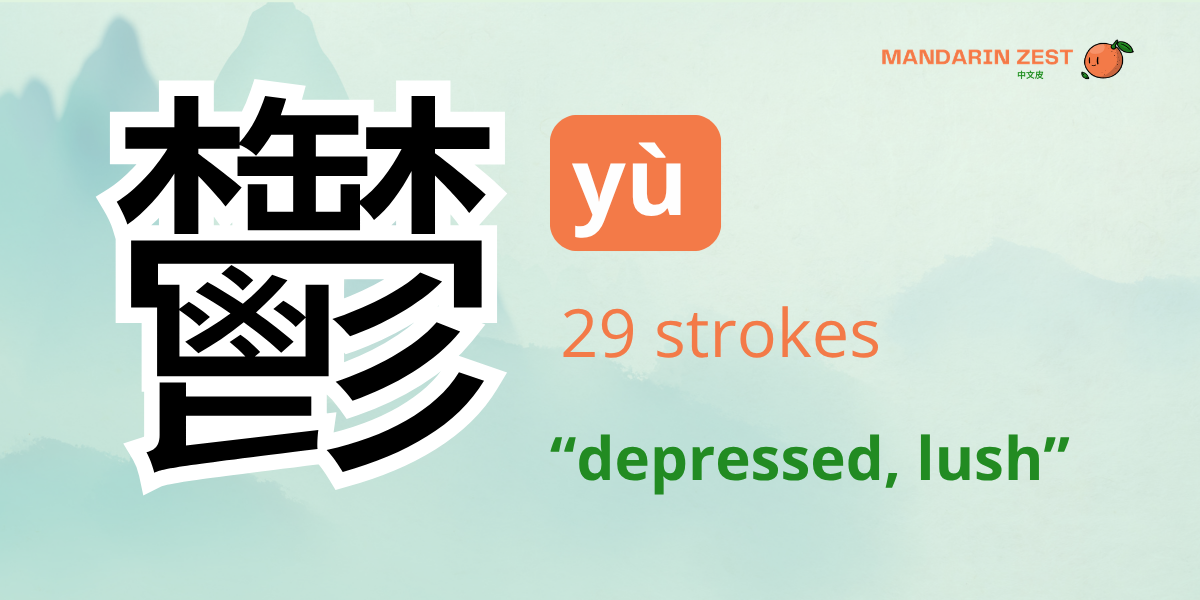
鬱 (yù, 29 strokes) — Depressed, Lush, Gloomy
The Traditional form of what became 郁 in Simplified. 郁 has just 9 strokes — meaning 鬱 lost 20 strokes in the simplification process. The character contains 林 (forest), 缶 (jar), and 鬯 (fragrant ritual wine), among other components. Its meaning of "luxuriant" comes from the forest component; its meaning of "gloomy" connects to an older pictographic form showing a person trampled in a forest.
It's one of the most structurally rich characters in Traditional Chinese — and one of the most dramatic examples of what simplification removed.
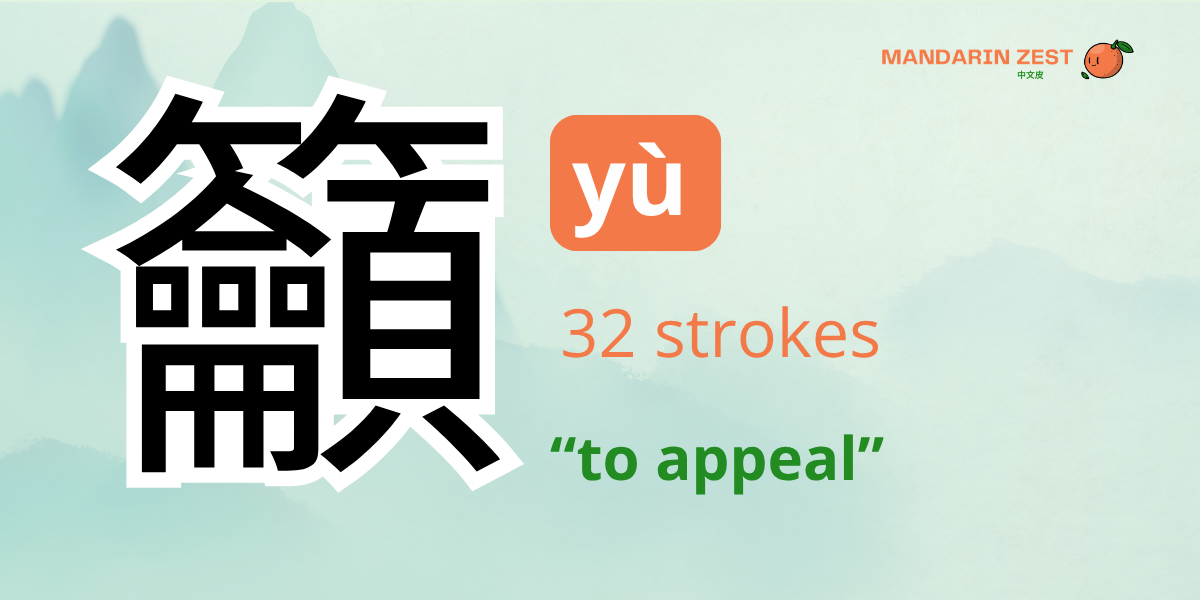
籲 (yù, 32 strokes) — To Appeal, To Implore
Simplified to 吁, which has just 6 strokes — a reduction of 26 strokes. 籲 is a frequent enough word (to appeal to, to call upon) that it appears regularly in formal writing, journalism, and political contexts in Taiwan and Hong Kong. The contrast between 籲 (32 strokes) and 吁 (6 strokes) is one of the starkest in the entire simplification process.
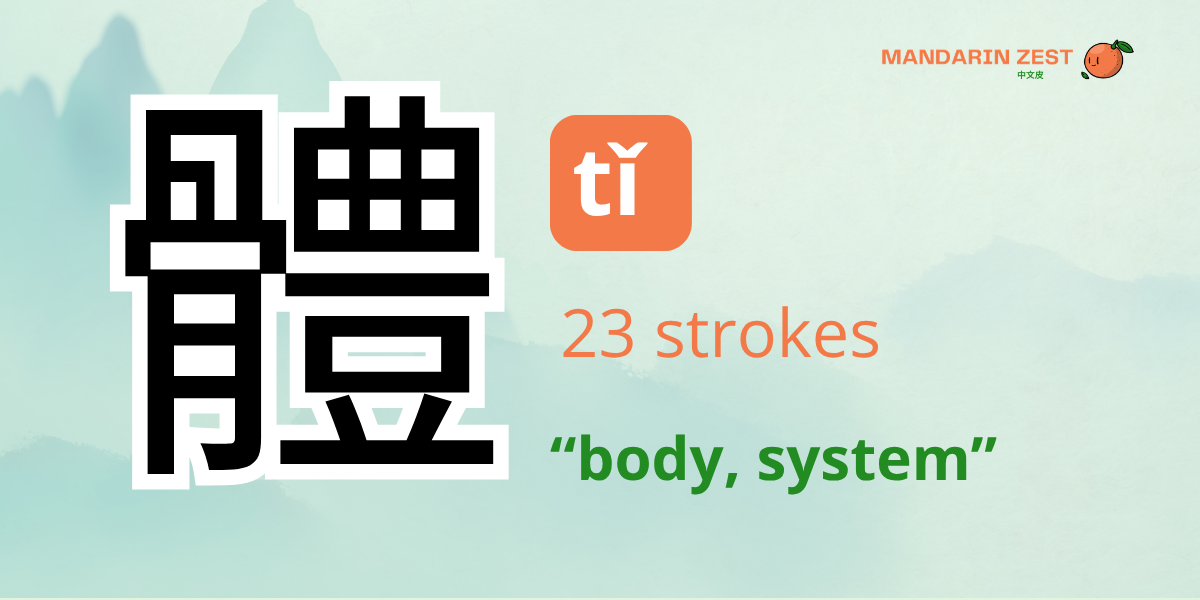
體 (tǐ, 23 strokes) — Body, System
Simplified to 体, which has 7 strokes. 體 appears everywhere in Traditional Chinese — 身體 (shēntǐ, body), 體育 (tǐyù, physical education), 體系 (tǐxì, system). It is one of the most commonly encountered high-stroke Traditional characters precisely because 体 and 體 are such frequent words.
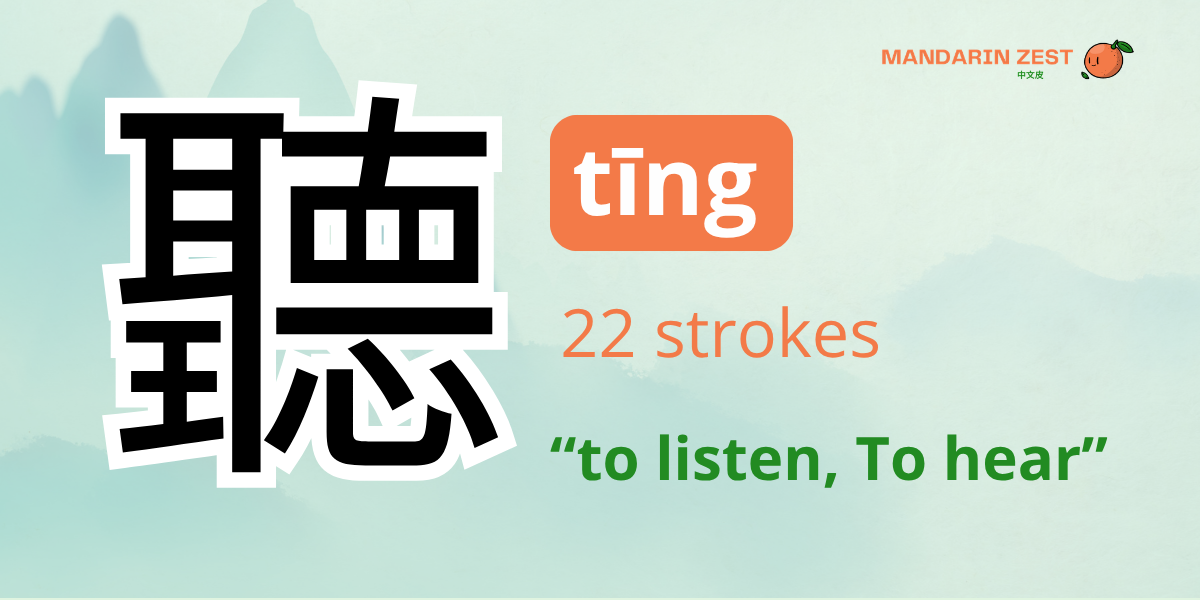
聽 (tīng, 22 strokes) — To Listen, To Hear
Simplified to 听, which has 7 strokes. One of the most structurally interesting Traditional characters — it contains 耳 (ear), 王 (king), 十 (ten), 四 (four), 一 (one), 心 (heart), and 德 (virtue) components. The etymology reflects an ancient idea that true listening requires the whole person — ear, heart, and focused attention. Simplified 听 loses all of this.
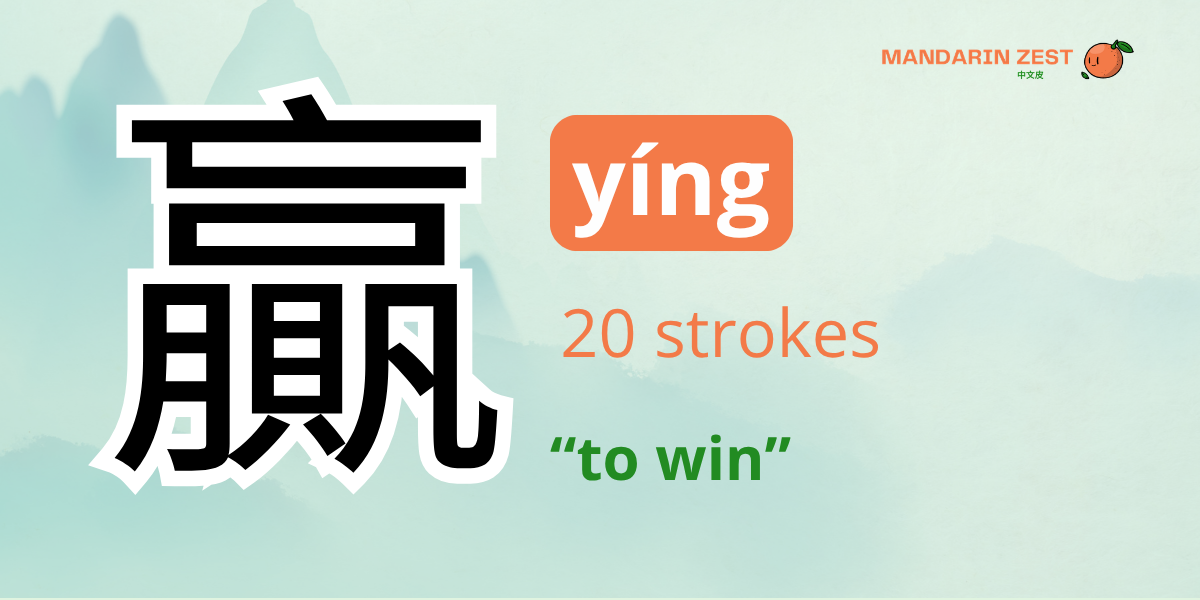
贏 (yíng, 20 strokes) — To Win
The Traditional form 贏 is more complex than the already-difficult Simplified 赢. Both appear on HSK 5 and are considered among the hardest characters learners encounter in structured study. Components: 亡 + 口 + 月 + 貝 + 凡.
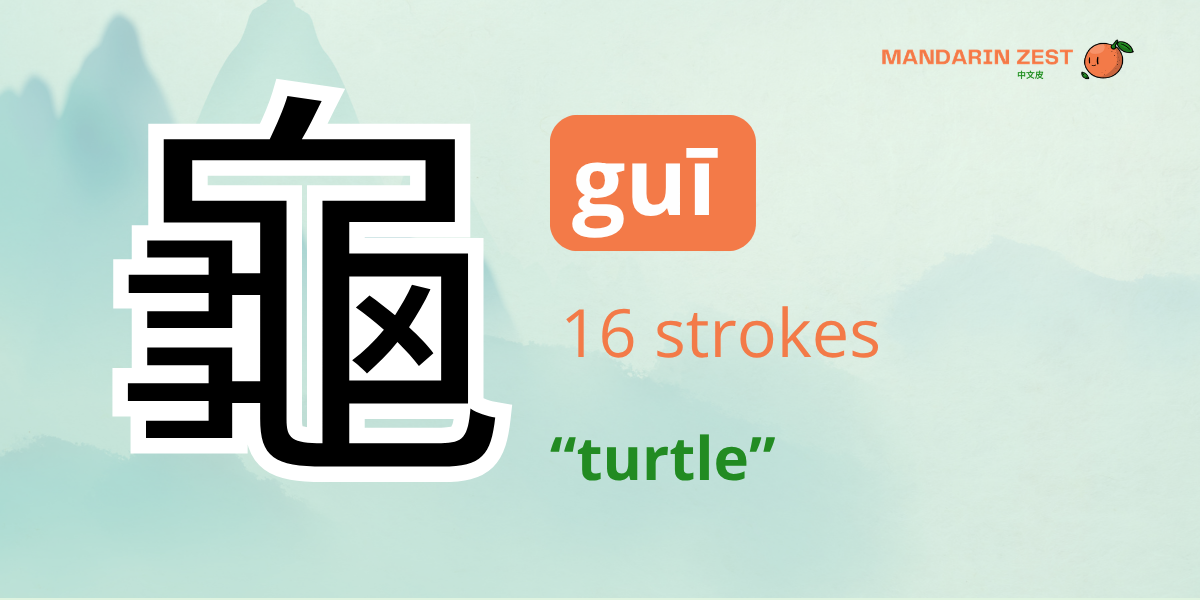
龜 (guī, 16 strokes Traditional) — Tortoise, Turtle
Simplified to 龟 (7 strokes). One of the most visually striking pictographic Traditional characters — you can clearly see the head, shell, legs, and tail of a turtle in the character's structure. Simplified 龟 retains a hint of this; Traditional 龜 shows it fully. Despite being unmistakably pictographic, its stroke order is considered genuinely difficult even for native Traditional Chinese writers.
How to Actually Learn Difficult Characters
Knowing which characters are hard is useful. Knowing how to approach them is more useful.
Break them down before you start. Before attempting to write a complex character, decompose it into its components. 赢 is not 17 random strokes — it's 亡 + 口 + 月 + 贝 + 凡, each written in sequence. This is always faster than trying to memorise the character as a whole shape.
Use stroke order from day one. Every character follows stroke order rules: top to bottom, left to right, horizontal before vertical, outside before inside. Correct stroke order is how your motor memory learns a character — the same sequence every time makes writing automatic. Wrong order means permanent inconsistency. The stroke order guide on Mandarin Zest shows the correct sequence for hundreds of characters.
Write, don't just recognise. Screen recognition — seeing a character and knowing what it means — is much easier than production. But you need production for real literacy. Physical writing practice, with a workbook, produces fundamentally better retention than tapping flashcards. The HSK 1 Character Writing Practice Book covers all HSK 1 characters with stroke order diagrams and practice grids. The Chinese Handwriting Practice Sheets extend the practice further.
Use Pleco for instant lookup and stroke order animation. The free Pleco app shows animated stroke order for virtually every character — you can watch the strokes appear in sequence before practising them yourself. Indispensable for complex characters where the sequence isn't obvious.
Review with spaced repetition. Characters fade without review. Anki (free) keeps learned characters active at decreasing review frequency as they become more consolidated. The Anki guide for Chinese learners explains how to set up an effective Chinese review system.
Read them in context. Characters learned in isolation are harder to retain than characters encountered in sentences. Graded readers at your HSK level put characters in natural context — which is what turns passive recognition into actual reading fluency.
Learn Chinese Characters the right way!
Chinese characters are often seen as one of the most intimidating parts of learning Mandarin. This guide was created to change that.
Quick Reference: Complexity by Category
| Category | Example character | Strokes | When you'll encounter it |
|---|---|---|---|
| Ancient talismanic | Huáng | 172 | Never |
| Archaic quadruplicated | 龘 Zhé | 64 | Never |
| Famous biáng character | biáng | 42–58 | On a Shaanxi noodle menu |
| Most complex modern standard | 齉 nàng | 36 | Extremely rare |
| Hard HSK 5–6 | 赢 yíng | 17 | Regular at advanced level |
| Hard HSK 3–4 | 鼻 bí | 14 | Regular at intermediate |
| Common everyday | 国 guó | 8 | Constant from HSK 1 |
| Basic HSK 1 | 一 yī | 1 | Day one |
FAQ
The record is held by Huáng at 172 strokes — though its status as a genuine character versus a Daoist talisman is debated. Among characters with confirmed modern usage, 齉 (nàng, 36 strokes) for "blocked nose" is the most complex in the Table of General Standard Chinese Characters.
It's real in the sense that it exists and appears on menus. It's contested in the sense that it can't be encoded in standard Unicode, its stroke count is disputed, and its origin may be a clever Shaanxi noodle restaurant invention rather than historical vocabulary. It's not in any standard dictionary.
At HSK 1–2, most characters have under 10 strokes. The genuinely complex ones — 15+ strokes — start appearing at HSK 3–4. 鼻 (bí, nose, 14 strokes) is one of the more complex early-level characters. By HSK 5–6, 赢 (yíng, to win, 17 strokes) is considered one of the most difficult.
Not really. 赢 (17 strokes) is considered much harder than 矗 (24 strokes) because its components are less visually distinct. Difficulty correlates more with how decomposable a character is and how visually similar it is to other characters than with raw stroke count.
For reading: recognition is sufficient. For writing by hand (useful for exams, note-taking, cultural engagement): production requires deliberate practice. For the HSK exam, the writing component requires character production — so if exams are your goal, writing practice is non-negotiable.

Antoine Collard
Originally from Belgium, Antoine lived more than 5 years in Taipei, Taiwan. He graduated from a Chinese-taught master’s program in Political Science at National Taiwan University.