
The Hungry Ghost Festival, or Zhongyuan (中元节, zhōngyuán Jié) in Taoism, and the Yulanpen Festival in Buddhism, falls on the fifteenth day of the seventh month of the lunisolar calendar, also known as Ghost Month. During this period, the gates to the underworld remain open, allowing spirits and hungry ghosts to cross over into the human world.
This year, Ghost Month commenced on 13th August and ends on 10th September, with the Hungry Ghost Festival being held on 27th August.
What is Ghost Month?
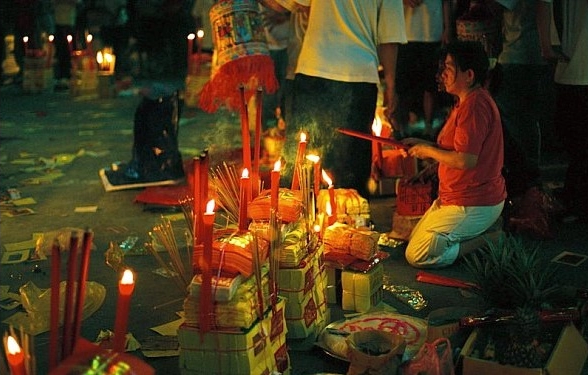
On the very first day of the seventh lunisolar month, the gates of the underworld open, signifying the beginning of Ghost Month, when spirits are allowed to cross over into the human realm. On this day, people pay their respects and honour their ancestors by offering food, paper money (which is burned so that spirits can use it) and by lighting incense.
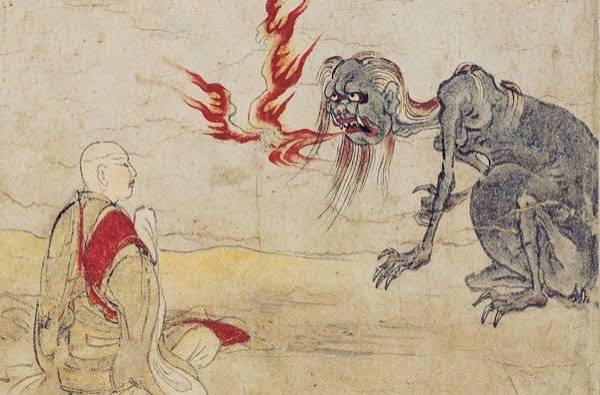
However, in addition to presenting offerings to deceased family members, spirits without family must also be included to prevent them from causing harm or mischief during the period. Hungry Ghosts are often incorporated into celebrations as their intense cravings can cause trouble for the living. These ghosts are often victims of their past behaviours such as greed and selfishness, and people make offerings to them out of compassion.
On the last day of the month, the gates to the underworld close and the spirits are expected to return so the boundary between the living and the dead is balanced. Following the end of Ghost Month, taboos and superstitions end.
Fact: There is another holiday celebrated in the seventh lunisolar month called ‘Qixi’ (also known as Chinese Valentine’s Day). Read Chinese Valentine's Day: The Qixi Festival, What It Is and How to Celebrate to find out more.
New to Chinese? Start Here.
The no-fluff roadmap for absolute beginners — what to learn first, what to skip, and how to actually stick with it past week two.
Ghost Month’s Origins
There isn’t a clear origin of Ghost Month, but it is believed to be a combination of Buddhism, Taoism, ancient Chinese traditions and folklore. The two main theories of origin are as follows.
In ancient Chinese culture, many communities practised ancestor veneration (a cultural and religious practice for remembering and honouring deceased family members). The dead were believed to have a form of existence that could bring fortune to their descendants based on a reciprocal relationship. This meant that the living cared for and paid their respects to the dead through offerings and rituals, whilst the dead protected the living in return.
The Buddhist story describes the seventh month as a joyful time when Buddha’s disciples would often meditate during the summer and return through the forests. Many followers would often obtain enlightenment during this period leading up to the day of gathering. However, one disciple named Mulian (目连) discovered that his mother had been reincarnated as a hungry ghost due to her collection of bad merit. Upon discovering his mother's misfortune, Mulian attempts to rescue her but realises he isn’t powerful enough and asks the Buddha for help. Buddha instructs Mulian to make monastic offerings to the Buddhist community on the fifteenth day of the seventh lunar month to build good merit. Through Mulian’s generous offerings and practice, the accumulated merit was dedicated to his mother, and his acts freed her from being stuck as a hungry ghost. This story became associated with the Hungry Ghost Festival (Ullambana or Sangha Day) and later merged with Chinese ancestor traditions and Taoism.
How Ghost Month is Celebrated
The Zhongyuan Festival (中元节, Hungry Ghost Festival) is held on the fifteenth day of Ghost Month. The celebrations can vary by family and region, but the basic idea behind it is to honour ancestors and make offerings to the spirits.
Food
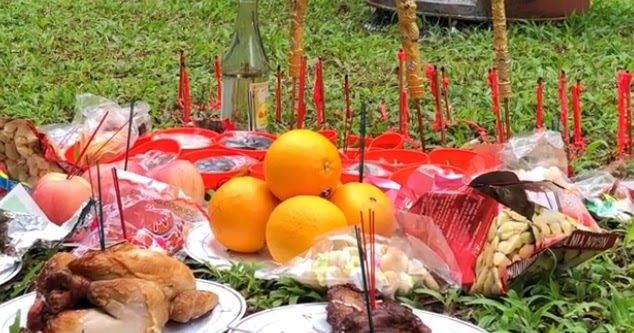
Offerings of fruit, sweets, cooked dishes, tea, wine and incense are placed on an altar. Altars are often located inside or outside the home as well as in local public temples. After the offerings are made, the spirits are allowed to feast first, and then the living may eat them afterwards; leftovers are taken home by the community or donated to charities.
Burning of Joss Paper
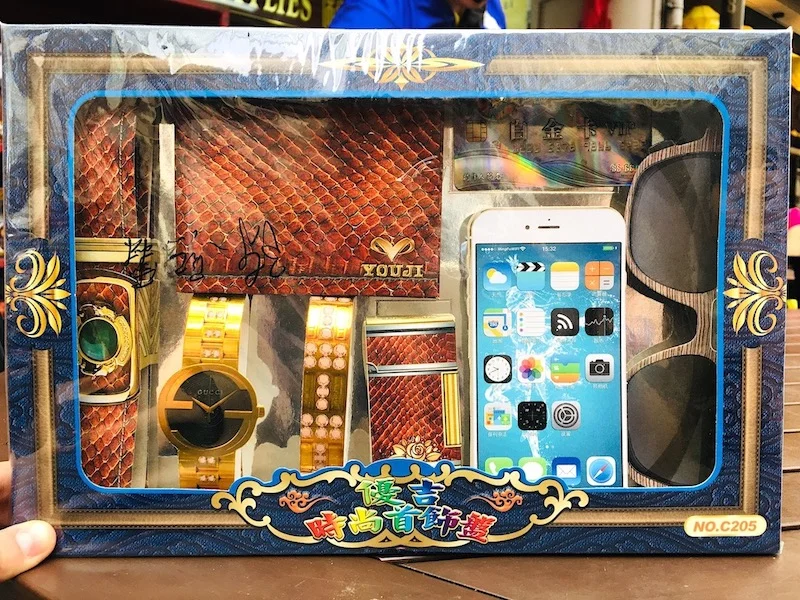
People often burn joss paper or “ghost money” to symbolise sending gifts to the afterlife where they can be used by the dead. Modern offerings of paper phones, houses, cars, expensive foods and even luxury designer goods are becoming more popular, with young people even burning paper boba tea from popular chains. These gifts are typically given to deceased family members, but can include hungry wandering spirits.
Opera
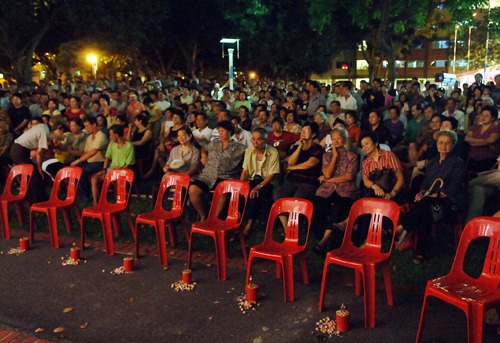
Celebrations beside food can also include entertaining the spirits who are visiting the human realm. Traditionally, Chinese opera performances were held outside, and performances such as comedy, singing and variety acts can also be included in Ghost Month performances called gē tái (歌台), which are still common in parts of Malaysia and Singapore. Shows are typically held during the evening as spirits are believed to be most active at night. During these events, the first few front-row seats are often left empty, reserved only for spirits whilst the living audience sits behind them.
Zhongyuan Festival
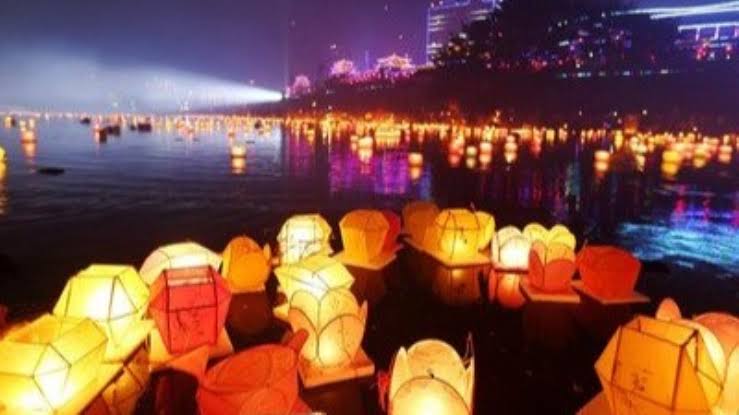
The Zhongyuan Festival is held on the fifteenth day of Ghost Month and the usual activities of Ghost Month occur but on a much larger scale. In the morning, family members typically prepare food for their ancestors (usually placed at a family altar), whilst wandering ghosts who may not have descendants caring for them have altars located on the street or at temples. Religious ceremonies take place, such as chanting scriptures, performing rituals and praying for the dead. In some locations, lanterns can be seen floating down rivers, illuminating the water and acting as a guiding path for lost spirits to follow.
Ghost Month Taboos
Ghost Month is considered the scariest time of the year, with a few things to avoid; otherwise, you might attract an unwanted guest.
Do not whistle at night. In Chinese culture, whistling is viewed as unlucky. This is because high-pitched whistling and vibrations are said to resemble noises of the ghost world. Nearby spirits may be attracted to the sound, making them aware of your location and enticing them to follow you home.
Do not swim. Ghosts who have passed away in water are said to remain trapped in the very spot where they died and therefore cannot travel to the afterlife. For a drowned spirit to move on, they require a living person to take their place. Water ghosts can be particularly resentful due to the gates of the afterlife being open during Ghost Month, reminding them about the warmth of the living, making them extremely desperate to find a replacement.
Do not take the last bus or train home. The last public transport home is believed to attract spirits who lurk on night trains and buses, and you could find an unexpected travel companion.
Do not have your slippers pointing towards your bed. If you leave your slippers facing your bed, they’re basically pointing to your location when you’re most vulnerable and can even direct negative energy towards you whilst you’re sleeping!
Do not take photos at night. More modern superstitions believe that if you take photos at night, you could capture something frightening in the background of your photos or selfies.
Do not pick up money or objects found on the ground. Money or objects on the road could be offerings belonging to spirits, and by picking it up, you are essentially stealing from them. Some beliefs include that ghosts use money to lure people so that they can be possessed or as a method to transfer bad luck; others describe that finding a hóng bāo (红包, red envelope) filled with money traps you into a spirit marriage, tying you to a ghostly partner.
Do not wear all-black, red or white outfits. You may think that wearing red in Chinese culture is lucky (which it is! Why Is Red Important in Chinese Culture); however, during the month when the deceased cross over into the world of the living, this prosperous colour might actually attract some spiteful and angry “red ghosts”. In addition, the colours red and black are believed to be full of Yin energy, like spirits, whilst those alive have yang energy. Outfits containing these “dark” and cold” colours might attract some ghostly friends. Wearing all white c must also be avoided to prevent spirits from thinking that you are in mourning or believing that you are from the underworld as well.
Join the Mandarin Zest Club
Join the Mandarin Zest Club and become part of a welcoming international community of Chinese learners from all over the world. Practice together, stay motivated, and connect with people who share your goals for learning Mandarin.

Chinese Ghost Month Vocabulary
| Chinese | Pinyin | English |
|---|---|---|
| 鬼月 | Guǐ yuè | Ghost month |
| 好兄弟 | Hǎo xiōng dì | “Good brothers” a polite term used to call ghosts |
| 中元节 | Zhōng yuán jié | Hungry Ghost Festival |
| 供品 | Gòng pǐn | Offerings |
| 阴间 | Yīn jiān | Realm of the dead, ghost world |
| 阳间 | Yáng jiān | Realm of the living, living world |
| 放河灯 | Fàng hé dēng | Release ease river lanterns (lanterns to guide spirits back to the ghost realm) |
| 孤魂野鬼 | Gū hún yě guǐ | Lonely spirits and lost ghosts (wandering ghosts without a family) |
| 鬼门关 | Guǐ mén guān | Gates/entrance to the underworld |
| 纸钱 | Zhǐ qián | Joss paper / paper money |
| 拜拜 | Bàibài | Religious ceremony, make offerings, pay respect |
FAQ
Although both holidays involve offerings to spirits, Tomb Sweeping Day focuses on visiting your ancestors’ graves and honouring them. In contrast, the main focus of the Hungry Ghost Festival is lost spirits.
The spirit world is believed to mirror the human world, and by burning objects and gifts, they can be sent to the afterlife.
The concept of hungry ghosts stems from Buddhism, where people get reborn as pretas (hungry ghosts) due to a collection of bad karma, specifically greed, selfishness and excessive attachment. These spirits are often depicted as having an immense hunger and are unable to satisfy their desires.
Ghost Month and Halloween both involve spirits and the dead, but they have different origins. Halloween has Celtic traditions and has an overall spooky theme, whereas Ghost Month comes from Chinese folk religion, Buddhism and Taoism, where ghosts from the underworld visit the human realm.
Yes, the Chinese name of the monk is Mulian, but the name can vary depending on the language. In Pali, his name is Moggallāna; in Sanskrit, Maudagalyāyana; and in English, Moggallāna or Maudgalyāyana.

Alice O'Connor
Alice is a UK-based writer and University of Leeds graduate in Asia Pacific Studies and Chinese. From her time living and studying abroad in Taipei she combines her studies with firsthand experiences to cover contemporary Chinese culture, trends, and Mandarin learning. Through her writing and storytelling, Alice helps readers connect with Chinese related topics.