
The Qixi Festival (七夕节, Qīxījié), also described as Chinese Valentine's Day and the Seven Sisters Festival, celebrates romance. It commemorates the legend of Niulang (牛郎, Cowherd) and Zhinü (织女, Weaver Girl, Goddess of Weaving), which depicts the daughter of the Jade Emperor falling in love with a mortal human. The two lovers are separated and can only meet once a year, on the seventh day of the seventh month of the lunar calendar, when a mischief of magpies forms a bridge across the Milky Way so they can be together.
This year the Qixi Festival falls on Wednesday, 19th August 2026.
The Story Behind the Qixi Festival
The legend of Zhinü and Niulang contains many variations, but this is the most common version told.
The Jade Emperor (玉皇), ruler of heaven and first emperor of China, had seven fairy daughters who one day went to a lake to bathe. Nearby, Niulang spotted them and was enamoured with the youngest sister, Zhinü, the Goddess of Weaving and the star Vega.
The pair fell in love at first sight, and Zhinü decided to stay in the human world to marry Niulang and start a family, where they raised two children.
The Jade Emperor later discovered that the pair had wed and was outraged at what he saw as a blasphemous union between a human and a goddess. He ordered Zhinü to return home to the heavens, instructing her to resume her duty of weaving clouds and robes.
Niulang was heartbroken over her sudden, forced departure. An ox, overhearing his cries, suggested that Niulang wear its hide as a disguise so he could rise up to the heavens and reunite with his lover.
Niulang agreed to the ox's plan, but the Jade Emperor refused to accept it and, in a fit of rage, created the Milky Way, a sea of stars separating and trapping the two lovers apart. Taking pity on the couple, a mischief of magpies formed a bridge across the stars so they could meet.
The Jade Emperor, though still angry at the transgression, was moved by the depth of the couple's love and agreed that the two could reunite once a year, in the seventh month of the lunar calendar, using the magpie bridge, on the condition that Niulang remain on Earth while Zhinü and their two children resided in the heavens.
Our Materials
Check out our dedicated materials, designed by teachers for learners.
Astronomical Connotations of the Qixi Festival
The legend behind Chinese Valentine's Day has strong connections to astronomy and the cosmos. The Vega star (associated with Zhinü) and the Altair star (Niulang) sit roughly sixteen light-years apart, on opposing sides of the Milky Way.
Vega and Altair make up two vertices of the Summer Triangle asterism. During the Qixi Festival, on the seventh day of the seventh lunar month, both stars form a triangle with a third star, Deneb. This star formation reflects Niulang and Zhinü, with the third star representing the magpie bridge connecting the two star-crossed lovers.
How the Qixi Festival Was Celebrated
There are many ways Chinese people celebrate the Qixi Festival, such as giving gifts to partners or going on dates. Some of the more traditional customs are losing popularity and are now more commonly practised in rural areas.
Food
Similarly to other Chinese festivals, food plays a central role. Sweet fried pastries made of dough, sweetener (sugar or honey), and oil, called Qiǎoguǒ (巧果, "skill fruit"), are often eaten. Their intricate patterns are created by pressing the dough into wooden moulds before frying. The name Qiǎoguǒ, or "fruit of skilfulness", reflects the tradition of young women praying to Zhinü, the Goddess of Weaving, to improve their needlework.
Huāguā (花瓜, flower melon) are melons carved by young women into designs of flowers, animals, or birds. The melons are placed as offerings to Zhinü alongside tea and other fruits as a wish for happiness in marriage.
Clothing
Hànfú (汉服, literally "clothing of the Han") is often worn during the festival, with young women dressing in colourful robes to showcase their embroidery and needlework skills. Since Qixi falls in summer, people typically choose lightweight, breathable fabrics like cotton or silk and often carry a fan as an accessory.
Qixi Festival Celebrations in the Present Day
In modern times, the Seven Sisters Festival is mostly celebrated through gift-giving between loved ones and partners, and it is not a national holiday in China.
Couples can often be seen going on romantic dates or strolls in the park rather than following traditional activities.
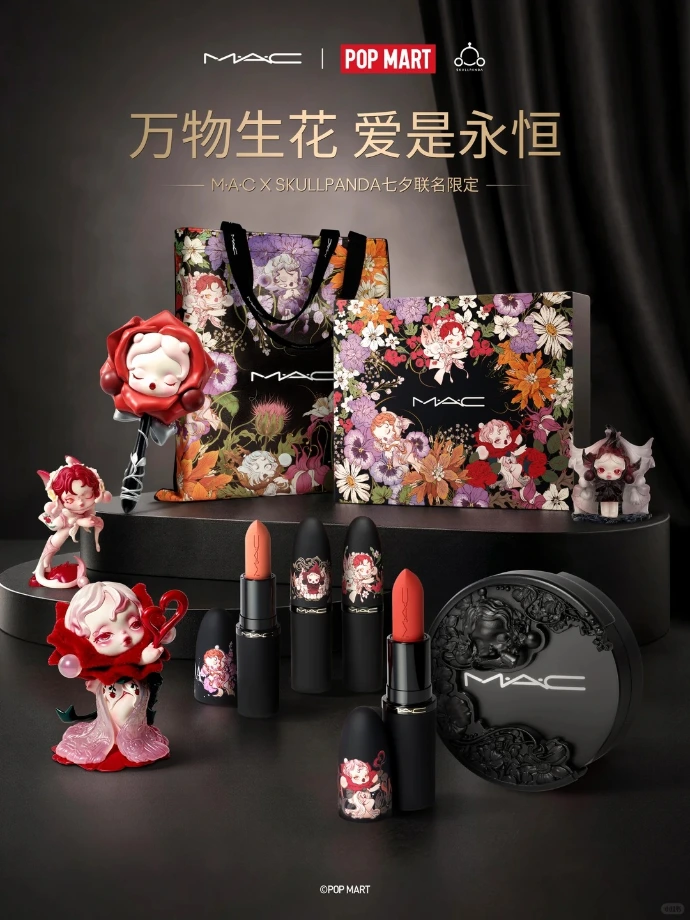
Nowadays, luxury brands use the Qixi Festival to encourage spending. Fashion houses such as Dior and Louis Vuitton regularly release Qixi collections spanning ready-to-wear clothing, accessories, bags, and homeware. More affordable gift options tend to come from beauty and lifestyle brands running limited Qixi-themed sets.
Despite the festival's growing commercialisation, Qixi was added to China's National Intangible Cultural Heritage list by the State Council in 2006.

Chinese Romance Vocabulary
| Chinese | Pinyin | English |
|---|---|---|
| 我爱你 | wǒ ài nǐ | I love you |
| 男朋友 | nán péngyǒu | boyfriend |
| 女朋友 | nǚ péngyǒu | girlfriend |
| 巧克力 | qiǎokèlì | chocolate |
| 天上 | tiānshàng | heaven, the heavens |
| 夫妻 | fūqī | married couple, husband and wife |
| 礼物 | lǐwù | gift |
FAQ
No. Qixi is also known as the Festival of Skills (乞巧节, Qǐqiǎo Jié), when young women would thread needles under the moonlight, wishing for creativity and skilfulness in their work. The festival isn't only about romance; it also celebrates relationships, connection, and resilience.
The mischief of magpies forming a bridge across the Milky Way symbolises connection across distance and separation and reunion after a long wait. It represents hope and resilience, a reminder that good things are sometimes worth waiting for.
No. Qixi follows the lunar calendar and falls on the seventh day of the seventh lunar month. Since the lunar calendar is based on the moon's cycle rather than the Gregorian calendar, the date shifts each year.
No. Qixi is not a public holiday, and schools and businesses operate as usual.
No. Despite being on China's National Intangible Cultural Heritage list, Qixi is not part of UNESCO's list.

Alice O'Connor
Alice is a UK-based writer and University of Leeds graduate in Asia Pacific Studies and Chinese. From her time living and studying abroad in Taipei she combines her studies with firsthand experiences to cover contemporary Chinese culture, trends, and Mandarin learning. Through her writing and storytelling, Alice helps readers connect with Chinese related topics.