
There are words in every language that resist translation — not because they're complicated, but because the concept they describe doesn't exist in the target language. 撒嬌 (sājiāo) is one of Chinese's best examples of this.
The dictionary will tell you it means "to act like a spoiled child" or "to be coquettish." Both are technically correct and both miss the point. 撒嬌 is a specific, culturally embedded communicative behaviour with its own rules, its own contexts, and its own social function that can't be collapsed into any single English word. Understanding it is understanding something important about how intimacy, gender, and indirect communication work in Chinese-speaking cultures.
Traditional and Simplified Characters
Because 撒嬌 originated in Taiwan and remains particularly associated with Taiwanese Chinese, this article includes both forms throughout:
- Traditional (used in Taiwan, Hong Kong, Macau): 撒嬌 (sājiāo)
- Simplified (used in mainland China): 撒娇 (sājiāo)
The character that differs: 嬌 (Traditional) vs 娇 (Simplified). In Traditional, 嬌 retains its full form with the woman radical 女 on the left and a more complex phonetic component. Both pronunciations are identical: sājiāo, second tone + first tone.
For why Simplified and Traditional differ and which to learn, the Mandarin Zest guide covers the decision in full.
Learn Chinese Characters the right way!
Chinese characters are often seen as one of the most intimidating parts of learning Mandarin. This guide was created to change that.
Character Breakdown
| Character | Traditional | Simplified | Pinyin | Core meaning |
|---|---|---|---|---|
| 撒 | 撒 | 撒 | sā | to scatter, to release, to let go |
| 嬌/娇 | 嬌 | 娇 | jiāo | coquettish, charming, delicate, tender |
Together: 撒嬌 / 撒娇 literally means "to scatter/release coquettishness" — to let out one's softer, more vulnerable, playful side deliberately and charmingly.
The character 嬌/娇 itself deserves attention. It contains the woman radical 女 (nǚ) as its left component, which connects it etymologically to femininity, delicacy, and charm. <cite index="8-1">When combined, 撒娇 (sājiāo) literally means to "scatter/release coquettishness." It's the act of letting out one's softer, more vulnerable, and playful side in a deliberate yet charming way.</cite>
Historical Background: Origins in Taiwan
There is a very particular form of female speech in Taiwan, which while it may not be unique to Taiwan, doesn't seem to have an equivalent term in English. That term is sajiao 撒嬌 (Sājiāo).
The term 撒嬌 / 撒娇 has existed in Chinese for centuries — it appears in classical literature and Qing dynasty texts. But its modern cultural currency, academic study, and widespread discussion as a distinctive communicative phenomenon began primarily in Taiwan.
This paper explores the meaning and the social practice of a Mandarin cultural term, sajiao, a babyish form of persuasion. The framework derived from the tradition of ethnography of communication examines how sajiao is understood as a gender indicator and how femininity is talked and performed in the Mandarin-speaking community, Taiwan.
Academic linguist H.S. Yueh's landmark research on 撒嬌 identified it as a cultural term — a piece of meta-language that native speakers use to describe a communicative practice significant to their culture. Cultural terms are distinct from ordinary vocabulary because they encode not just a meaning but a way of being in the world. The Modern Chinese Dictionary defines 撒嬌 as: "To deliberately act like a spoiled child in front of someone because of the awareness of the other person's affection."
That "awareness of the other person's affection" is the key. 撒嬌 / 撒娇 is not random childishness. It's a behaviour that only happens within a relationship of genuine intimacy and trust — one where the person performing 撒嬌 knows the other person cares enough to receive it without judgment.
From Taiwan, the term and the practice spread across mainland Chinese internet and popular culture, particularly through Taiwanese pop music, TV dramas, and the global spread of Mandopop in the 1990s and 2000s. Today 撒娇 is equally recognised across all Mandarin-speaking communities, though Taiwan remains the context where it has been most extensively documented and discussed.
What 撒嬌 / 撒娇 Actually Means
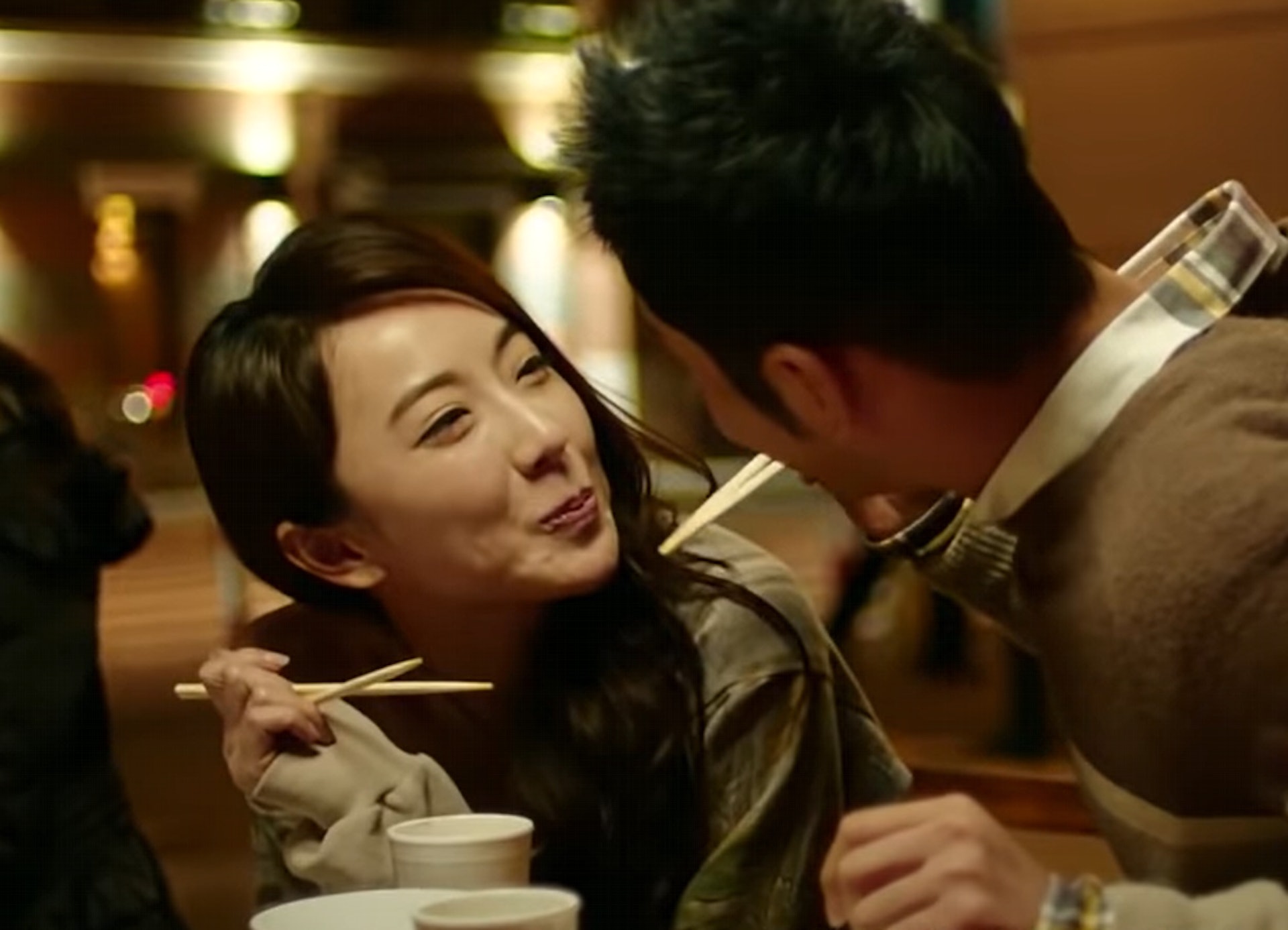
撒娇 is a cultural practice that can be baffling to Westerners. Where pouting or acting childish might be viewed negatively as a sign of immaturity or manipulation in the West, 撒娇 is often a welcome and even expected part of intimate relationships in China.
The behaviour involves a cluster of verbal and non-verbal cues used together:
Verbal cues:
- A higher-pitched, softer voice than normal speech
- Elongated syllables and a drawn-out, whiny quality
- Repetition of requests or endearments
- Exaggerated complaints about minor things
Non-verbal cues:
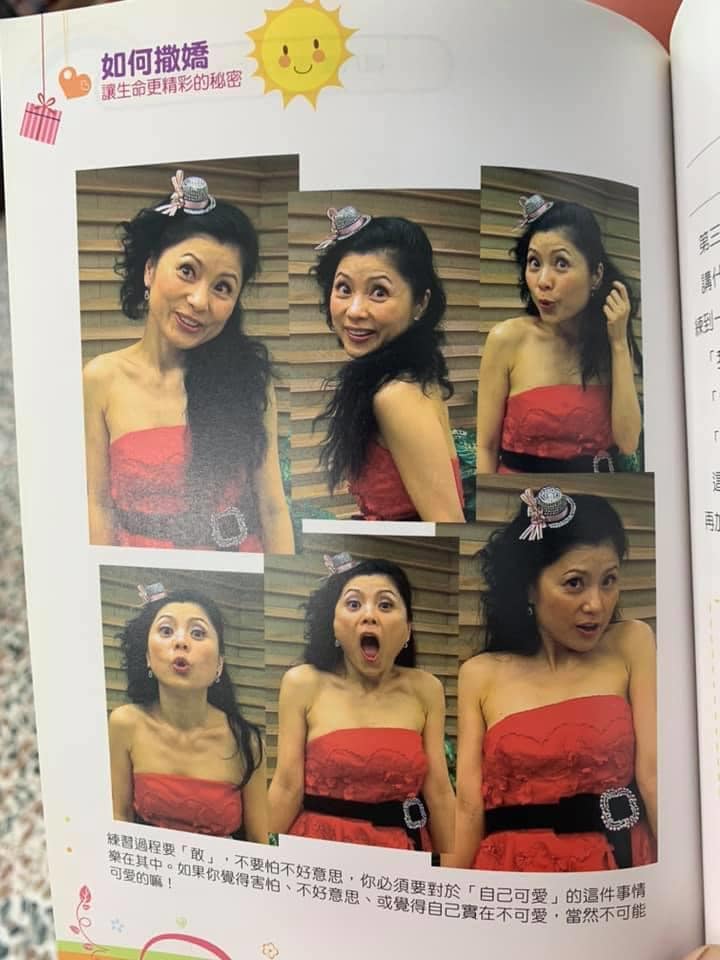
- Pouting, exaggerated sad expressions
- Tugging at someone's sleeve or arm
- Turning away then looking back
- Stamping feet lightly, mild exasperation gestures
- Physical leaning or clinging
None of these alone constitutes 撒嬌. It's the combination, the register, and crucially — the relational context that makes it 撒嬌 rather than genuine distress or bad behaviour.
The Nine Functions of 撒嬌
Academic research identified nine primary communicative functions that 撒嬌 / 撒娇 serves in everyday interactions. Far from being a single behaviour, it's a flexible communicative tool that different people deploy for different purposes:
- Persuasion — the most common function. Getting someone to agree to something by making the request irresistibly charming rather than directly demanding.
- Emotional expression — communicating affection, warmth, and attachment in a culturally acceptable indirect way. In a culture where direct declarations of love are less common, 撒嬌 / 撒娇 is one of the primary vehicles for expressing that you feel close enough to someone to drop your guard.
- Seeking comfort — when distressed, using 撒嬌 to signal that you want to be comforted and held without explicitly saying so.
- Playfulness — not all 撒嬌 has an agenda. Sometimes it's simply a mode of playful interaction that deepens intimacy between people who are close.
- Avoidance — redirecting a situation through charm rather than confrontation, de-escalating tension by shifting to a softer register.
- Appreciation expression — showing gratitude or happiness in an exaggerated, endearing way.
- Attention seeking — when someone feels ignored, 撒嬌 is a culturally acceptable way to reclaim attention from a loved one.
- Privilege seeking — requesting special treatment, small indulgences, or exceptions to normal expectations.
- Displeasure expression — communicating mild unhappiness in a way that doesn't create confrontation or damage the relationship.
What unites all nine: 撒嬌 / 撒娇 operates within the safety of an established relationship. You only 撒嬌 with people you know care about you. This is why it signals intimacy rather than immaturity — it's a behaviour that only becomes available once a relationship reaches a certain depth of trust.
Join the Mandarin Zest Club
Join the Mandarin Zest Club and become part of a welcoming international community of Chinese learners from all over the world. Practice together, stay motivated, and connect with people who share your goals for learning Mandarin.

撒嬌 and Gender: A Nuanced Picture
The study critiques the essentialist view of sajiao as exclusively feminine, revealing its broader social dynamics and applications.
The traditional cultural understanding associates 撒嬌 / 撒娇 primarily with women — and the character 嬌/娇 itself contains the woman radical, encoding femininity linguistically. In conventional Chinese gender norms, 撒嬌 was understood as part of 溫柔 (wēnróu, gentleness and tenderness) — the cluster of traits associated with ideal femininity.
撒娇 (sājiāo) refers to adults who throw child-like tantrums in public, usually directed at their significant other. The phenomenon is something that Western audiences generally aren't familiar with. And it's an interesting issue as it relates to the evolution of gender roles in modern Chinese society.
But academic research and contemporary usage show a more complex picture. Men 撒嬌 too — particularly toward people with more authority or closer intimacy (a parent, an older sibling, a partner who takes on a protective role). Children 撒嬌 with parents. Close friends 撒嬌 with each other. The gendered reading of 撒嬌 reflects a historical cultural association, not an absolute rule.
In contemporary Chinese internet culture, the word is applied more broadly: 猫咪在撒娇 (māomī zài sājiāo, the cat is being cute and demanding) is now a perfectly normal sentence. The concept has expanded beyond human gender performance into a general characterisation of charming, attention-seeking softness.
Cultural Context: Why 撒嬌 Exists
To understand why 撒嬌 / 撒娇 has such a significant social role in Chinese-speaking cultures, it helps to understand what it's operating against.
Chinese social culture places high value on 含蓄 (hánxù, emotional restraint and indirectness) — the idea that direct emotional expression, particularly of vulnerability or need, is exposing and potentially inappropriate in most contexts. You don't openly tell people you need comfort. You don't explicitly demand special treatment. You maintain composure and dignity in social interactions.
撒嬌 is the licensed exception to this rule. <cite index="8-1">In a culture where direct expressions of love like "I love you" can be less common, 撒娇 serves as a powerful, indirect way to communicate affection, trust, and vulnerability. By performing 撒娇, a person is essentially saying, "I trust you enough to let my guard down and be childish with you, and I know you care."</cite>
The same dynamic applies to the broader picture of untranslatable Chinese emotional concepts. 缘分 (yuánfèn), 心疼 (xīnténg), 撒嬌 — these words cluster around a distinctively Chinese way of expressing emotional life: indirect, relational, embedded in specific contexts rather than declared openly.
A brief comparative note for linguistic interest: Japanese has a conceptually similar term, 甘える (amaeru), which psychoanalyst Takeo Doi described as the desire to depend on another's benevolence. It describes the same territory — adult regressive behaviour within a safe relationship — though its cultural contours differ from 撒嬌 in specific ways. The cross-cultural existence of similar concepts suggests the behaviour is universal; the word 撒嬌 / 撒娇 is what Chinese culture has specifically chosen to name and legitimise it.
撒嬌 in Context: Example Sentences
Both Traditional and Simplified are provided throughout.
撒嬌 in romantic relationships:
她對男朋友撒嬌,希望他能帶她去旅行。
她对男朋友撒娇,希望他能带她去旅行。
Tā duì nánpéngyǒu sājiāo, xīwàng tā néng dài tā qù lǚxíng.
She 撒嬌'd with her boyfriend, hoping he'd take her on a trip.
他喜歡女朋友撒嬌的樣子。
他喜欢女朋友撒娇的样子。
Tā xǐhuān nǚpéngyǒu sājiāo de yàngzi.
He loves the way his girlfriend 撒嬌s.
撒嬌 with family:
她在父母面前從來都會撒嬌。
她在父母面前从来都会撒娇。
Tā zài fùmǔ miànqián cónglái dōu huì sājiāo.
She always 撒嬌s in front of her parents.
撒嬌 in a broader context:
別撒嬌了,快去做功課。
别撒娇了,快去做功课。
Bié sājiāo le, kuài qù zuò gōngkè.
Stop 撒嬌-ing and go do your homework.
那隻貓咪在對我撒嬌呢。
那只猫咪在对我撒娇呢。
Nà zhī māomī zài duì wǒ sājiāo ne.
That cat is 撒嬌-ing at me.
撒嬌 commented on:
你好會撒嬌!
你好会撒娇!
Nǐ hǎo huì sājiāo!
You're so good at 撒嬌! (usually an affectionate compliment)
Related Vocabulary
| Traditional | Simplified | Pinyin | Meaning |
|---|---|---|---|
| 撒嬌 | 撒娇 | sājiāo | The act of playful coaxing / coquettish behaviour |
| 嬌氣 | 娇气 | jiāoqì | Delicate temperament; overly soft or sensitive |
| 嬌羞 | 娇羞 | jiāoxiū | Coyly bashful; charmingly shy |
| 嬌嗔 | 娇嗔 | jiāochēn | Coquettishly annoyed; a charming faux-complaint |
| 嬌生慣養 | 娇生惯养 | jiāo shēng guàn yǎng | Pampered and spoiled (upbringing) |
| 溫柔 | 温柔 | wēnróu | Gentle and soft; tender |
| 含蓄 | 含蓄 | hánxù | Emotionally restrained; indirect |
| 撒嬌打滾 | 撒娇打滚 | sājiāo dǎgǔn | Extreme 撒嬌 — whining and rolling around (exaggerated expression) |
| 賣萌 | 卖萌 | mài méng | To act cute deliberately; similar internet-era concept |
撒嬌 vs 賣萌 / 卖萌: A Modern Distinction
In contemporary Chinese internet culture — particularly on platforms like Xiaohongshu, Weibo, and Douyin — 撒嬌 / 撒娇 coexists with a newer term: 賣萌 / 卖萌 (mài méng, literally "sell cuteness").
The difference:
- 撒嬌 / 撒娇 happens within an established relationship of intimacy. It's real, relational, and has genuine emotional content.
- 賣萌 / 卖萌 is more performative — consciously acting cute for an audience, often online, often without the relational depth that 撒嬌 requires.
A girl 撒嬌-ing with her boyfriend is being genuinely vulnerable within a real relationship. An influencer 賣萌-ing at the camera is performing cuteness for followers. Both involve softness and charm; the relational authenticity is different.
This distinction connects to the broader world of Chinese internet slang — terms that evolved rapidly online and carry cultural weight that dictionaries can't fully capture.
撒嬌 in Chinese Drama and Pop Culture
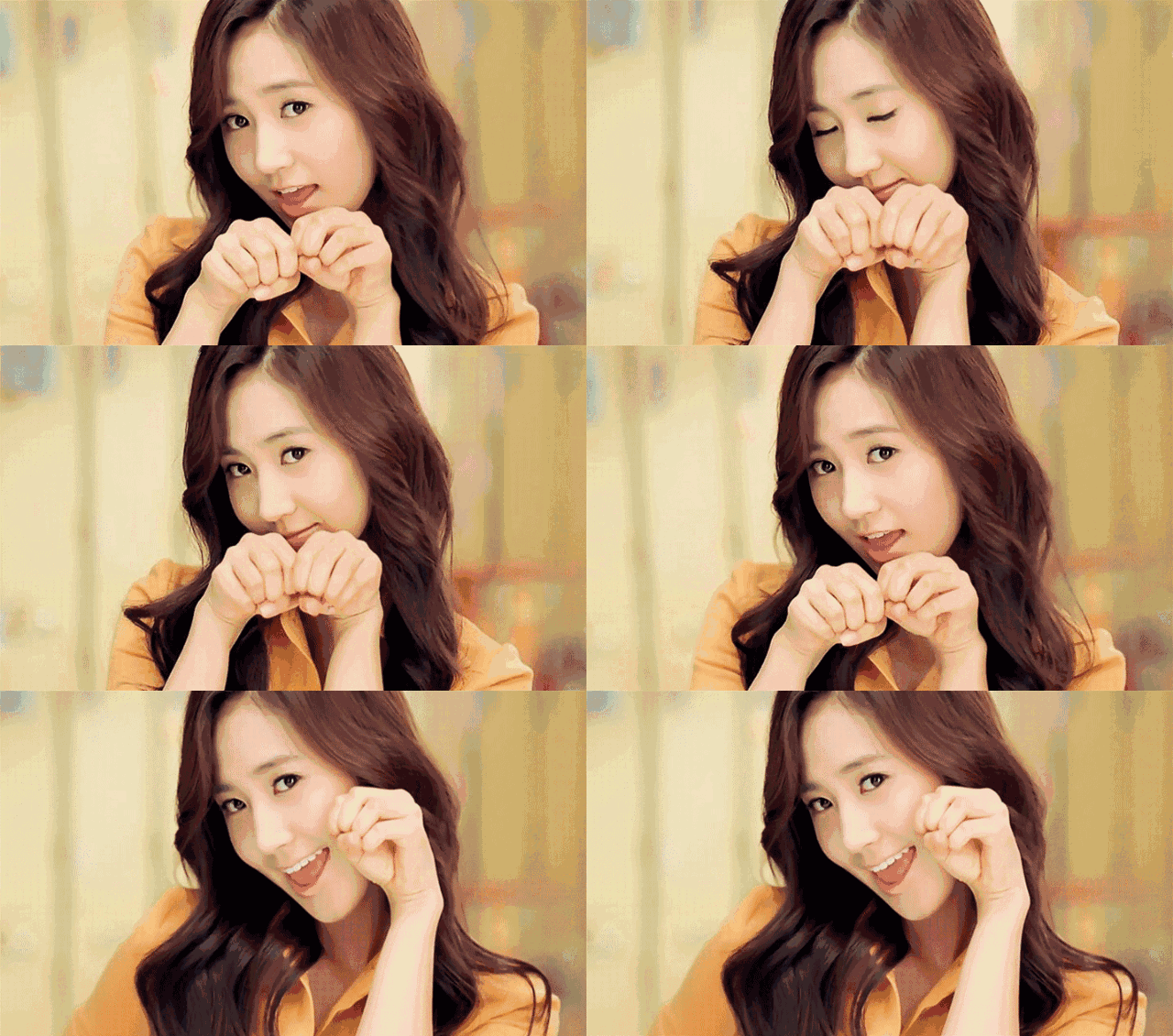
If you want to see 撒嬌 / 撒娇 in its natural habitat, Chinese romantic dramas are where it's most visible — and most discussed. The 撒嬌 scenes in Chinese romantic dramas (愛情劇 / 爱情剧, àiqíng jù) are often the scenes fans clip and share, because they show the licensed softness that 撒嬌 represents at its most vivid.
Taiwanese romantic dramas in particular — 偶像劇 / 偶像剧 (ǒuxiàng jù, idol dramas) — were influential in spreading 撒嬌 as a cultural concept across mainland China in the 2000s. Shows like Meteor Garden (流星花園 / 流星花园) introduced mainland Chinese audiences to a Taiwanese emotional vocabulary, of which 撒嬌 was a significant part.
For learners, watching Chinese drama specifically for 撒嬌 scenes is a genuinely useful exercise — you'll hear the voice change, see the non-verbal cues, and understand from context exactly what the behaviour signals in the relationship. The Netflix Chinese drama guide recommends shows and approaches for using TV effectively as a learning tool.
For Language Learners: What to Do With This Word
撒嬌 / 撒娇 belongs to the category of words you learn not primarily to use yourself but to understand when you encounter them. If you're studying Chinese, knowing this word:
- Helps you understand a common dynamic in romantic drama dialogue
- Explains comments you'll see on Chinese social media
- Gives you access to a cultural concept that appears constantly in discussion of relationships
- Shows you how Chinese encodes emotional and relational life differently from English
It's the kind of word that Words That Hold the Sky explores across 100 Chinese expressions — the ones that don't translate cleanly because the concept they carry belongs specifically to Chinese cultural experience.
For learners building vocabulary more broadly, the New HSK vocabulary lists are the structured foundation — and for the cultural layer that sits underneath the vocabulary, the how to say hello in Chinese and why Chinese people don't say I love you articles explore the same territory of indirect emotional expression in Chinese life.
FAQ
Western observers sometimes read 撒嬌 as manipulative — using charm to get what you want. Within Chinese cultural understanding, this misses the relational dimension. Far from being just "spoiled," 撒娇 is a nuanced form of communication used in romantic relationships, family dynamics, and close friendships, revealing a deep layer of intimacy and trust. The behaviour signals trust — you only 撒嬌 with people you know are safe to be vulnerable with.
Yes. While culturally associated with femininity, academic research shows 撒嬌 is used across genders in appropriate contexts — a son with a parent, a man with a close partner in a relationship where roles allow it. Contemporary usage has also expanded to animals: 猫咪在撒娇 (the cat is 撒嬌-ing) is standard.
The concept is widely understood across all Mandarin-speaking communities, but Taiwan is where the term has been most extensively studied, culturally discussed, and associated with a specific romantic-feminine communicative style. Mainland usage reflects the same essential meaning with somewhat less academic cultural framing.
There isn't a good one. "To act like a spoiled child" is the most common dictionary entry. "To be playfully coquettish," "to coax through charm," "to whine endearingly" — all capture pieces. The full concept requires the cultural context, which is why it's worth learning as 撒嬌 / 撒娇 rather than as a translation.