
Knowing how to say thank you in Mandarin Chinese may seem basic, but it is one of the most useful things to say when travelling in China or speaking with Chinese friends, regardless of whether you are a novice or fluent.
The most common way to say thank you is 谢谢 (xièxiè). However, there are several ways to express “thank you” in Chinese depending on the situation and the person you are speaking with.
This guide shows you ten ways to say “thank you” in Chinese, with pinyin pronunciation, characters and example sentences.
If you need help with pronunciation, check out: Mandarin Chinese Tones: A Complete Beginner's Guide to the Four Tones
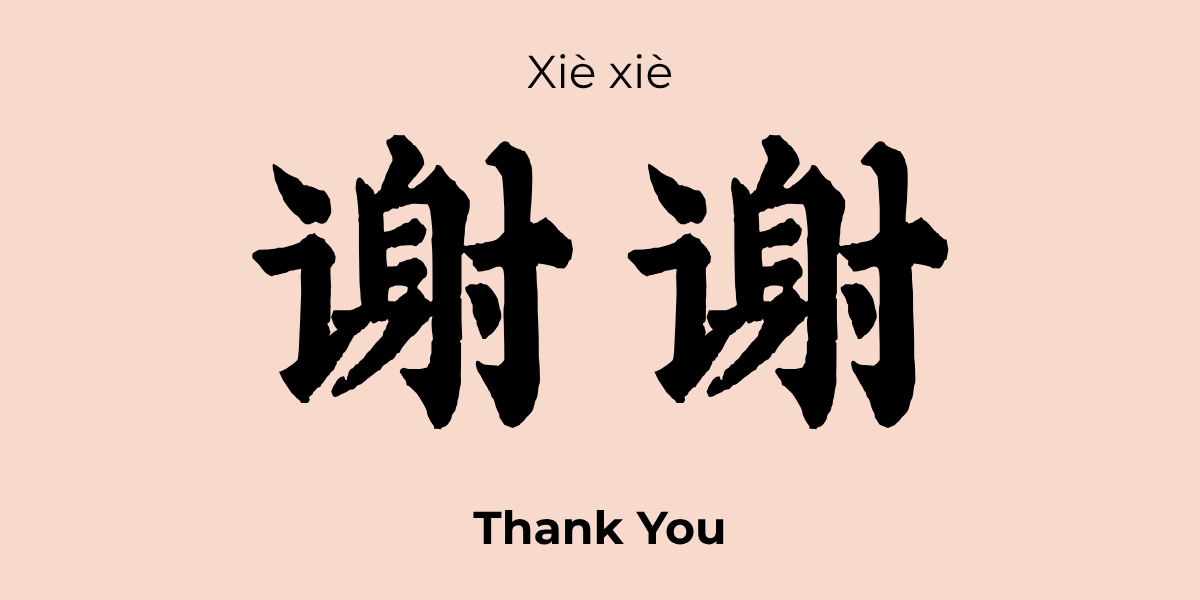
1. 谢谢 (Xièxiè) - Thank You
谢谢 is the most common way to say thank you in Mandarin and can be used for everyday settings with friends, family, colleagues and strangers.
Use this when someone is being polite or helpful, such as when you drop your wallet and a stranger picks it up and hands it back to you.
Example:
A: 给你 (gěi nǐ, here you go)
B: 谢谢 (xièxiè, thank you)
2. 谢谢你 (Xièxiè Nǐ) - Thank You (Polite)
谢谢你 also means “thank you”, but is more polite and personal because it addresses the person you are thanking.
The character 你 (nǐ) means “you”, so the expression can be translated as “thank you”.
It is mainly used to thank someone for helping you.
Example:
A: 地铁在这里 (dìtiě zài zhèlǐ, the subway is here)
B: 谢谢你 (xièxiè nǐ, thank you)
3. 多谢 (Duōxiè) - Many Thanks
多谢 can be translated as “many thanks” or “thanks a lot”.
It is mainly used orally rather than in writing, although 谢谢 is generally more common in everyday conversations.
Example:
A: 我觉得你应该问我们的老板 (wǒ juédé nǐ yīnggāi wèn wǒmen de lǎobǎn, I think you should ask our boss)
B: 多谢你的建议 (duōxiè nǐ de jiànyì, many thanks for your advice)
4. 非常感谢 (Fēicháng Gǎnxiè) -Thank You Very Much
非常感谢 is a formal and stronger way to express gratitude.
非常 (fēicháng) means “extremely” or “very”, while 感谢 (gǎnxiè) is “to thank” or “appreciate”.
You can use this phrase when you have received significant help and want to show stronger appreciation.
Example:
A: 我来教你怎么买火车票 (wǒ lái jiào nǐ zěnme mǎi huǒchē piào, I’ll show you how to buy a train ticket)
B: 非常感谢 (fēicháng gǎnxiè, thank you very much)
5. 太感谢了 (Tài Gǎnxiè Le) - Thank You So Much
太感谢了 is a more enthusiastic way to thank someone and is similar to “thank you so much” and “I’m very grateful.”
太 (tài) means “very” or “extremely”, and 感谢 (gǎnxiè) can be translated as “to thank”.
太感谢了 can be used when someone has been particularly helpful or considerate.
Example:
A: 我们终于完成了这个项目 (wǒmen zhōngyú wánchéngle zhège xiàngmù, we’ve finally finished this project).
B: 你帮了我这么大的忙,太感谢了! (Nǐ bāng le wǒ zhème dà de máng, tài gǎnxiè le! You've helped me so much, thank you!)
6. 感谢你 (Gǎnxiè Nǐ) - I Appreciate You
感谢你 means “I appreciate you”, and compared to 谢谢你, 感谢你 can sound more formal. It is often used when acknowledging someone’s help or kindness.
Example:
A: 祝贺你考上大学 (zhùhè nǐ kǎo shàng dàxué, congratulations on getting into university).
B: 感谢你一直支持我 (gǎnxiè nǐ yìzhí zhīchí wǒ, thank you for always supporting me).
7. 感激不尽 (Gǎnjī Bù Jìn) - I Can’t Thank You Enough
The expression '感激不尽’ is a more expressive way to show deep gratitude and conveys the message that you can’t put into words how thankful you are for someone’s help.
"感激” (gǎnjī) means “to be grateful”, while 不尽 (bù jìn) suggests that something can’t be fully expressed.
Example:
A: 这是完成的作品 (zhè shì wánchéng de zuòpǐn, here is the finished work).
B: 你的帮助让我感激不尽 (nǐ de bāngzhù ràng wǒ gǎnjī bù jìn, I can’t thank you enough for your help).
8. 谢谢您的帮助 (Xièxie Nín De Bǎngzhù) - Thank You For Your Help
If you want to thank someone politely, particularly in more professional situations, you can say 谢谢您的帮助.
This phrase is a little longer than the others, so let’s break it down:
谢谢 (xièxiè, thank you)
您 (nín, you (polite))
的 (de, grammar particle)
帮助 (bāngzhù, help)
Example:
A: 我朋友帮你在他公司争取到了一个面试机会 (wǒ péngyǒu bāng nǐ zài tā gōngsī zhēngqǔ dàole yīgè miànshì jīhuì, my friend got you an interview at his company).
B: 谢谢您的帮助 (zièxie nín de bǎngzhù, thank you for your help).
9. 真是太谢谢你了 (Zhēnshi Tài Xièxie Nǐ Le) - Thank You So Much (emphasised)
真是太谢谢你了 is a more enthusiastic way of thanking somebody, especially when they’ve done a massive favour.
真是 (zhēnshi) is used to add emphasis, making the phrase sound more heartfelt and genuine.
This is mainly used with family and friends in informal contexts.
Example:
A: 我收到你发来的信息,说你迷路了,所以我过来接你 (wǒ shōu dào nǐ fā de xìnxī, shuō nǐ mílùle, suǒyǐ wǒ guòlái jiē nǐ, I got your text that you were lost, so I came to pick you up).
B: 你特意来帮我,真是太谢谢你了 (nǐ tèyì lái bāng wǒ, zhēnshi tài xièxiè nǐ le! You came all this way to help me; thank you so much!
10. 非常感谢您的支持 (Fēicháng Gǎnxiè Nín De Zhīchí) - Thank You Very Much For Your Support
非常感谢您的支持 is another polite and formal way to thank someone for their support. It’s particularly helpful in professional settings such as presentations, written messages and meetings.
This is another long expression, so let’s break it up:
非常 (fēicháng, very)
感谢 (gǎnxiè, to thank or appreciate)
您 (nín, you (polite))
的 (de, grammar particle indicating possession)
支持 (zhīchí, support)
Example:
A: 你可以休较长时间的工作假 (nǐ kěyǐ jiào cháng shíjiān de gōngzuò jiǎ, you are allowed to take extended work leave)
B: 非常感谢您的支持与理解 (fēicháng gǎnxiè nín de zhīchí yǔ lǔjiě, thank you very much for your support and understanding).
Thank You Vocabulary Table
| Chinese | Pinyin | English |
|---|---|---|
| 谢谢 | Xièxiè | Thank you |
| 谢谢你 | Xièxiè nǐ | Thank you (polite) |
| 多谢 | Duōxiè | Many thanks |
| 非常感谢 | Fēicháng gǎnxiè | Thank you very much |
| 太感谢了 | Tài gǎnxiè le | Thank you so much |
| 感谢你 | Gǎnxiè nǐ | I appreciate you |
| 感激不尽 | Gǎnjī bù jìn | I can’t thank you enough |
| 谢谢您的帮助 | Xièxie nín de bãngzhù | Thank you for your help |
| 真是太谢谢你了 | Zhēnshi tài xièxie nǐ le | Thank you so much (emphasised) |
| 非常感谢你的支持 | Fēicháng gǎnxiè nín de zhīchí | Thank you very much for your support |
Now that you can say “thank you” in Chinese, why not learn more important everyday words: How to Say Yes and No in Chinese
FAQ
The most common way to say thank you in Chinese is 谢谢 (xièxiè). It’s suitable for everyday situations, including when talking to strangers.
The easiest way to respond is by saying 不客气 (bú kéqi), meaning “you’re welcome”, but you can also say “no need to thank me” 不用谢 (bú yòng xiè).
Yes, you can say 谢谢 to older people, but if you’d like to be more polite, you can use 谢谢您 (xièxiè nín).

Alice O'Connor
Alice is a UK-based writer and University of Leeds graduate in Asia Pacific Studies and Chinese. From her time living and studying abroad in Taipei she combines her studies with firsthand experiences to cover contemporary Chinese culture, trends, and Mandarin learning. Through her writing and storytelling, Alice helps readers connect with Chinese related topics.