
If you've recently downloaded Xiaohongshu — or stumbled across it while researching China travel or Chinese internet culture — you've probably noticed something immediately: almost nothing looks familiar.
People comment with words like 种草, 蹲, YYDS, or 冲, and even a direct translation often makes no sense at all. "Planted grass." "Squat." These aren't mistakes — they're a living language of internet slang and community shorthand that has evolved over more than a decade on one of China's most influential platforms.
This guide covers everything: what Xiaohongshu actually is, why it matters for Chinese learners specifically, the vocabulary you need to navigate it confidently, and how to use it as a genuine tool for language practice. By the end, you'll be reading comments, understanding reviews, and searching the platform the way millions of Chinese users do every day.
What Is Xiaohongshu (小红书)?
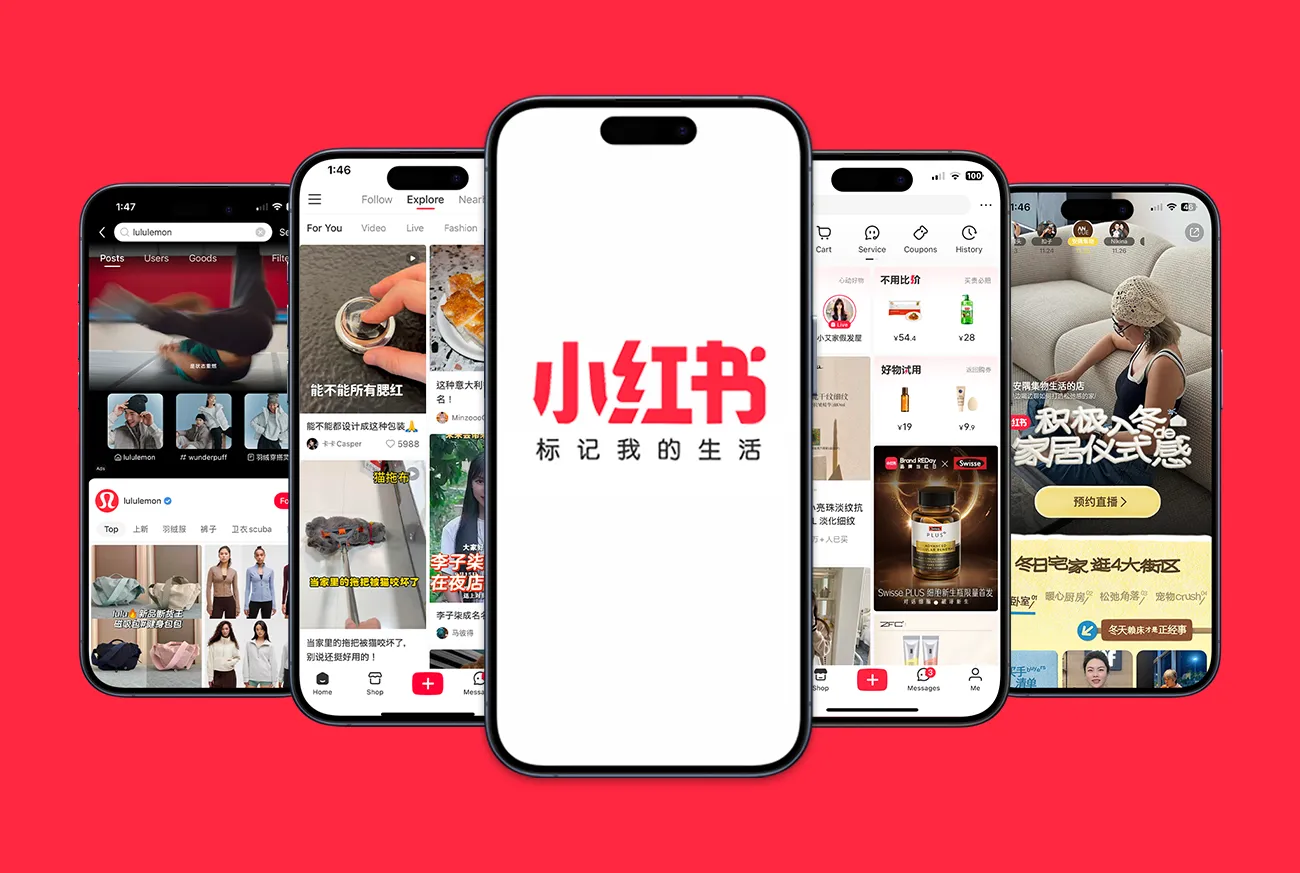
Xiaohongshu (小红书, xiǎohóngshū, literally "Little Red Book") is one of China's largest lifestyle and social commerce platforms, founded in 2013. Its English branding is simply "RED."
The best way to understand what it does: imagine Instagram, Pinterest, Google Reviews, and Amazon Reviews merged into a single app, with a user base that's largely young, urban, and female. People use it to share detailed personal experiences — skincare product reviews, restaurant recommendations, outfit ideas, travel itineraries, study tips, apartment tours, cooking tutorials. The content skews toward real, honest recommendations rather than polished influencer content, which is part of why it's become so trusted.
For many Chinese users, Xiaohongshu is now the first place they search before making a purchase, booking a restaurant, or planning a trip. The search function is arguably as important as the feed — which makes it genuinely different from most Western social platforms.
Why it matters for Mandarin learners: Xiaohongshu is one of the best sources of authentic, contemporary Chinese that exists outside China. The language is natural and current — not the formal register of a textbook or the scripted speech of a TV drama. Reading comments and posts on Xiaohongshu exposes you to the internet slang and everyday expressions that are increasingly part of modern Chinese as it's actually spoken and written.
Why Xiaohongshu's Language Is Different
If you try reading Xiaohongshu comments with a standard Chinese dictionary, you'll get stuck immediately. That's not a failure of your Chinese — it's the nature of Chinese internet language.
Xiaohongshu users communicate using abbreviations, memes, internet catchphrases, and playful expressions that evolve much faster than printed vocabulary. These aren't random — they follow patterns, and once you know the patterns, they start making sense quickly.
The most important principle: don't translate literally. 种草 doesn't mean planting grass. 蹲 doesn't mean squatting. 天花板 doesn't mean a physical ceiling. The cultural meaning and the dictionary meaning are different things — and understanding the cultural layer is what separates someone who can read Xiaohongshu from someone who can only stare at it. This is exactly the kind of culturally embedded language that makes Chinese so interesting once you get past the basics.
Part 1: Shopping Vocabulary
Shopping and product discovery are at Xiaohongshu's core. These are the expressions you'll see most often under product reviews and recommendation posts.
种草 (zhòng cǎo) — To be convinced to buy something
Literal meaning: Plant grass Actual meaning: To become interested in buying or trying something after seeing someone else's recommendation. When a review is so compelling that you immediately want the product, you've been 种草'd.
Example: 这个测评把我完全种草了。(Zhège cèpíng bǎ wǒ wánquán zhòngcǎo le.) — This review completely sold me on it.
English equivalent: "I'm sold." / "Now I need this."
拔草 (bá cǎo) — To change your mind about buying
Literal meaning: Pull out the grass Actual meaning: To give up on buying something, usually after discovering negative reviews or problems. The opposite of 种草.
Example: 看了差评之后我直接拔草了。(Kànle chàpíng zhīhòu wǒ zhíjiē bácǎo le.) — After reading the bad reviews, I immediately decided not to buy it.
平替 (píng tì) — Affordable alternative
One of the most searched terms on Xiaohongshu. Means a more affordable option that offers similar quality or appearance to a premium or luxury product.
Example: 这包是大牌的完美平替。(Zhè bāo shì dàpái de wánměi píngtì.) — This bag is the perfect affordable alternative to the designer version.
避雷 (bì léi) — Warning: avoid this
Literal meaning: Avoid landmines Actual meaning: A warning to stay away from something with poor quality, bad service, or misleading advertising. Creators post "避雷" content specifically to protect their followers from wasting money.
Example: 这几款口红必须避雷!(Zhè jǐ kuǎn kǒuhóng bìxū bìléi!) — These lipstick shades are ones to avoid!
踩雷 (cǎi léi) — Having a bad experience
Literal meaning: Step on a landmine Actual meaning: What happened when you ignored the 避雷 warnings — you bought the product or visited the place and it was disappointing or bad.
Example: 这家餐厅真的踩雷了。(Zhè jiā cāntīng zhēnde cǎiléi le.) — That restaurant was a real disappointment.
冲 (chōng) — Go for it!
One of the shortest and most common comments on the platform. When a product is highly recommended, users simply comment 冲! — meaning "buy it, don't hesitate." Think of it as the Chinese internet equivalent of "do it."
天花板 (tiānhuābǎn) — The best of the best
Literal meaning: Ceiling Actual meaning: The absolute highest standard in a category. When something is the 天花板, nothing can surpass it.
Example: 这家咖啡馆是上海咖啡店的天花板。(Zhè jiā kāfēiguǎn shì Shànghǎi kāfēidiàn de tiānhuābǎn.) — This café is the best coffee shop in Shanghai.
Our Materials
Check out our dedicated materials, designed by teachers for learners.
Part 2: Community Expressions
These are the expressions you'll see in comments and between creators and followers — the social glue of Xiaohongshu's community.
宝子 (bǎozi) — Bestie / Friend / Everyone
A warm, affectionate way to address followers or readers online. Creators often begin posts with 宝子们 (bǎozimen) — the equivalent of "hey everyone!" or "friends!" It signals a friendly, close community tone rather than a formal broadcaster-audience relationship.
姐妹 (jiěmèi) — Girl / Sis
Literally "sisters," but used casually among women on the platform regardless of whether they know each other. You'll see comments like 姐妹,求链接!(jiěmèi, qiú liànjiē!) — "Sis, can you share the link?"
蹲 (dūn) — Waiting for updates
Literal meaning: Squat Actual meaning: "I'm here, waiting." When users want more information from a creator — a product link, more photos, the next part of a review — they comment 蹲 to indicate they're waiting. Think of it as camping in the comments.
求链接 (qiú liànjiē) — Please share the link
Possibly the most common comment on shopping-related posts. If someone sees a product they want, this is what they ask.
码住 (mǎ zhù) — Saving this for later
The Chinese equivalent of bookmarking something mentally. When users find useful information they want to return to, they comment 码住! — "saving this!"
收藏了 (shōucáng le) — Saved!
Simply means the user has bookmarked or favourited the post. A signal to the creator that the content was valuable enough to keep.

Part 3: Compliments and Praise
Xiaohongshu culture tends toward enthusiasm. Here are the expressions used when something is genuinely impressive.
YYDS (永远的神, yǒngyuǎn de shén) — GOAT / Greatest of all time
One of the most widely used Chinese internet acronyms. Stands for 永远的神 — "eternally divine" or "forever legendary." Used for anything considered the absolute best: a beauty product, a restaurant, a singer, a travel destination.
Example: 这款防晒霜是YYDS。(Zhè kuǎn fángshàishuāng shì YYDS.) — This sunscreen is the GOAT.
封神 (fēngshén) — Legendary / Beyond impressive
Means something has achieved god-like status — it has exceeded all expectations. Used for concerts, makeup looks, food presentations, fashion moments.
神仙 (shénxiān) — Otherworldly / Perfect
Literally "immortal/fairy" — online it describes something that feels almost unreal in its beauty or perfection. Common expressions: 神仙颜值 (unreal beauty), 神仙搭配 (a perfect combination), 神仙地方 (an incredible place).
Part 4: Food and Travel Vocabulary
Two of Xiaohongshu's biggest content categories. These terms appear constantly in restaurant and travel posts.
探店 (tàn diàn) — Restaurant/café discovery post
Literal meaning: Explore a store Actual meaning: A post where someone visits and reviews a restaurant, café, or shop, typically including photos, prices, standout dishes, and overall impressions. When you search 上海探店 (Shànghǎi tàn diàn), you'll find locals' personal reviews of Shanghai restaurants and cafés — far more useful than international review sites for local recommendations.
打卡 (dǎ kǎ) — Check-in / Visit and document
Literal meaning: Punch a card Actual meaning: Visiting a popular or trendy place and documenting the experience with photos. Applied to tourist attractions, restaurants, themed cafés, events, and anything that's currently trending. 打卡 culture is a significant driver of foot traffic to Xiaohongshu-viral locations.
Citywalk
Borrowed directly from English and now one of the most popular content formats on Xiaohongshu. Refers to exploring a city on foot, discovering neighbourhoods, and documenting local culture. Searching 上海Citywalk will surface dozens of walking route recommendations from local users — genuinely useful for anyone visiting or living in Chinese cities.
攻略 (gōnglüè) — Guide / Strategy
A detailed how-to guide or comprehensive review — the term literally means "strategy" or "battle plan." When someone posts 日本旅行攻略 (Rìběn lǚxíng gōnglüè, Japan travel guide), it's a thorough, practical post with everything you need to know. Searching [destination] + 攻略 is one of the most effective ways to use Xiaohongshu for travel planning.
Join the Mandarin Zest Club
Join the Mandarin Zest Club and become part of a welcoming international community of Chinese learners from all over the world. Practice together, stay motivated, and connect with people who share your goals for learning Mandarin.

Part 5: Using Xiaohongshu as a Chinese Learning Tool
This is the section most guides skip entirely — and it's the most valuable part for Mandarin learners.
Xiaohongshu is authentic, current, real Chinese. Unlike textbooks, it contains the Chinese that people actually write to each other — shortened, abbreviated, culturally loaded, fast-moving. Every scroll is exposure to language as it's genuinely used in 2026.
Here's how to use it deliberately as a learning tool:
Search topics you're interested in in Chinese. If you're learning to cook Chinese food, search 家常菜 (jiācháng cài, home-cooked dishes). If you're interested in Chinese skincare, search 护肤 (hùfū). Searching in Chinese means reading results in Chinese — immediate, low-stakes reading practice on content you're actually motivated to read.
Learn comment culture before reading articles. The comments are shorter, more repetitive, and use a constrained set of slang. Starting with comments rather than long posts is a gentler entry point. Once 种草, 蹲, 冲, and 天花板 are automatic, longer content becomes more navigable.
Use it alongside structured vocabulary study. The New HSK vocabulary lists give you the frequency-ordered core vocabulary. Xiaohongshu gives you a live environment where that vocabulary appears in real use. The combination — structured foundation, authentic exposure — is what the complete self-study roadmap recommends.
Notice what you keep seeing. Xiaohongshu's algorithm surfaces repeated patterns. The same 10-20 slang terms appear constantly. Once you know 种草, 平替, 探店, 打卡, and 攻略, you've covered the majority of what you'll encounter in everyday browsing.
Use Pleco alongside. When you encounter an unfamiliar character on Xiaohongshu, Pleco's camera function lets you point your phone at text and translate instantly. It's the most practical dictionary tool for this kind of real-world reading practice.
The vocabulary on Xiaohongshu also connects to broader Chinese internet culture covered on the Mandarin Zest blog — including Chinese internet slang and apps used in China.

Quick Reference: Xiaohongshu Vocabulary
| Term | Pinyin | Meaning |
|---|---|---|
| 种草 | zhòng cǎo | convinced to buy / influenced |
| 拔草 | bá cǎo | decided not to buy |
| 平替 | píng tì | affordable alternative |
| 避雷 | bì léi | warning: avoid this |
| 踩雷 | cǎi léi | had a bad experience |
| 冲 | chōng | go for it / buy it |
| 天花板 | tiānhuābǎn | the absolute best |
| YYDS | — | greatest of all time |
| 封神 | fēngshén | legendary / beyond impressive |
| 神仙 | shénxiān | otherworldly / perfect |
| 宝子 | bǎozi | friend / bestie / everyone |
| 姐妹 | jiěmèi | girl / sis |
| 蹲 | dūn | waiting for updates |
| 求链接 | qiú liànjiē | please share the link |
| 码住 | mǎ zhù | saving this for later |
| 收藏了 | shōucáng le | saved! |
| 探店 | tàn diàn | restaurant/shop review post |
| 打卡 | dǎ kǎ | visit and document |
| 攻略 | gōnglüè | guide / strategy |
FAQ
Yes — Xiaohongshu (RED) is available on the App Store and Google Play in most countries. The app is primarily in Chinese, though the interface has been partially localised for international users. You don't need a Chinese phone number to browse, but some features require account registration.
Not exactly. Both platforms focus on visual content, but Xiaohongshu is significantly more search-driven and review-focused. Many users visit specifically to research purchases or plan trips — more like TripAdvisor or a lifestyle search engine than a social feed.
The English name RED comes from Xiaohongshu's original branding. 小红书 literally means "Little Red Book" — the same English name as the famous Mao-era political text, though Xiaohongshu's founders have said the name was chosen for its auspicious colour associations rather than any political connection.
Genuinely, yes — with the caveat that the language is internet-register Chinese, not formal Mandarin. It's excellent for exposure to contemporary written Chinese and internet slang, less useful for HSK exam preparation or classical Chinese. Pair it with structured study for the best results.
避雷 is the warning — content designed to help you avoid a bad experience before it happens. 踩雷 is the confession — what happened when someone actually had the bad experience. One is preventive, one is retrospective.

Emma Huang
Emma is originally from Sichuan, China, and is currently studying Sociology at UCLA. As a native Mandarin speaker with experience living in an English-speaking academic environment, she understands the challenges and rewards of language learning. She is interested in cultural communication and creating engaging digital materials.