This isn't an argument against books, apps, or discipline. You need all three. But Chinese is different. With its tones, characters, and grammar that's completely unlike English, it's much harder to learn in isolation than languages like Spanish or French.
Studying alongside other people helps overcome those challenges in ways solo study often can't. Here's why, and what actually happens when you learn as part of a community.
Chinese Is a Spoken Language Before It's a Written One
Most self-study plans quietly become reading and writing plans. That's almost inevitable. Books, apps, and flashcards are all designed to be used alone, in silence, at your own pace.

For Chinese, it is a major problem. Mandarin is a tonal language, which means pitch changes the meaning of a word. Mā (mother), má (hemp), mǎ (horse), and mà (to scold) may look nearly identical in pinyin, but to a native speaker they're as different as entirely separate words. Learning to recognize those differences is only half the challenge—you also have to produce them accurately, without stopping to think.
Thinking of learning Chinese online? Find advice here:
Can You Become Fluent in Chinese Online in 2026? An Honest Answer
There's also a psychological reason practicing alone is so difficult. You already know what you intended to say, so your brain quietly edits your own speech as you hear it. Instead of noticing a mistake, you often hear the word you meant to pronounce. Another person doesn't have that advantage. They hear only what actually came out of your mouth, making them the most accurate mirror of your pronunciation.
Every conversation creates a feedback loop: you speak, someone reacts, you adjust, and your brain recalibrates. That's why speaking with other people isn't just good practice—it's one of the fastest ways to sound more like someone who actually speaks Chinese.
Join the Mandarin Zest Club
Join the Mandarin Zest Club and become part of a welcoming international community of Chinese learners from all over the world. Practice together, stay motivated, and connect with people who share your goals for learning Mandarin.

Characters Stick Better When They're Shared
People often imagine learning Chinese characters as a lonely exercise: endless spaced repetition and long evenings spent memorizing stroke after stroke. Some of that is unavoidable. But memorizing a character and truly remembering it are two different things.
Characters you've only seen on a screen tend to fade together over time. Characters you've actually used—with another person—are much harder to forget. Maybe you texted them to a study partner, wrote them on a whiteboard during class, misread them aloud and got corrected, or used them in a conversation that made everyone laugh. Each of those moments gives the character another connection in your memory.
This reflects a well-established principle in cognitive psychology: the richer the context in which you learn something, the easier it is to recall later. Instead of relying on a single memory from a flashcard, you're linking the character to a conversation, an emotion, a correction, a joke, or a personal experience.
That's one of the hidden advantages of learning with other people. Without putting in much extra effort, you naturally encounter the same characters in different situations and from different perspectives. Over time, those repeated, varied experiences create a much stronger memory than simple repetition ever could.
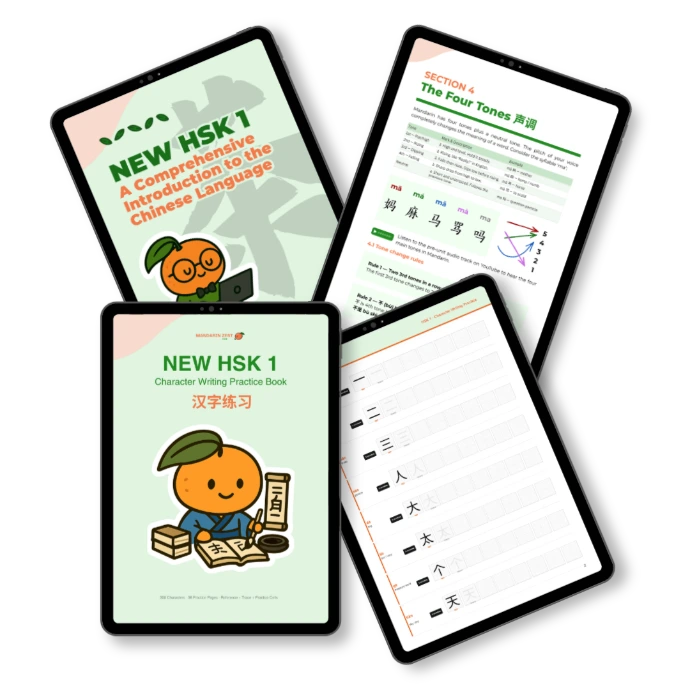
Learn Chinese Characters the right way!
Chinese characters are often seen as one of the most intimidating parts of learning Mandarin. This guide was created to change that.

The Real Cost of Studying Alone Isn't Time—It's Silence
Ask self-taught Chinese learners what they struggle with most, and you'll hear the same answer again and again: speaking. Not because they never studied, but because they rarely had anyone to speak with.
That's the biggest limitation of learning alone. You can spend an hour a day on an app, keep your streak alive, only to freeze the first time a native speaker asks a question. The problem isn't a lack of knowledge. It's a lack of practice using that knowledge under real-world conditions.
Language apps are built around predictable interactions. You know the question is coming, you have time to think, and there's usually only one correct answer. Real conversations work differently. People interrupt, change the subject, speak faster than you're ready for, use unfamiliar words, and ask questions you never anticipated. You have to process what you hear and respond on the spot.
That's a skill you can't develop in silence.
join our discord server!
Join the Mandarin Zest community on Discord. Discover Chinese pop culture and internet trends, chat with fellow learners, and interact with teachers and fluent moderators.

Learning with other people introduces that unpredictability from the very beginning. A classmate phrases something differently than you would. Someone asks a question you hadn't considered. It can feel uncomfortable at first, but that's precisely the point.
Every unpredictable conversation trains your brain to think in Chinese rather than translate from your native language. Over time, what once felt intimidating becomes familiar, and the conversations that used to leave you speechless start to feel surprisingly manageable.
Motivation Isn't a Personality Trait—It's a Product of Structure
There's a common belief that some people are simply "disciplined" while others aren't. According to this idea, successful self-learners have a special kind of willpower that allows them to study consistently, while everyone else eventually gives up. But that's not really how motivation works.
Motivation isn't something you either possess or lack. It's something that your environment can create or quietly destroy.
New to Chinese? Start Here.
The no-fluff roadmap for absolute beginners — what to learn first, what to skip, and how to actually stick with it past week two.

When you study alone, you have to rebuild your motivation from scratch every single day. You have to decide what to study, when to study, how to measure progress, and whether today's effort is actually moving you forward. Maintaining that level of self-direction for months or years is difficult for anyone. It's not a question of character; it's a question of structure.
Now compare that with knowing that three other people are waiting for you online every Tuesday at 7 p.m. They expect you to show up. They expect you to have reviewed the vocabulary from last week. They want to hear what happened in your life and how you would explain it in Chinese. That pressure isn't about forcing yourself to be more disciplined: it's the power of social accountability.
And social accountability is often a much stronger force than motivation alone.
Learning with others also solves one of the biggest hidden problems in self-study: decision fatigue. Alone, you're responsible for being your own teacher, curriculum designer, scheduler, and source of encouragement—all indefinitely.
In a group, much of that uncertainty disappears. The focus is already set: tones, HSK grammar, conversation practice, daily topics, or whatever skill the group is working on. Instead of spending your energy planning your learning, you can spend it actually learning.
The goal isn't to become someone with endless discipline. The goal is to build a system that makes consistency easier. A good learning environment doesn't replace motivation but creates the conditions where motivation naturally lasts.

The Honest Downsides of Group Learning
I don't want to oversell this. Group study isn't automatically better in every dimension, and pretending otherwise wouldn't be honest.
Group sessions run at a shared pace, which means sometimes you're bored waiting for others to catch up, and sometimes you're scrambling to keep up yourself. Scheduling is a real friction point. If your group meets Tuesday at 7pm and you have a standing conflict, that's a genuine loss, not a small one.
And there's an emotional cost too: speaking in front of others, especially early on, can feel exposing in a way that a silent flashcard app never does. Some learners need a period of quiet, private practice before they're ready to speak out loud in front of anyone, and that's a completely legitimate way to build the confidence to eventually join a group.
The honest answer is that self-study and group study aren't really competitors — they're complements. The vocabulary you drill alone is what you'll draw on when you're put on the spot in a group session. The tones you get corrected on in a group are what you'll rehearse quietly on your own between sessions. Learners who do both tend to progress faster than learners who commit fully to either one.
What This Looks Like in Practice
If there's one thing I'd want a self-taught learner to take from all this, it's not "throw out your apps" but "find people to use the language with, regularly, on a schedule you didn't set yourself." The specific format matters less than the fact that it happens consistently and involves other humans reacting to what you say.
That's more or less how our own study club came together. We're a community of Chinese learners who meet regularly online to speak Chinese: not just study about it, but actually use it, out loud, with other people.
Join the Mandarin Zest Club
Join the Mandarin Zest Club and become part of a welcoming international community of Chinese learners from all over the world. Practice together, stay motivated, and connect with people who share your goals for learning Mandarin.
Sessions run throughout the week at different times, organized by theme and by focus area (speaking, writing, grammar, reading, and more), and by level, so whether you're brand new or already comfortable with conversation, there's a session that fits where you are. Every session comes with supporting materials, and new sessions get added by our session leaders as the month goes on, so it stays fresh rather than repetitive.
If the isolation of self-study sounds familiar — the flashcards that never quite turn into conversation, the motivation that fades by week three — that's exactly the gap this kind of community is built to close. You don't need to be fluent to join, and you don't need to have your tones perfect. You just need to be willing to show up, say something imperfect out loud, and let someone else's reaction help you fix it. That's the part no app or textbook can do for you, and it's the part that actually moves the needle.
Come find one of our sessions this month, pick a level and a focus area that fits where you are, and see what a week of speaking Chinese with other learners does that a month of studying alone couldn't.
However you get there, the milestone worth chasing isn't a longer streak or a bigger flashcard deck but the first time you say something in Chinese, get a real reaction from a real person, and understand it without having to think. Everything else is just the road to that moment.
The best Chinese materials!
Chinese doesn’t have to be complicated
with the right tools and structure, it actually makes sense.