
So you've made it past HSK 1. You can greet someone, count to 100, and maybe order a coffee without completely panicking. That's genuinely real progress — more than most people who say they "want to learn Chinese" ever achieve.
But now comes the part that actually separates casual learners from people who build real Mandarin ability: HSK 2 under the new HSK 3.0 standard.
This isn't your older sibling's HSK 2. The overhauled framework — officially rolled out in 2021 and now widely implemented — demands significantly more from learners at every level. HSK 2 now covers 500 vocabulary words, introduces more complex grammar, and tests comprehension in ways the old exam simply didn't. If you've been Googling "HSK 2 study plan" and landing on guides referencing 150 or 300 words, you're reading outdated information.
This guide is built around the New HSK 3.0 standard. It gives you a realistic, month-by-month, week-by-week plan to pass HSK 2 in three months — along with what the exam actually covers, which grammar patterns to master, and the honest mistakes that cause learners to fall short.
Let's get into it.
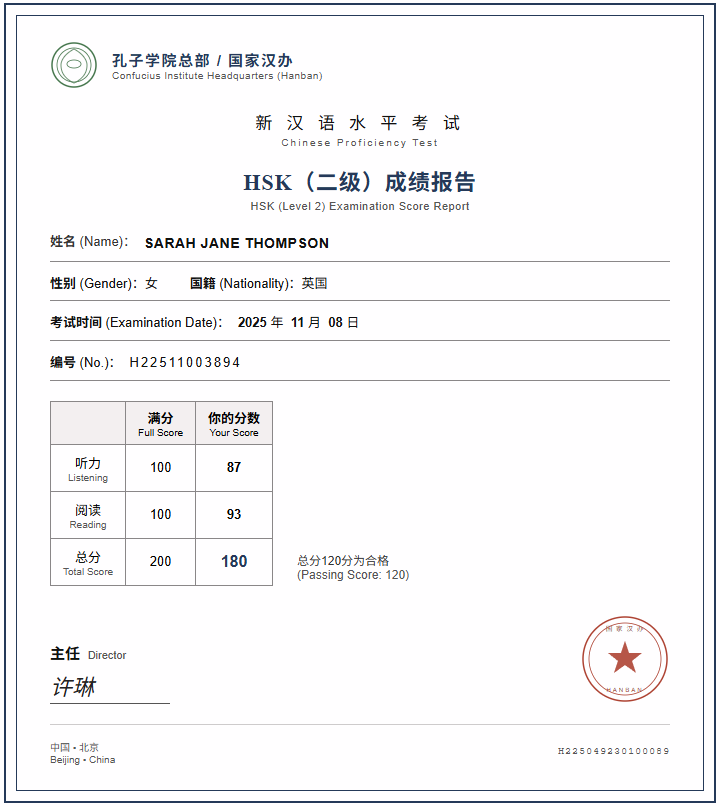
What Is the New HSK 3.0 and How Is It Different?
The HSK (Hànyǔ Shuǐpíng Kǎoshì — 汉语水平考试) is the official standardized Mandarin proficiency exam administered by Hanban, the Chinese government body overseeing Chinese language education internationally. It's the benchmark most universities, employers, and visa programs use when assessing Mandarin ability.
The original HSK system had six levels. The New HSK 3.0 restructured this into nine levels, with the lower levels substantially expanded in scope. Here's what changed most at HSK 2:
Old HSK 2: ~300 vocabulary words. Focused on simple recognition and matching. Fairly forgiving exam format.
New HSK 3.0 Level 2: 500 vocabulary words total (cumulative from HSK 1). Deeper grammar expectations. More demanding reading passages. Character recognition without pinyin support throughout.
The jump is real. Anyone studying with old materials or old flashcard decks is preparing for a test that no longer exists in that form.
What HSK 2 (New) tests you on:
- Listening: Short dialogues and monologues on everyday topics — daily routines, simple descriptions, basic instructions. Audio plays at a natural pace; there's no slow mode.
- Reading: Short passages and sentence-level comprehension. No pinyin. You're expected to recognize characters and extract meaning from context.
- Writing: Sentence-level construction, filling in blanks with correct characters, and basic ordering exercises.
It's still classified as an "elementary" level — but the honest framing is this: HSK 2 is the point where Mandarin stops being a party trick and starts becoming a skill. Treat it accordingly.

Before You Start: Honest Prerequisites
Your HSK 1 Foundation Needs to Be Solid
HSK 2 is cumulative. That 500-word figure includes the vocabulary from HSK 1 — which means every gap in your HSK 1 knowledge becomes a gap you're carrying into a harder exam. Before committing to this three-month plan, do a quick, honest self-audit:
- Can you write (not just recognize) the core HSK 1 characters from memory?
- Do you understand Subject-Verb-Object sentence structure, negation with 不 and 没, and the difference between 是 and 有?
- Can you read a simple 3–4 sentence paragraph in Chinese characters without pinyin and get the gist?
- Can you follow a slow conversation on a basic topic (greetings, family, daily routine) without getting lost?
If several of these feel shaky, invest 2–3 focused weeks on HSK 1 consolidation before starting this plan. It will save you time in the long run. A weak foundation doesn't just slow Month 1 — it causes compounding confusion through Month 3.
Understand How You Learn Best
Mandarin is not a language that rewards passive study. Reading about grammar without producing sentences doesn't work. Listening without speaking back doesn't wire your brain the way it needs to be wired. Whatever study methods you use, make sure at least some portion of every session involves you actively producing — writing sentences, speaking out loud, constructing something from memory.
This matters especially for tonal language acquisition. Your brain needs output practice to build the neural pathways that let you hear and process tones automatically. Passive listening alone won't get you there in time for an exam.
Get Your Materials Sorted Before Day One
One of the most common ways learners waste their first two weeks is spending them deciding what to study with. You open YouTube, watch three videos, switch to an app, realize the app uses old vocabulary lists, buy a textbook that's too advanced — and suddenly it's Week 3 and you haven't actually studied HSK 2 yet.
For this plan, you need three things lined up from the start:
- A structured textbook aligned with New HSK 3.0 standards — this is your backbone
- A flashcard system (Anki is free and excellent; physical cards work too)
- A source of listening material at HSK 2 level (your textbook's audio, YouTube channels, or HSK-specific podcasts)
On the textbook front: our NEW HSK 2: The Beginner Days Are Over — Let the Adventure Begin! is built specifically for this stage of the New HSK 3.0 framework. It's 200 pages that assume you've completed HSK 1 — so it doesn't waste time re-explaining the basics, but it also doesn't assume you're already intermediate. Grammar is introduced progressively, reading passages mirror the exam format, and the sentence-building exercises are designed to move you from passive recognition to active production.
It's $16, and with code HORSEYEAR2026 you get 10% off — the same code that over 50,000 students in our community have used.
Our HSK 2 Materials
Are you planning to take the HSK 2 exam? Check out our dedicated materials, designed by teachers for learners.
The 3-Month New HSK 3.0 Level 2 Study Plan
This plan is built around 5–6 study days per week at 50–70 minutes per session. It's designed to take you from the start of HSK 2 content all the way through exam-ready confidence. Each month has a specific goal, and each week has a defined focus so you're never wondering "what should I be doing today?"
Month 1: Vocabulary Foundation and Grammar Exposure
Month goal: Learn the first 250 new HSK 2 vocabulary words, understand how they connect to your HSK 1 base, and get comfortable with the core grammar patterns introduced at this level.
The first month is about volume and exposure. You're building the raw material your brain will refine in Months 2 and 3. Don't get perfectionist about it — your goal is familiarity, not mastery. Mastery comes from repeated encounters, and you'll get those.
Weekly breakdown:
| Week | Vocabulary Focus | Grammar Focus |
|---|---|---|
| Week 1 | Words 1–60 (new HSK 2 vocabulary) | Review of HSK 1 grammar: 不/没, 是/有, basic SVO, 的 |
| Week 2 | Words 61–120 | Duration phrases: 学了三个小时, 等了很久 |
| Week 3 | Words 121–180 | 比 comparisons: 我比他忙, 今天比昨天冷 |
| Week 4 | Words 181–250 | Review week: full Month 1 vocabulary quiz + grammar exercises |
Daily routine (55–65 min):
- 15 min — Anki flashcard review: new batch of ~15 words, plus spaced repetition of older cards
- 25 min — Textbook: grammar explanation + written exercises for the week's focus
- 10 min — Write 5–8 new characters by hand. Don't skip this. Motor memory reinforces character retention in a way screens simply can't replicate.
- 10 min — Listen to one short HSK 2 dialogue. Don't stress about understanding everything — just keep your ear active.
The mistake to avoid in Month 1: Treating vocabulary as a standalone task disconnected from grammar. Every new word should appear in at least one sentence you construct yourself. If you learn 买 (to buy), write: 我想买一杯咖啡。 If you learn 贵 (expensive), write: 这个太贵了。 Sentences, not lists.
Month 2: Grammar Depth, Reading, and Active Production
Month goal: Complete the vocabulary list (words 251–500), deepen your grammar understanding from recognition to active use, and begin working with short reading passages.
Month 2 is where the work gets harder and more rewarding. You're shifting from "I've seen this word" to "I can use this grammar pattern correctly." That shift requires more active practice — more writing, more speaking out loud, more time with passages rather than isolated sentences.
Weekly breakdown:
| Week | Vocabulary Focus | Grammar + Skills Focus |
|---|---|---|
| Week 5 | Words 251–320 | 把 sentences: 把书放在桌子上, 把作业写完 |
| Week 6 | Words 321–390 | 是...的 structure: 我是昨天来的, 她是坐飞机去的 |
| Week 7 | Words 391–450 | Resultative complements: 写完, 听懂, 做好, 找到 |
| Week 8 | Words 451–500 + full review | First full timed reading section (mock exam format) |
Daily routine (60–70 min):
- 15 min — Anki review: full rotating deck now includes all vocabulary encountered so far
- 30 min — Textbook: grammar section + passage reading + comprehension questions
- 15 min — Sentence production: write 5–8 sentences using that week's grammar focus, then check them
- 5–10 min — Shadow a dialogue out loud: listen once, then repeat phrase by phrase, matching tone and rhythm
Key milestone to hit by end of Week 8: You should be able to read a 5–8 sentence HSK 2 passage in Chinese characters (no pinyin) and answer comprehension questions with at least 70% accuracy. If you're consistently below that, spend an extra week on reading before moving to Month 3. There's no shame in adjusting the timeline — what matters is that you're ready when you sit the exam.
On shadowing: This technique gets underused by HSK 2 students who see it as a "speaking thing" rather than an exam prep technique. But shadowing trains your brain to process spoken Mandarin faster, which directly improves your listening section performance. Ten minutes of shadowing per day is worth more to your listening score than 30 minutes of passive audio.
Join the Mandarin Zest Club
Join the Mandarin Zest Club and become part of a welcoming international community of Chinese learners from all over the world. Practice together, stay motivated, and connect with people who share your goals for learning Mandarin.

Month 3: Exam Simulation, Weak Point Elimination, and Confidence Building
Month goal: Simulate exam conditions, identify and fix the specific weak points your practice reveals, and go into exam day genuinely prepared rather than just hoping for the best.
Month 3 is not about learning new things. It's about converting everything you've built into reliable performance under time pressure. The enemy at this stage isn't ignorance — it's anxiety and unfamiliarity with the exam format. Timed practice sessions fix both.
Weekly breakdown:
| Week | Focus |
|---|---|
| Week 9 | Full mock exam #1 under timed conditions. Review every error — not just the answer, but why you got it wrong. |
| Week 10 | Targeted drilling based on mock exam results. If listening failed you: daily shadowing + transcript work. If reading was slow: timed passage drills. If vocabulary had gaps: flashcard intensive. |
| Week 11 | Full mock exam #2. Listening section deep dive — go question by question and analyze patterns in what you miss. |
| Week 12 | Light review only. Character writing reinforcement. Skim vocabulary list and flag any lingering uncertainty. Rest. |
Daily routine (45–55 min):
- 20 min — Targeted drilling of your identified weak areas
- 15 min — Listening practice with transcript review afterward
- 10 min — Vocabulary list skim: anything that feels uncertain gets flagged and added to your Anki deck for daily review
- 5 min — Write out 5 characters from memory. Maintain the habit.
The Week 12 rule: Don't cram. If you've followed this plan honestly, you're ready. Cramming in the final week increases anxiety and causes you to second-guess things you actually know. Keep sessions under 45 minutes, focus on review rather than new exposure, and get proper sleep the night before the exam. Your brain consolidates memory during sleep — that last night of rest is part of your preparation, not a break from it.
The Grammar Points You Must Own Before Exam Day
These patterns appear repeatedly throughout the New HSK 3.0 Level 2 exam — in listening, reading, and writing sections. You need to go beyond recognizing them when you see them; you need to be able to produce them correctly and quickly.
1. 比 (bǐ) — Comparisons Structure: A + 比 + B + adjective Example: 今天比昨天冷。(Today is colder than yesterday.) Common error: Adding 更 or 非常 after the adjective. You don't say 比他更高 — just 比他高.
2. 把 (bǎ) — Disposal construction Structure: Subject + 把 + Object + Verb + complement Example: 请把书放在桌子上。(Please put the book on the table.) Common error: Using 把 with stative verbs or verbs without a result/direction complement. 我把书看 is wrong — it needs a complement: 我把书看完了.
3. 是...的 — Emphasizing past context Structure: 是 + [time/place/manner] + Verb + 的 Example: 我是昨天从北京来的。(I came from Beijing yesterday.) Common error: Confusing this with simple past tense. 是...的 emphasizes how, when, or where something happened — not just that it did.
4. Resultative complements Structure: Verb + result Common examples: 写完 (finish writing), 听懂 (understand through listening), 做好 (do well/finish), 找到 (find/manage to find), 买到 (successfully buy) Common error: Not understanding that the complement describes the result of the action, not the action itself. 我没听懂 means "I listened but didn't understand" — the effort happened, the result didn't.
5. Duration phrases Structure: Verb + 了 + time duration Example: 我学了三个月了。(I've been studying for three months.) The double 了 signals ongoing action continuing into the present. 我学了三个月 (single 了) implies it might be over.
6. 了 (le) — Both uses Aspect marker (verb + 了): marks completed action. 我吃了饭。 Sentence-final modal (了 at end): marks change of state or new situation. 他来了。天黑了。 Common error: Using only one interpretation. The exam will test both.
7. Measure words — for real this time 一本书 (books), 一张纸 (flat things), 一杯水 (cups/glasses), 一件衣服 (clothing), 一条鱼 (fish, rivers, roads), 一只猫 (animals) Common error: Defaulting to 一个 for everything. At HSK 2, this gets penalized. Measure words need to become automatic.
8. Verb-directional complements 上来/下去/进来/出去 as verb complements indicating direction relative to the speaker. Example: 他走进来了。(He walked in [toward me].)
9. 还是 vs. 或者 — Choice in different contexts 还是 for questions: 你喝茶还是咖啡? 或者 for statements: 你可以喝茶或者咖啡。 Common error: Using 或者 in a question. Sounds unnatural and will cost you points.
10. 一点儿 vs. 有点儿 一点儿 = a little (modifies nouns, or softens requests): 我要一点儿糖. / 请说慢一点儿. 有点儿 = somewhat (modifies adjectives, implies mild negativity): 今天有点儿冷。/ 这个有点儿贵。
If any of these feel unclear, go back to your textbook's grammar section before moving on. Spending 30 extra minutes truly understanding 把 sentences is worth more than memorizing 20 extra vocabulary words.
How to Study 500 Vocabulary Words Without Losing Your Mind
500 words sounds like a lot. Spread over 12 weeks of active study, it's about 42 new words per week — which is roughly 6–7 words per day. That's very manageable, but only if you approach it correctly.
Don't study words in isolation. A word without context is just a string of sounds. A word in a sentence is something your brain can anchor to a meaning, a situation, a feeling. When you learn 担心 (to worry), don't just write it down 10 times. Write: 妈妈很担心我。Then write: 你不用担心。Now it lives in your memory as something real.
Use spaced repetition, not cramming. Anki is built around this principle — you see a card when you're about to forget it, which is the optimal moment for memory consolidation. If you're studying 40 words on Monday and not seeing them again until Friday, you're losing 60–70% of them by Wednesday. Spaced repetition solves this automatically.
Prioritize high-frequency words. Not all 500 words appear equally often in the exam. Words related to time, location, daily activities, feelings, and basic descriptions come up constantly. Words in specialized or unusual categories might appear once. Use your textbook's word lists as a guide — the ordering is typically frequency-informed.
Review old vocabulary in new contexts. By Month 2, you should be constructing sentences that use HSK 1 and HSK 2 vocabulary together. 我昨天很担心,因为我的朋友没来。This kind of sentence-building keeps older vocabulary active while reinforcing newer words.
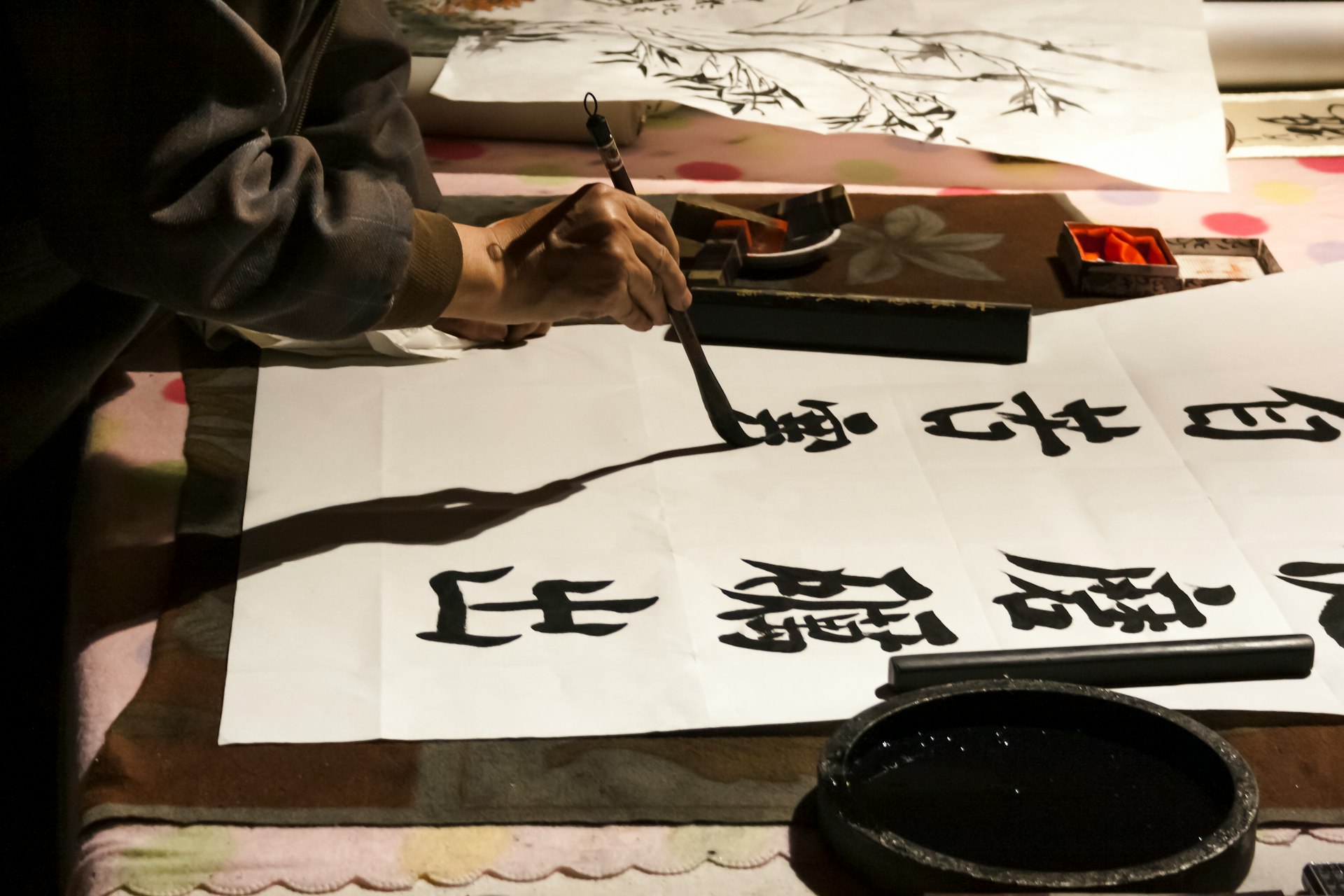
Don't ignore characters. The New HSK 3.0 exams are character-based — pinyin is largely absent from the reading sections. Learning a word's meaning and pronunciation without its written form means you've only half-learned it. Every vocabulary study session should include at minimum a look at the written character, and ideally some writing practice.
Learn Chinese Characters the right way!
Chinese characters are often seen as one of the most intimidating parts of learning Mandarin. This guide was created to change that.
Listening Section: Why People Fail It and How to Not
The listening section is where overconfident test-takers lose the points they expected to get. Here's the pattern: someone studies vocabulary diligently, feels reasonably good about reading, and assumes listening will be fine because they've "heard some Chinese." Then the audio plays at natural speed, the speakers don't pause to let you catch up, and they miss three consecutive questions trying to recover from the first one they lost.
The fix is simple but requires discipline: start listening practice from Week 1.
Not Week 9. Not "when your vocabulary is strong enough." Week 1.
Here's why: listening comprehension in a tonal language is a skill that develops slowly through consistent exposure, not quickly through intensive cramming. Ten minutes of listening every day for 84 days builds a fundamentally different kind of comprehension than seven hours of listening the week before the exam.
Concrete practices that work:
Active listening with transcripts. Listen to a short HSK 2 dialogue. Don't look at the transcript. Note what you understood and what you missed. Listen again. Still don't look. Now check the transcript and identify specifically which words or phrases you missed — and why. Was it a character you don't know? A grammar pattern you didn't parse fast enough? A tone that sounded different in natural speech than in isolation? That analysis is where the learning happens.
Shadowing. Find a short dialogue (1–2 minutes). Listen to one phrase. Pause. Repeat it out loud at the same pace, matching the tones as closely as you can. Continue phrase by phrase. This feels awkward and even a bit silly at first — that means it's working. Shadowing forces your brain to process spoken Mandarin at the speed it's actually spoken, which is the fundamental skill the listening exam tests.
Tone sandhi and natural speech. In natural spoken Mandarin, tones blur together, syllables get reduced, and speakers don't enunciate clearly for the benefit of learners. 不 changes tone before a 4th-tone syllable. 一 changes tone depending on what follows. Knowing tones in isolation doesn't fully prepare you for how they sound in connected speech. Listening practice exposes you to this; studying vocabulary lists alone doesn't.
Reading Section: Building Real Character Recognition
The reading section at HSK 2 includes sentence matching, true/false comprehension, and fill-in-the-blank exercises — all in Chinese characters with no pinyin. This is a significant step up from what many learners have been practicing.
The core issue most students face: they've been reading Chinese with pinyin as a crutch, and they haven't noticed. They feel confident reading HSK 2 texts when the romanization is there, then completely freeze when it's removed. This is a solvable problem, but it requires deliberate practice.
Cover the pinyin. Starting from Week 1, make a habit of covering the pinyin in your textbook and reading the characters first. If you get stuck, try to work it out from context before uncovering. This is uncomfortable. That discomfort is the training.
Read whole sentences, not individual characters. Fluent readers don't decode a text character by character — they read in chunks, using context and grammar patterns to predict what's coming. You can start building this habit now by always reading complete sentences rather than stopping to analyze every individual character.
Practice with the exam format. The HSK 2 reading section has specific question types: true/false judgment, sentence ordering, and matching. Practicing these specific formats is important — not because the content is tricky, but because format familiarity reduces the cognitive overhead on exam day, leaving more mental bandwidth for actual comprehension.
Time yourself. Many students who score well on untimed practice fall apart under exam conditions not because they don't know the material but because they're too slow. Build the habit of working under gentle time pressure from Month 2 onward. Set a timer and complete reading exercises within it.
Join our discord server!
Join the Mandarin Zest community on Discord. Discover Chinese pop culture and internet trends, chat with fellow learners, and interact with teachers and fluent moderators.

Should You Study Every Day? On Rest and Consistency
The plan above is structured around 5–6 study days per week, and that's deliberate. Rest days aren't wasted days — they're when memory consolidation happens. Sleep and rest are when your brain processes and stores what it encountered during active study. Grinding through 7 straight days every week tends to produce diminishing returns by Week 3 and burnout by Week 6.
That said, "rest day" doesn't mean "zero Chinese." Passive exposure on rest days — watching a Chinese drama with subtitles, listening to a Mandarin podcast while cooking, reading a short text without pressure — keeps your brain in the language without the cognitive load of active study.
What consistency actually looks like over three months:
You will miss some sessions. Life happens. The measure of a good study plan isn't whether you hit every single day — it's whether you get back on track quickly when you don't. Miss one day? Pick up where you left off the next day. Miss a full week due to illness or travel? Go back one week in the plan and resume from there. The structure exists to anchor you, not to make you feel guilty when you fall short of it.
New HSK 3.0 vs. Old HSK 2: A Clear Comparison
If you've been studying from older resources, here's what's changed and why it matters:
| Old HSK 2 | New HSK 3.0 Level 2 | |
|---|---|---|
| Vocabulary | ~300 words | 500 words (cumulative) |
| Characters | Recognized with pinyin support | No pinyin in most reading sections |
| Grammar depth | Basic patterns | More complex constructions (把, 是...的, resultative complements) |
| Listening | Slower, clearer audio | Natural speech pace |
| Overall difficulty | Gentle step from HSK 1 | Meaningful jump requiring 3+ months of dedicated study |
If your flashcard deck or study app still references the old vocabulary list, update it. The exam has moved on. Materials built for the new standard (including our HSK 2 textbook) won't have this problem, but apps and free resources online vary widely in whether they've updated.
The Bottom Line
Three months. Five hundred words. A few dozen grammar patterns. And the discipline to show up most days with a clear plan.
That's what it takes to pass New HSK 3.0 Level 2 — and it's genuinely achievable. Plenty of learners do it. The ones who succeed aren't necessarily smarter or more gifted with languages. They just took the preparation seriously, used the right materials, and didn't let a missed session turn into a missed week.
You already proved you can do this when you passed HSK 1. HSK 2 is the next chapter — harder, yes, but the kind of harder that leads somewhere real. By the time you pass it, you'll be able to read simple texts, follow basic conversations, and start to feel the actual texture of the language. That's not a small thing.
If you want a textbook that's built specifically for this stage — aligned with the New HSK 3.0 standard, structured to build vocabulary and grammar progressively, and designed to move you from passive recognition to active use — our NEW HSK 2: The Beginner Days Are Over — Let the Adventure Begin! is where to start. It's 200 pages, $16, and built for exactly where you are right now.
Use code HORSEYEAR2026 for 10% off at checkout.
好了 — you have the plan. Now go use it. 加油!
FAQ
Three months is realistic for most learners studying 50–60 minutes per day, 5–6 days per week. Learners who put in more time or who already have solid HSK 1 foundations can do it in less. If your schedule only allows 30 minutes per day, plan for five to six months.
For many learners, yes. It's a verifiable credential that signals genuine commitment and a concrete level of proficiency. Employers in fields involving China relations, universities with Mandarin programs, and visa applications for study in China all recognize it. Even if you never formally "use" the certificate, the exam preparation itself forces a level of rigor that free-form studying rarely produces.
Technically nothing stops you from registering for any HSK level. Practically, HSK 3 (New HSK 3.0) is a substantial step — 600 additional words on top of HSK 2, more complex grammar, and longer reading passages. Most learners who skip levels find themselves overwhelmed and end up going back. The sequential path is faster overall.
The standard pass mark is 120 out of 200 points (60%). The exam is divided between listening, reading, and writing sections. Most candidates find reading the most manageable section and listening the trickiest on first sitting.
Yes — the writing section includes character-level tasks. You don't need to produce freehand essays, but you do need to be able to write target vocabulary characters correctly. Regular handwriting practice (even 5–10 minutes per day) throughout your preparation prevents this from becoming a problem on exam day.