In most Western countries, counting on your fingers goes up to 5 on one hand and 10 on two. If you want to show someone the number 8, you hold up eight fingers.
In China, you can show any number from 1 to 10 using a single hand.
It's one of those small cultural details that travellers to China often notice without fully understanding — a market vendor flashing a price, a friend confirming a number across a noisy restaurant, someone gesturing a quantity when speech isn't practical. Once you know the system, you'll spot it everywhere.
There's one important caveat: the gestures for 7, 8, 9, and 10 vary between mainland China and Taiwan — and some directly conflict. This guide covers all regional versions clearly, so you know exactly what to use and where.
Why Does China Have a One-Hand Number System?
The system developed for practical reasons. China has enormous dialect diversity — and some numbers are genuinely hard to distinguish aurally across dialects. The number 4 (四, sì) and 10 (十, shí) sound similar in some southern varieties. A gesture system bridges that gap reliably.
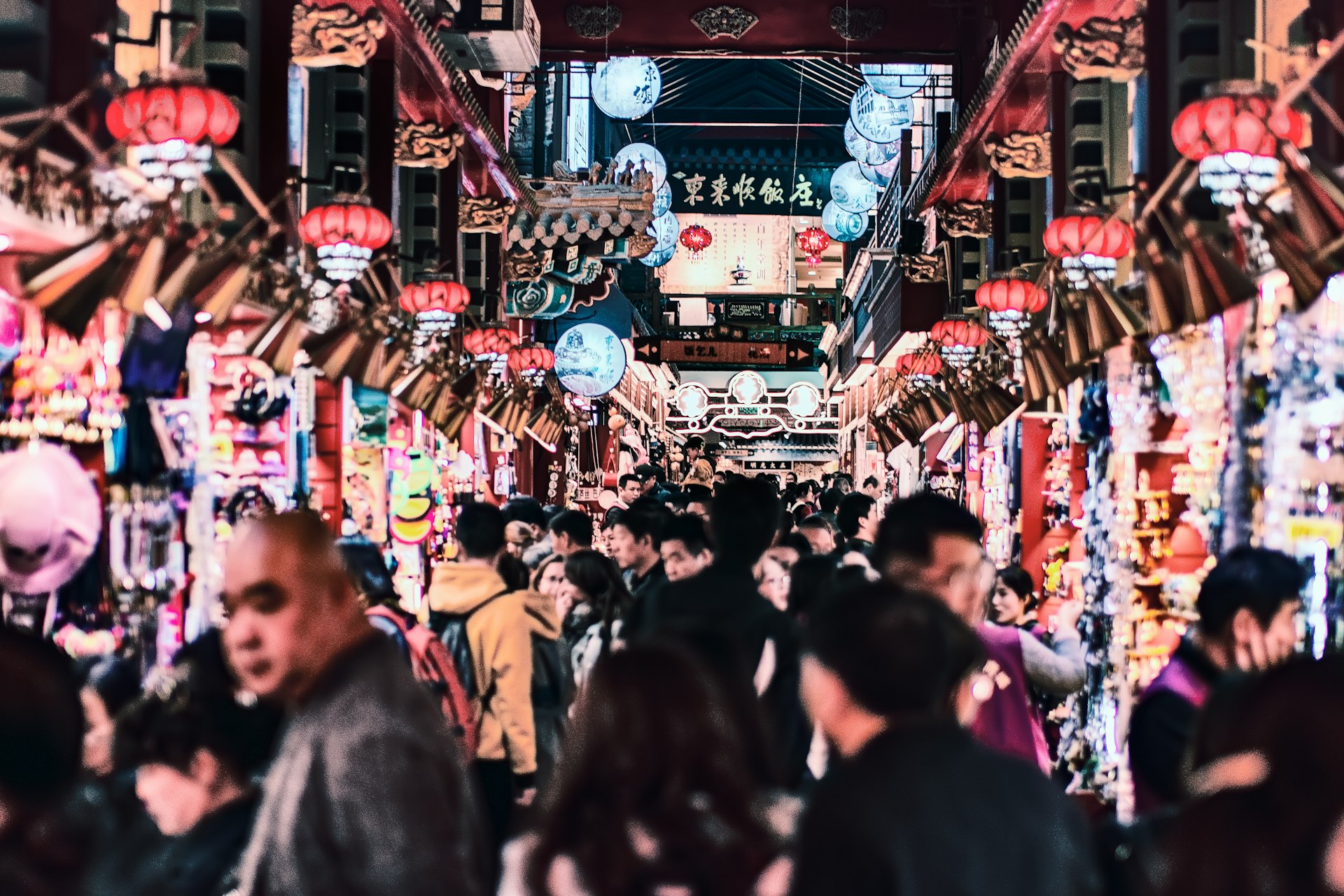
It also has roots in trading culture, where merchants could communicate prices discreetly by feeling hand gestures inside a sleeve — useful when bargaining in crowded markets without revealing your bid to onlookers. Today the system is used in markets, restaurants, drinking games (划拳, huáquán), and anywhere verbal communication is impractical or noisy.
Numbers 1–6: The Same Everywhere
Good news first: numbers 1 through 6 are consistent across mainland China and Taiwan.
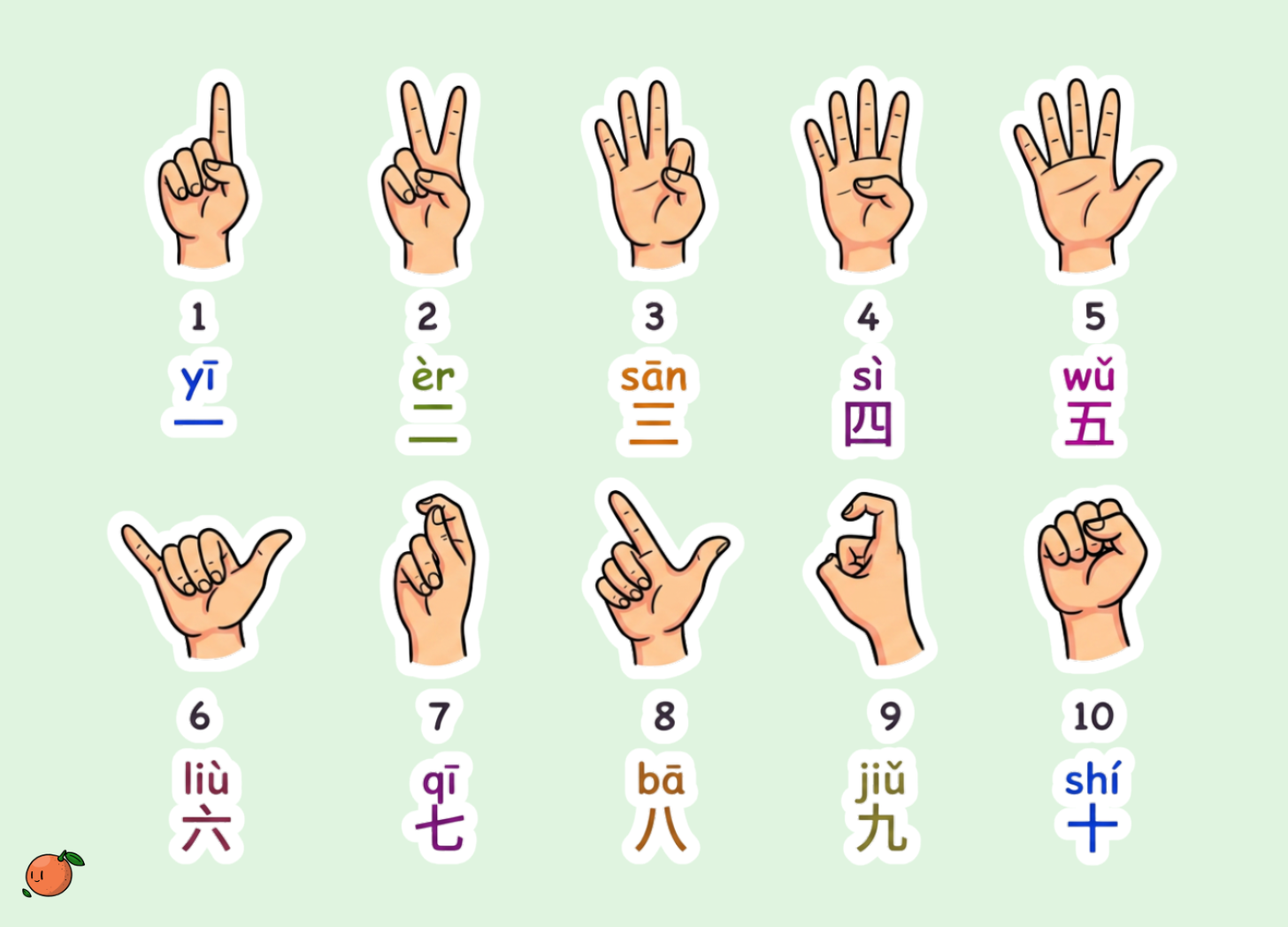
1 (一, yī)
Extend your index finger. Identical to Western counting. Also carries cultural associations with unity and new beginnings.
2 (二, èr)
Extend index and middle fingers — a V or peace sign shape. In numerical context, unambiguously means two.
3 (三, sān)
Extend thumb, index, and middle fingers — a shape resembling the numeral 3. Note this differs from the Western version, which typically uses index, middle, and ring fingers.
4 (四, sì)
Thumb tucked against the palm, four fingers extended. Clear and easy to recognise.
5 (五, wǔ)
Open palm, all five fingers spread. Universal.
6 (六, liù)
Extend thumb and little finger ("hang loose"), fold the three middle fingers into the palm. Consistent across all regions. Also resembles holding a phone to your ear.
Numbers 7–10: Regional Differences
This is where the systems diverge. Taiwan's 7, 8, and 9 follow a logical "add one finger" progression from the L-shape — but this means they differ from mainland gestures for the same numbers.
7 (七, qī)
Mainland China: Bring all five fingertips together, pointing upward — a bunched or pinching shape, sometimes described as the gesture for rubbing money. This is the standard across Northern and most of mainland China.
Taiwan: Thumb and index finger in an L-shape (the same as mainland China's gesture for 8). This is the key conflict — what Taiwan calls 7, the mainland calls 8.
8 (八, bā)
The character 八 consists of two diverging strokes, and the most common gestures echo this visually.
Mainland China: Thumb and index finger forming an L-shape — like a handgun pointing sideways. Other fingers closed, palm facing the observer. This is the most widely used version.
Taiwan: Thumb, index finger, and middle finger all extended (three fingers) — one more finger than the mainland 8. So Taiwan's 8 = mainland's L-shape plus the middle finger.
9 (九, jiǔ)
Mainland China: Index finger bent and hooked inward, other fingers loosely closed. The hook mirrors the curved stroke in the character 九.
Taiwan: Thumb, index, middle, and ring fingers all extended (four fingers), little finger curled down — one more finger added to Taiwan's 8.
So the Taiwan pattern for 7–9 is elegant:
- 7 = L-shape (2 fingers: thumb + index)
- 8 = L-shape + middle finger (3 fingers)
- 9 = L-shape + middle + ring (4 fingers)
Each number simply adds one more finger. The mainland uses completely different shapes for all three.
10 (十, shí)
The character 十 is a cross, and the gestures reference this — but the most common mainland version is simpler than many guides suggest.
Mainland China (most common): Closed fist, palm facing the signer. Some distinguish zero (thumb in) from ten (thumb out).
Mainland China (alternative): Cross the index fingers of both hands to form an X shape (十), mimicking the character directly.
Taiwan (most common): Two index fingers crossed forming an X or cross shape — the same as the mainland alternative, but standard in Taiwan rather than optional.
Our Materials
Are you planning to take the HSK exam or just want improve your reading skills? Check out our dedicated materials, designed by teachers for learners.
Complete Regional Comparison
| # | Character / Pinyin | Mainland China | Taiwan |
|---|---|---|---|
| 1 | 一 yī | Index finger | Same |
| 2 | 二 èr | Index + middle (V shape) | Same |
| 3 | 三 sān | Thumb + index + middle | Same |
| 4 | 四 sì | 4 fingers, thumb tucked | Same |
| 5 | 五 wǔ | Open palm | Same |
| 6 | 六 liù | Thumb + little finger | Same |
| 7 | 七 qī | All fingertips bunched | L-shape (thumb + index) ⚠️ |
| 8 | 八 bā | L-shape (thumb + index) | Thumb + index + middle ⚠️ |
| 9 | 九 jiǔ | Hooked index finger | Thumb + index + middle + ring ⚠️ |
| 10 | 十 shí | Fist | Two index fingers crossed (X) |
⚠️ = differs from mainland — what Taiwan calls 7 is what mainland calls 8; Taiwan's 8 and 9 add one finger each time
The Taiwan Pattern Explained Simply
Taiwan's 7, 8, and 9 are a sequential system:
7 = L-shape (same as mainland 8) 8 = L-shape + middle finger 9 = L-shape + middle + ring finger
Each number adds one finger to the previous. It's internally logical — but because Taiwan's starting point (7 = L-shape) is what the mainland uses for 8, everything shifts by one. This is the most important thing to understand if you're moving between mainland and Taiwan contexts.

Lucky and Unlucky Numbers
Not all numbers carry equal cultural weight in China:
Lucky:
- 6 (六, liù) — sounds like 流 (liú, to flow). 六六大顺 means everything goes smoothly
- 8 (八, bā) — sounds like 发 (fā, to prosper). The luckiest number in Chinese commercial culture — phone numbers with 8s command premium prices
- 9 (九, jiǔ) — sounds like 久 (jiǔ, long-lasting). Popular for anniversaries and gifts
Unlucky:
- 4 (四, sì) — sounds like 死 (sǐ, death). Many buildings in China skip floors 4, 14, 24 and so on
Essential Number Vocabulary
| Character | Pinyin | Meaning |
|---|---|---|
| 一 | yī | 1 |
| 二 | èr | 2 |
| 三 | sān | 3 |
| 四 | sì | 4 |
| 五 | wǔ | 5 |
| 六 | liù | 6 |
| 七 | qī | 7 |
| 八 | bā | 8 |
| 九 | jiǔ | 9 |
| 十 | shí | 10 |
| 百 | bǎi | 100 |
| 千 | qiān | 1,000 |
| 多少钱? | Duōshao qián? | How much? |
| 太贵了 | Tài guì le | Too expensive |
| 便宜一点 | Piányí yīdiǎn | A little cheaper |
Join our discord server!
Join the Mandarin Zest community on Discord. Discover Chinese pop culture and internet trends, chat with fellow learners, and interact with teachers and fluent moderators.

Final Thoughts
The Chinese number gesture system is one of those small pieces of practical cultural knowledge that disproportionately improves your experience in China — and understanding the Taiwan variation adds a genuinely interesting layer about how Chinese-speaking cultures have evolved distinctly across different regions.
Learn the gestures for wherever you're going. The L-shape for 8 on the mainland and for 7 in Taiwan is probably the single most useful gesture to internalise — because 8 appears everywhere in Chinese commercial life, and in Taiwan you'll need the L-shape one number earlier.
FAQ
Yes — particularly in markets, food stalls, loud restaurants, and during drinking finger games (划拳). Less common in formal settings, but completely normal in everyday commercial interactions.
On the mainland: bunched fingers for 7, L-shape for 8, hooked index for 9, fist for 10. In Taiwan: L-shape for 7, three fingers for 8, four fingers for 9, crossed X for 10. In Hong Kong: both systems are broadly understood.
The systems evolved independently. Taiwan's version follows a clean sequential logic (add one finger each time from the L-shape), while the mainland system uses shapes that visually reference the character forms. Neither is wrong — they simply developed differently.
Show digits sequentially — the gesture for 1 followed by the gesture for 6 means 16. A fist (zero) can be used to indicate tens: gesture for 2 + fist = 20. For larger numbers, most people simply show a phone screen or write the number down.
Yes — Chinese number gestures are fully integrated into Chinese Sign Language, giving them a formal linguistic status beyond everyday commercial use.