There are 300 vocabulary words required for HSK 3.0 Level 1, based on the latest official syllabus.
The new HSK 3.0 is an updated version of the Chinese proficiency test that introduces a more structured progression, higher vocabulary requirements, and a closer alignment with real-life language use compared to the previous version.
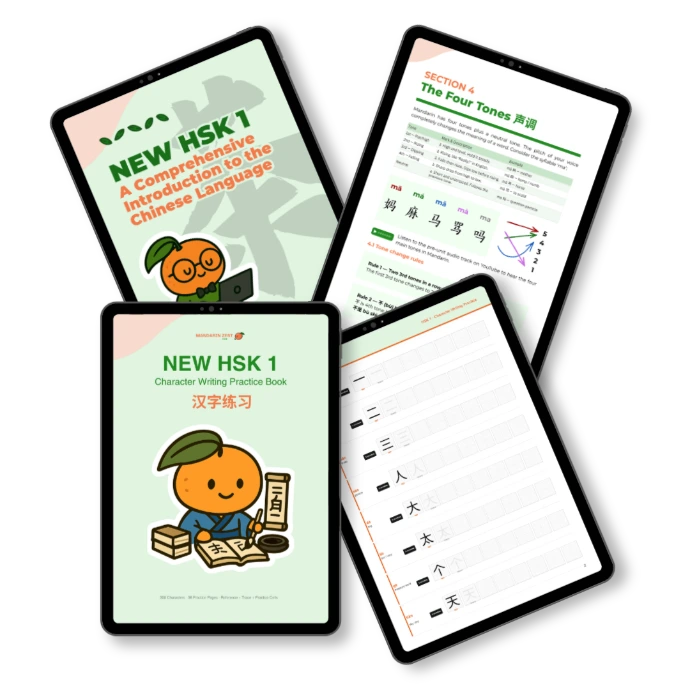
Our HSK 1 Materials
Are you planning to take the HSK 1 exam? Check out our dedicated materials, designed by teachers for learners.
Your Dynamic Snippet will be displayed here... This message is displayed because you did not provide enough options to retrieve its content.
Get the pdf version: New HSK 1 Vocab List.pdf
| No. | Word | Pinyin | Part of Speech | Translation |
|---|---|---|---|---|
| 1 | 爱 | ài | verb | to love |
| 2 | 八 | bā | number | eight |
| 3 | 爸爸 | bàba | noun | dad |
| 4 | 吧 | ba | auxiliary | particle indicating suggestion, confirmation, or hesitation |
| 5 | 白天 | báitiān | noun | daytime |
| 6 | 百 | bǎi | number | hundred |
| 7 | 半 | bàn | number、(adverb) | half; (half, semi-) |
| 8 | 包子 | bāozi | noun | steamed stuffed bun |
| 9 | 杯子 | bēizi | noun | cup, glass |
| 10 | 本 | běn | classifier | measure word for books |
| 11 | 边 | biān | noun、suffix | side; suffix indicating direction |
| 12 | 病 | bìng | noun、verb | illness, disease; to be ill |
| 13 | 不 | bù | adverb | not, no |
| 14 | 不客气 | bú kèqi | you’re welcome | |
| 15 | 不要 | búyào | adverb | don’t, not want |
| 16 | 菜 | cài | noun | vegetable, dish |
| 17 | 茶 | chá | noun | tea |
| 18 | 唱 | chàng | verb | to sing |
| 19 | 超市 | chāoshì | noun | supermarket |
| 20 | 车 | chē | noun | vehicle, car |
| 21 | 吃 | chī | verb | to eat |
| 22 | 出租车 | chūzūchē | noun | taxi |
| 23 | 穿 | chuān | verb | to wear |
| 24 | 打电话 | dǎ diànhuà | to make a phone call | |
| 25 | 大 | dà | adjective | big |
| 26 | 大家 | dàjiā | pronoun | everyone |
| 27 | 大学 | dàxué | noun | university |
| 28 | 大学生 | dàxuéshēng | noun | university student |
| 29 | 到 | dào | verb | to arrive |
| 30 | 的 | de | auxiliary | possessive or modifying particle |
| 31 | 第 | dì | prefix | prefix for ordinal numbers |
| 32 | 弟弟 | dìdi | noun | younger brother |
| 33 | 点 | diǎn | classifier、(noun) | measure word for small round things; (point, dot) |
| 34 | 店 | diàn | noun | shop, store |
| 35 | 电话 | diànhuà | noun | telephone, phone call |
| 36 | 电脑 | diànnǎo | noun | computer |
| 37 | 电视 | diànshì | noun | television |
| 38 | 电影 | diànyǐng | noun | movie, film |
| 39 | 电影院 | diànyǐngyuàn | noun | cinema |
| 40 | 东西 | dōngxi | noun | thing, object |
| 41 | 都 | dōu | adverb | all, both |
| 42 | 读 | dú | verb | to read |
| 43 | 读书 | dúshū | verb | to read a book |
| 44 | 对 | duì | adjective、preposition、(verb、classifier) | correct, right; to, toward, for; (to treat; pair) |
| 45 | 对不起 | duìbuqǐ | verb | sorry |
| 46 | 多 | duō | adjective、verb、pronoun、(number、adverb) | many, much; to have more; how many, how much; (more, over) |
| 47 | 多少 | duōshao | pronoun | how many, how much |
| 48 | 儿子 | érzi | noun | son |
| 49 | 二 | èr | number | two |
| 50 | 饭 | fàn | noun | cooked rice, meal |
| 51 | 饭店 | fàndiàn | noun | restaurant |
| 52 | 房间 | fángjiān | noun | room |
| 53 | 非常 | fēicháng | adverb | very, extremely |
| 54 | 飞机 | fēijī | noun | airplane |
| 55 | 分 | fēn | classifier、(verb、noun) | minute; (to divide, to separate; component, part) |
| 56 | 分钟 | fēnzhōng | classifier | minute |
| 57 | 高兴 | gāoxìng | adjective | happy, glad |
| 58 | 歌 | gē | noun | song |
| 59 | 哥哥 | gēge | noun | older brother |
| 60 | 个 | gè | classifier | measure word for general objects |
| 61 | 给 | gěi | verb、(preposition) | to give; (to, for) |
| 62 | 公司 | gōngsī | noun | company |
| 63 | 工作 | gōngzuò | verb、noun | work; to work |
| 64 | 狗 | gǒu | noun | dog |
| 65 | 贵 | guì | adjective | expensive |
| 66 | 国 | guó | noun | country |
| 67 | 还 | hái | adverb | still, also; quite |
| 68 | 孩子 | háizi | noun | child |
| 69 | 汉语 | Hànyǔ | noun | Chinese language |
| 70 | 汉字 | Hànzì | noun | Chinese character |
| 71 | 好 | hǎo | adjective、(adverb)、(verb) | good; (well); (to be fond of) |
| 72 | 好吃 | hǎochī | adjective | delicious, tasty |
| 73 | 好看 | hǎokàn | adjective | good-looking |
| 74 | 好听 | hǎotīng | adjective | pleasant to listen to |
| 75 | 好玩儿 | hǎowánr | adjective | fun, amusing |
| 76 | 号 | hào | noun、classifier | number; measure word for people, items |
| 77 | 喝 | hē | verb | to drink |
| 78 | 和 | hé | preposition、conjunction | and, with |
| 79 | 很 | hěn | adverb | very |
| 80 | 后 | hòu | noun | behind, later |
| 81 | 回 | huí | verb、(classifier) | to return; (measure word for times) |
| 82 | 会 | huì | verb | can, to be able to |
| 83 | 火车 | huǒchē | noun | train |
| 84 | 鸡蛋 | jīdàn | noun | egg |
| 85 | 几 | jǐ | pronoun、number | how many, a few |
| 86 | 家 | jiā | noun、classifier、(suffix) | home, family; measure word for families; (suffix indicating a person specializing in something) |
| 87 | 家人 | jiārén | noun | family member |
| 88 | 见 | jiàn | verb | to see |
| 89 | 件 | jiàn | classifier | measure word for items |
| 90 | 饺子 | jiǎozi | noun | dumpling |
| 91 | 叫 | jiào | verb、(preposition) | to be called, to call; to make; (by) |
| 92 | 姐姐 | jiějie | noun | older sister |
| 93 | 今年 | jīnnián | noun | this year |
| 94 | 今天 | jīntiān | noun | today |
| 95 | 九 | jiǔ | number | nine |
| 96 | 觉得 | juéde | verb | to feel, to think |
| 97 | 开 | kāi | verb | to open |
| 98 | 开车 | kāichē | verb | to drive |
| 99 | 看 | kàn | verb | to see, to look |
| 100 | 看病 | kànbìng | verb | to see a doctor |
| 101 | 看见 | kànjiàn | verb | to see |
| 102 | 可以 | kěyǐ | verb、adjective | can, may; okay, fine |
| 103 | 课 | kè | noun | class, lesson |
| 104 | 口 | kǒu | noun、classifier | mouth; measure word for family members, bites |
| 105 | 块 | kuài | classifier | measure word for pieces, chunks, money |
| 106 | 来 | lái | verb | to come |
| 107 | 老师 | lǎoshī | noun | teacher |
| 108 | 了 | le | auxiliary | particle indicating completed action or change of state |
| 109 | 冷 | lěng | adjective | cold |
| 110 | 里 | lǐ | noun | inside, in, mile |
| 111 | 两 | liǎng | number | two |
| 112 | 零 | líng | number | zero |
| 113 | 六 | liù | number | six |
| 114 | 妈妈 | māma | noun | mom |
| 115 | 吗 | ma | auxiliary | question particle |
| 116 | 买 | mǎi | verb | to buy |
| 117 | 卖 | mài | verb | to sell |
| 118 | 忙 | máng | adjective、verb | busy; to be busy |
| 119 | 猫 | māo | noun | cat |
| 120 | 没关系 | méi guānxi | never mind, it’s okay | |
| 121 | 没事 | méishì | verb | to have nothing to do, it doesn’t matter |
| 122 | 没有 | méiyǒu | verb、adverb | to not have; have not |
| 123 | 妹妹 | mèimei | noun | younger sister |
| 124 | 们 | men | suffix | plural suffix for pronouns and nouns |
| 125 | 米饭 | mǐfàn | noun | cooked rice |
| 126 | 面包 | miànbāo | noun | bread |
| 127 | 面条儿 | miàntiáor | noun | noodles |
| 128 | 明年 | míngnián | noun | next year |
| 129 | 明天 | míngtiān | noun | tomorrow |
| 130 | 名字 | míngzi | noun | name |
| 131 | 哪 | nǎ | pronoun | which |
| 132 | 哪个 | nǎge | pronoun | which one |
| 133 | 哪里 | nǎlǐ | pronoun | where |
| 134 | 哪儿 | nǎr | pronoun | where |
| 135 | 哪些 | nǎxiē | pronoun | which ones |
| 136 | 那 | nà | pronoun、(conjunction) | that; (then) |
| 137 | 那边 | nàbiān | pronoun | over there |
| 138 | 那个 | nàge | pronoun | that one |
| 139 | 那里 | nàlǐ | pronoun | there |
| 140 | 那儿 | nàr | pronoun | there |
| 141 | 那些 | nàxiē | pronoun | those |
| 142 | 男 | nán | adjective | male |
| 143 | 男朋友 | nánpéngyou | noun | boyfriend |
| 144 | 呢 | ne | auxiliary | question or continuation particle |
| 145 | 能 | néng | verb | can, be able to |
| 146 | 你 | nǐ | pronoun | you |
| 147 | 你好 | nǐ hǎo | hello | |
| 148 | 你们 | nǐmen | pronoun | you plural |
| 149 | 年 | nián | noun、classifier | year; measure word for years |
| 150 | 您 | nín | pronoun | you |
| 151 | 牛奶 | niúnǎi | noun | milk |
| 152 | 女 | nǚ | adjective | female |
| 153 | 女儿 | nǚ’ér | noun | daughter |
| 154 | 女朋友 | nǚpéngyou | noun | girlfriend |
| 155 | 女士 | nǚshì | noun | lady, Ms. |
| 156 | 朋友 | péngyou | noun | friend |
| 157 | 便宜 | piányi | adjective | cheap |
| 158 | 漂亮 | piàoliang | adjective | beautiful |
| 159 | 苹果 | píngguǒ | noun | apple |
| 160 | 七 | qī | number | seven |
| 161 | 起床 | qǐchuáng | verb | to get up |
| 162 | 千 | qiān | number | thousand |
| 163 | 前 | qián | noun | front, before |
| 164 | 钱 | qián | noun | money |
| 165 | 请 | qǐng | verb | please |
| 166 | 请问 | qǐngwèn | verb | may I ask |
| 167 | 去 | qù | verb | to go |
| 168 | 去年 | qùnián | noun | last year |
| 169 | 热 | rè | adjective | hot |
| 170 | 人 | rén | noun | person |
| 171 | 认识 | rènshi | verb | to know, to recognize |
| 172 | 日 | rì | classifier、(noun) | measure word for days; (sun) |
| 173 | 三 | sān | number | three |
| 174 | 商店 | shāngdiàn | noun | store, shop |
| 175 | 上 | shàng | noun、verb | up, above; to go up |
| 176 | 上班 | shàngbān | verb | to go to work |
| 177 | 上课 | shàngkè | verb | to attend class |
| 178 | 上午 | shàngwǔ | noun | morning |
| 179 | 上学 | shàngxué | verb | to go to school |
| 180 | 少 | shǎo | adjective、verb | few, little; to lack |
| 181 | 谁 | shéi/shuí | pronoun | who |
| 182 | 什么 | shénme | pronoun | what |
| 183 | 生病 | shēngbìng | verb | to get sick |
| 184 | 十 | shí | number | ten |
| 185 | 时候 | shíhou | noun | moment, time |
| 186 | 时间 | shíjiān | noun | time |
| 187 | 事 | shì | noun | matter, thing |
| 188 | 是 | shì | verb | to be |
| 189 | 手机 | shǒujī | noun | cell phone |
| 190 | 书 | shū | noun | book |
| 191 | 书店 | shūdiàn | noun | bookstore |
| 192 | 水 | shuǐ | noun | water |
| 193 | 水果 | shuǐguǒ | noun | fruit |
| 194 | 睡 | shuì | verb | to sleep |
| 195 | 睡觉 | shuìjiào | verb | to sleep |
| 196 | 说 | shuō | verb | to speak, to say |
| 197 | 说话 | shuōhuà | verb | to talk |
| 198 | 四 | sì | number | four |
| 199 | 岁 | suì | classifier | measure word for age |
| 200 | 他 | tā | pronoun | he, him |
| 201 | 它 | tā | pronoun | it |
| 202 | 她 | tā | pronoun | she |
| 203 | 他们 | tāmen | pronoun | they |
| 204 | 它们 | tāmen | pronoun | they |
| 205 | 她们 | tāmen | pronoun | they |
| 206 | 太 | tài | adverb | too, extremely |
| 207 | 天 | tiān | noun、classifier | day; measure word for days |
| 208 | 天气 | tiānqì | noun | weather |
| 209 | 听 | tīng | verb | to listen |
| 210 | 听见 | tīngjiàn | verb | to hear |
| 211 | 同学 | tóngxué | noun | classmate |
| 212 | 外 | wài | noun | outside, exterior |
| 213 | 外边 | wàibian | noun | outside |
| 214 | 玩 | wán | verb | to play |
| 215 | 晚 | wǎn | adjective | late |
| 216 | 晚饭 | wǎnfàn | noun | dinner |
| 217 | 晚上 | wǎnshang | noun | evening |
| 218 | 喂 | wèi | interjection | hello used when answering the phone) |
| 219 | 问 | wèn | verb | to ask |
| 220 | 问题 | wèntí | noun | question |
| 221 | 我 | wǒ | pronoun | I |
| 222 | 我们 | wǒmen | pronoun | we |
| 223 | 五 | wǔ | number | five |
| 224 | 午饭 | wǔfàn | noun | lunch |
| 225 | 喜欢 | xǐhuan | verb | to like |
| 226 | 下 | xià | noun、verb、classifier | down, below; to go down; measure word for times |
| 227 | 下雨 | xià yǔ | to rain | |
| 228 | 下班 | xiàbān | verb | to get off work |
| 229 | 下课 | xiàkè | verb | to finish class |
| 230 | 下午 | xiàwǔ | noun | afternoon |
| 231 | 先生 | xiānsheng | noun | Mr., husband |
| 232 | 现在 | xiànzài | noun | now |
| 233 | 想 | xiǎng | verb | to think; to want |
| 234 | 小 | xiǎo | adjective、prefix | small; prefix indicating small size or endearment |
| 235 | 小朋友 | xiǎopéngyǒu | noun | little friend, child |
| 236 | 小时 | xiǎoshí | noun | hour |
| 237 | 小学 | xiǎoxué | noun | primary school |
| 238 | 小学生 | xiǎoxuéshēng | noun | primary school student |
| 239 | 些 | xiē | classifier | measure word for an indefinite amount |
| 240 | 写 | xiě | verb | to write |
| 241 | 谢谢 | xièxie | verb | to thank |
| 242 | 新 | xīn | adjective | new |
| 243 | 星期 | xīngqī | noun | week |
| 244 | 星期日 | xīngqīrì | noun | Sunday |
| 245 | 星期天 | xīngqītiān | noun | Sunday |
| 246 | 休息 | xiūxi | verb | to rest |
| 247 | 学 | xué | verb | to learn, to study |
| 248 | 学生 | xuéshēng | noun | student |
| 249 | 学习 | xuéxí | verb | to study |
| 250 | 学校 | xuéxiào | noun | school |
| 251 | 雪 | xuě | noun | snow |
| 252 | 要 | yào | verb | to want, to need |
| 253 | 也 | yě | adverb | also, too |
| 254 | 一 | yī | number | one |
| 255 | 衣服 | yīfu | noun | clothes |
| 256 | 医生 | yīshēng | noun | doctor |
| 257 | 医院 | yīyuàn | noun | hospital |
| 258 | 一半 | yíbàn | number | half |
| 259 | 一下 | yíxià | numberclassifier、(adverb) | once, a little; (in a short while) |
| 260 | 椅子 | yǐzi | noun | chair |
| 261 | 一点儿 | yìdiǎnr | number-classifier | a little, a bit |
| 262 | 一些 | yìxiē | number-classifier | some, a few |
| 263 | 有 | yǒu | verb | to have, to exist |
| 264 | 有的 | yǒude | pronoun | some of them |
| 265 | 有点儿 | yǒudiǎnr | adverb | a little, slightly |
| 266 | 有些 | yǒuxiē | pronoun、(adverb) | some, some of; (somewhat, rather) |
| 267 | 雨 | yǔ | noun | rain |
| 268 | 元 | yuán | classifier | yuan |
| 269 | 月 | yuè | noun | month; moon |
| 270 | 再 | zài | adverb | again, then |
| 271 | 在 | zài | verb、preposition、adverb | to be at; at; in the middle of |
| 272 | 再见 | zàijiàn | verb | goodbye |
| 273 | 早 | zǎo | adjective | early |
| 274 | 早饭 | zǎofàn | noun | breakfast |
| 275 | 早上 | zǎoshang | noun | morning |
| 276 | 怎么 | zěnme | pronoun | how |
| 277 | 怎么样 | zěnmeyàng | pronoun | how about, what do you think |
| 278 | 找 | zhǎo | verb | to look for |
| 279 | 这 | zhè | pronoun | this |
| 280 | 这边 | zhèbiān | pronoun | here |
| 281 | 这个 | zhège | pronoun | this one |
| 282 | 这里 | zhèlǐ | pronoun | here |
| 283 | 这儿 | zhèr | pronoun | here |
| 284 | 这些 | zhèxiē | pronoun | these |
| 285 | 真 | zhēn | adverb、(adjective) | really; (true) |
| 286 | 正在 | zhèngzài | adverb | in the process of |
| 287 | 只 | zhī | classifier | measure word for animals, one of a pair |
| 288 | 知道 | zhīdào | verb | to know |
| 289 | 中国 | Zhōngguó | noun | China |
| 290 | 中文 | Zhōngwén | noun | Chinese language |
| 291 | 中午 | zhōngwǔ | noun | noon |
| 292 | 中学 | zhōngxué | noun | middle school |
| 293 | 中学生 | zhōngxuéshēng | noun | middle school student |
| 294 | 住 | zhù | verb | to live, to reside |
| 295 | 桌子 | zhuōzi | noun | table, desk |
| 296 | 字 | zì | noun | character, script |
| 297 | 昨天 | zuótiān | noun | yesterday |
| 298 | 坐 | zuò | verb | to sit |
| 299 | 做 | zuò | verb | to do, to make |
| 300 | 做饭 | zuò fàn | verb | to cook |
The best Chinese materials!
Chinese doesn’t have to be complicated
with the right tools and structure, it actually makes sense.