Every tourist going to Taiwan is recommended to take a trip to a night market, but why?
If you follow your nose, you can find all sorts of delicious food and snacks, from shaved ice with grass jelly or taro balls to Taiwanese pork sausages wrapped in rice to stinky tofu loaded with pickled vegetables and even made-to-order fresh watermelon juice, where you can customise the sugar and ice levels.

What Are Taiwanese Night Markets?
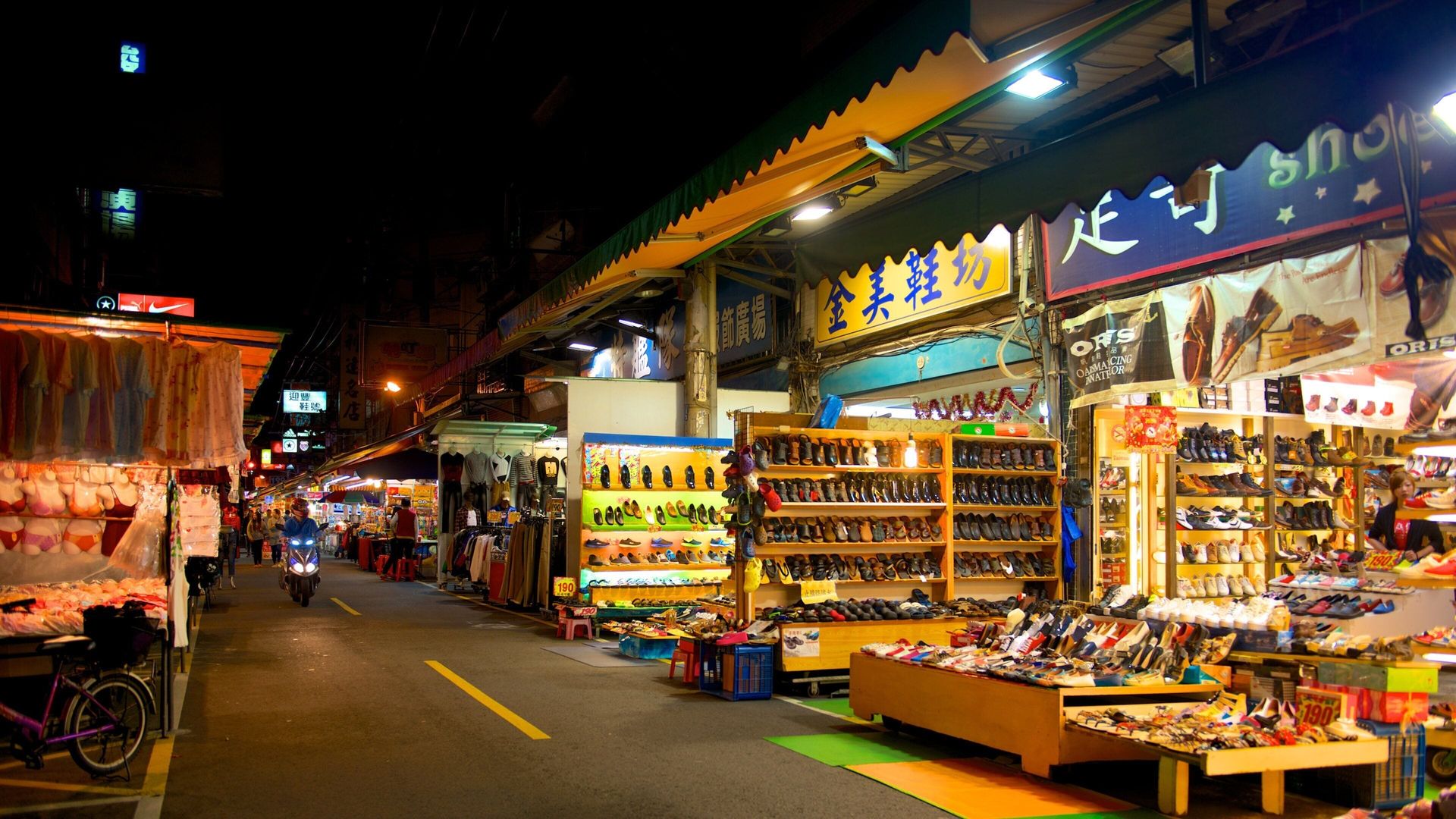
During the early evening in Taiwan, you can see street vendors setting up their stalls, preparing vegetables, and the glow of bright neon signs hanging above shopfronts. These tiny vibrant stalls are often congregated together just off a main road creating a busy and fast-paced atmosphere where tourists and locals go to get a hot and delicious meal or snack.
If you’re worried about not being able to speak a little bit of Mandarin on your trip, then why not check out ‘Chinese for Travellers: 50 Essential Phrases Before You Go to China '? (Please bear in mind that Taiwan uses traditional characters unlike mainland China.)
History and Culture
Night markets have had a deep cultural and historical influence over the small island, with night stalls dating back over two centuries. Night market culture in China stemmed from peddlers who would be selling food or goods outside of busy temples to visitors who were only able to visit after work in the evening.
During the Qing Dynasty, there was an influx of Han Chinese immigration to Taiwan, attracted by the land’s agricultural capabilities. The farmers worked extremely long hours and required nourishing meals to sustain them, which led to peddlers delivering food to the fields or setting up small portable stalls nearby.
During Taiwan’s economic transformation in the 1950s-1960s, there was a surge in migrant workers, who made up the largest proportion of customers at street stalls offering xiǎochī (小吃, snacks / street food). The intergration of daily life and routine eventually developed into Taiwan’s xiǎochī culture, making food stalls a key part of the island’s economy. The highly competitive nature of night markets has led to new food and drink combinations to help attract customers and stand out from the crowd.
However, the increasing tourism of night markets has shifted away from tradition. Social media posts have generated large queues for certain stalls (particularly Taiwanese fried chicken), which has led to a larger number of stalls selling “viral food” to cater to demands, but this has reduced the variety of more traditional dishes being sold. The increased exposure and modernisation of these markets also risks changing their culture and significance to appeal to large numbers of people. (You can read more about the fading tradition of night markets and challenges faced here: A Cultural Icon: Taiwan's Night Market).
Fact: Did you know that many Taiwanese homes don’t have built-in ovens or cookers? Instead, people use microwaves, portable gas or electric stovetops, or sometimes electric cooking pots.
Things To Do
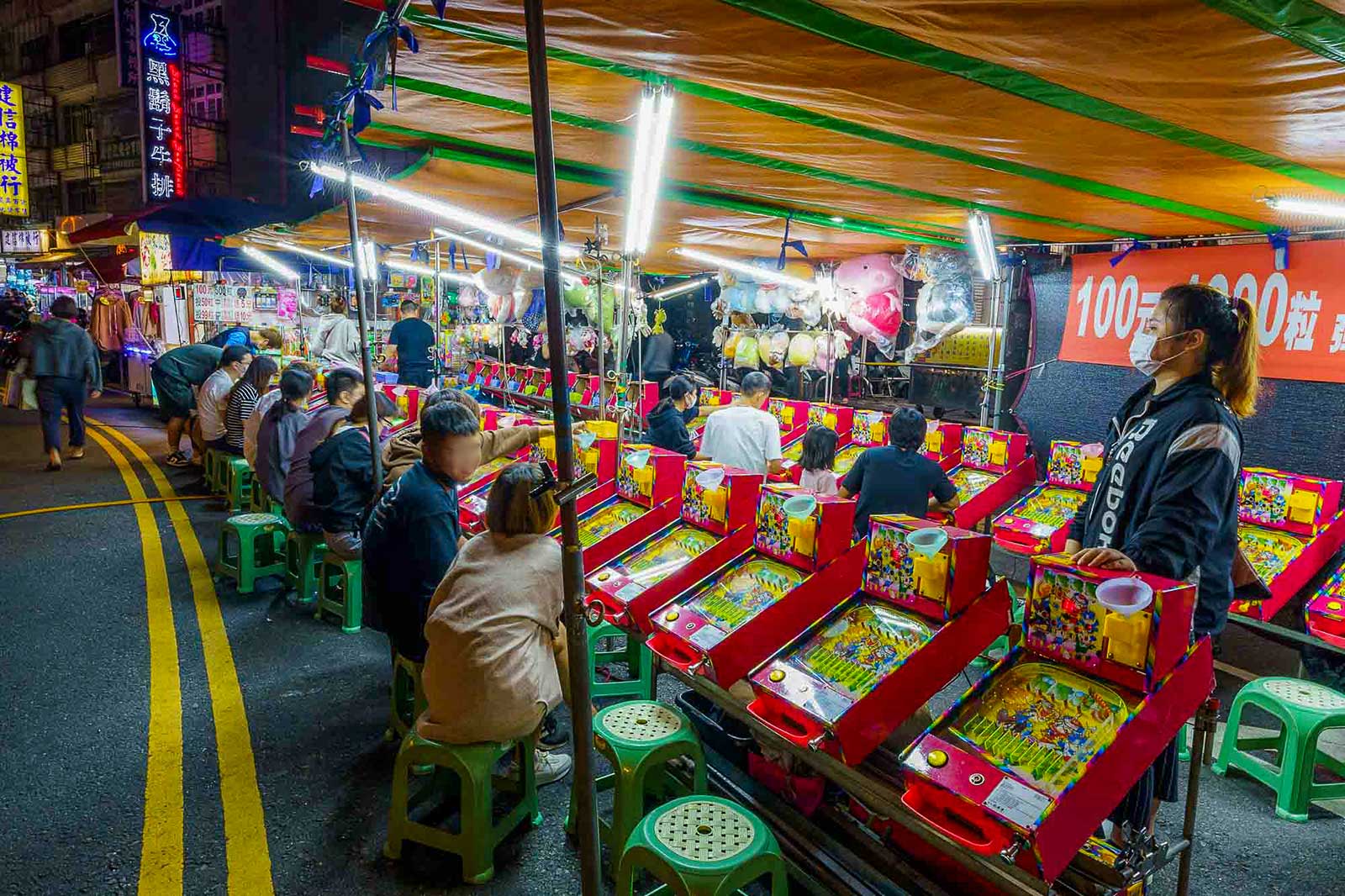
Did you know that besides all the mouthwatering snacks, there are activities at night markets? You can shop for trendy cheap clothing, throw darts at colourful balloons and even get your ears cleaned!
If you want to work up an appetite before exploring all of the stalls the Keelung River is right around the corner from Raohe night market. Near the river front you are able to rent YouBikes with your easy card (MRT pass) or by downloading the YouBike app onto your phone.
If you’re interested in movies, there’s a 2025 film named ‘Left Handed Girl’ (age rating 15) written, directed and produced by Shih-Ching Tsou that depicts a single mother and her two daughters moving to Taipei, where she runs a night market stall. It follows the three family members struggling to pay off debt, navigating familial relationships and hidden secrets. The trailer for Left Handed Girl can be found here.

Some vendors bring their children to work and you might see them playing games or munching on tanghulu.
Ten Must-Try Night Market Foods
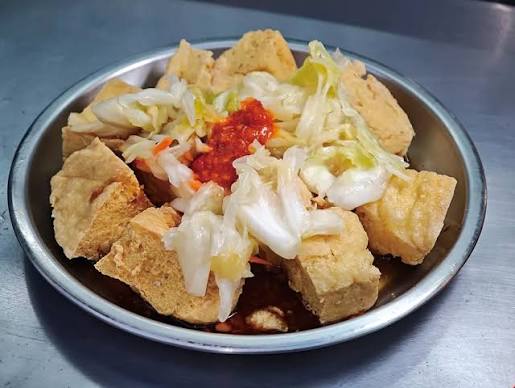
Stinky Tofu
Stinky tofu (臭豆腐, chòu dòfu) is a rich savoury umami dish, paired with pickled vegetables (泡菜, pàocài) and chili (it can be adjusted to your spice tolerance). The most popular way to prepare the tofu is deep-frying until golden and crispy. The chef will then create holes in the top of the tofu, allowing the sauce and seasonings to soak up and create the perfect flavourful bite. The reason why stinky tofu has such a strong “pungent” scent is due to its long fermentation process, where enzymes break down plant proteins found in the tofu, releasing sulphur and hydrogen sulphide.
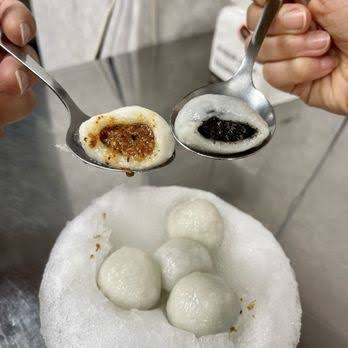
Fire and Ice Tangyuan
Fire and ice tangyuan (bīnghuǒ tāngyuán, 冰火汤圆, 冰火湯圓) is a sweet and refreshing Taiwanese dessert. The “white balls” you see on top are called tangyuan and are made of chewy gelatinous rice, filled with very hot black sesame or peanuts (they can also be filled with red bean or jujube paste). The hot tangyuan are placed on a mountain of shaved ice (hence the name fire and ice) and can be sweetened to liking with a drizzle of osmanthus syrup.
If you want to try some Michelin Bib Gourmand tangyuan head over to Yu Pin Yuan Iced and Hot Tangyuan in Tonghua (Lingjiang Night Market). No. 31, Alley 50, Lane 39, Tonghua Street, Da’an District
They also have another location at Raohe Night Market, No. 142, Raohe Street, Songshan District
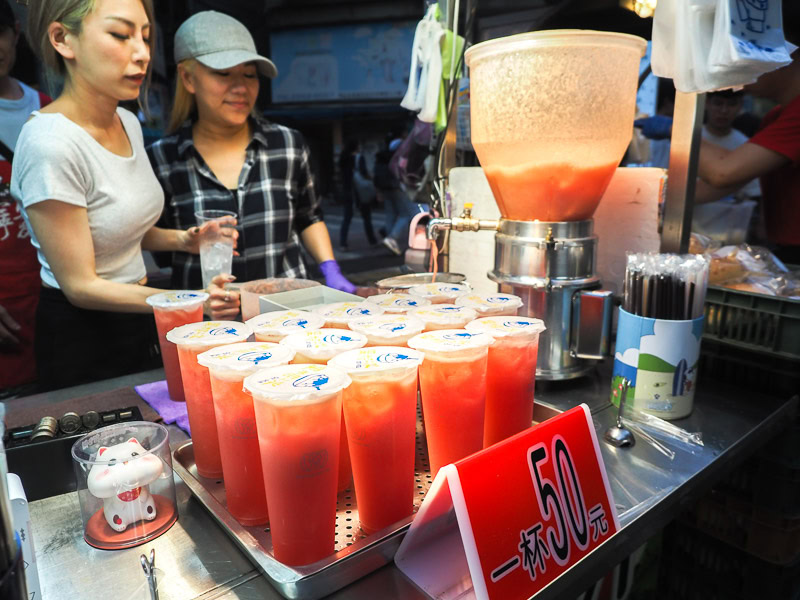
Watermelon Juice
Taiwan's subtropical climate makes it excellent for growing fruit, so why not sip on some freshly prepared watermelon juice (西瓜汁,xīguā zhī)? A perfect way to cool down in hot weather when strolling past hot cooking stations or as a palate cleanser.
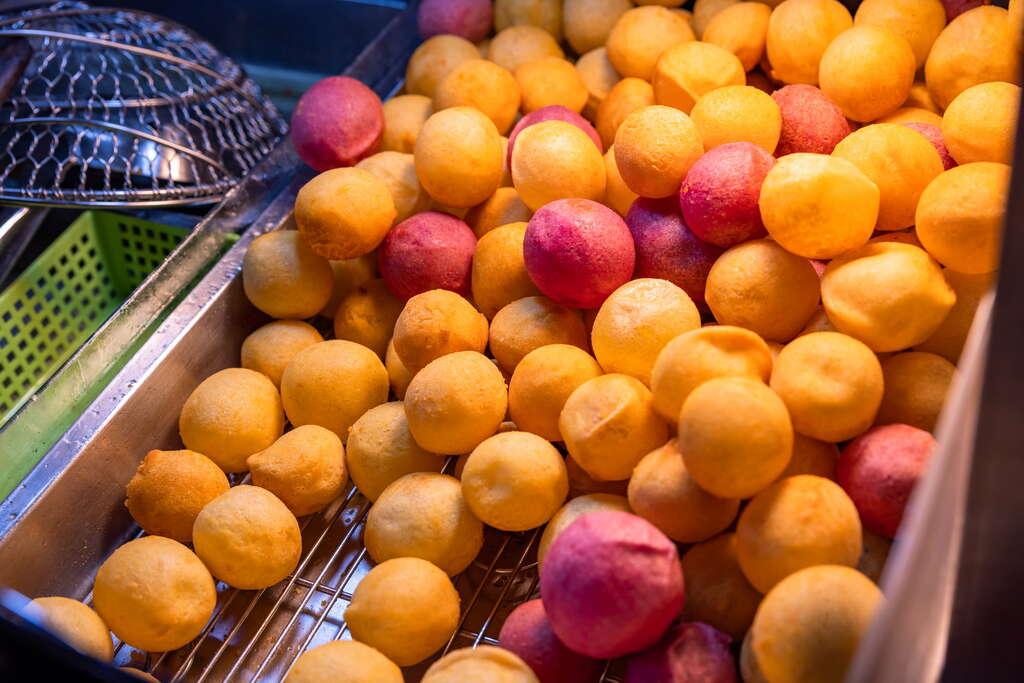
Fried Sweet Potato Balls
Deep-fried sweet potato balls (地瓜球, dìguā qiú) are fried until they puff up, making them light and airy. They are served in paper bags with small wooden sticks for you to poke them with. If you’re a fan of mochi, then you’ll love their chewy texture.
Small Sausage in a Big Sausage
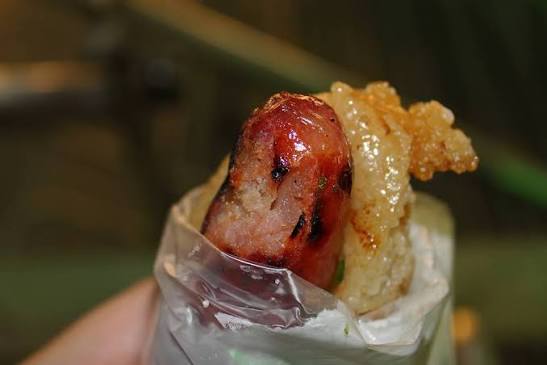
Dà cháng bāo xiǎo cháng (大肠包小肠, 大腸包小腸) is a small sweet Taiwanese pork sausage wrapped in a larger sticky rice sausage. Taiwanese sausages are sweet, rich and garlicky, with a high ratio of pork fat to lean meat, making them very juicy and tender. To eat it, you don’t peel back the plastic wrapper; instead, you squeeze the bottom and twist it like a push-pop, making an easy and convenient snack to eat whilst walking.
Black pepper bun
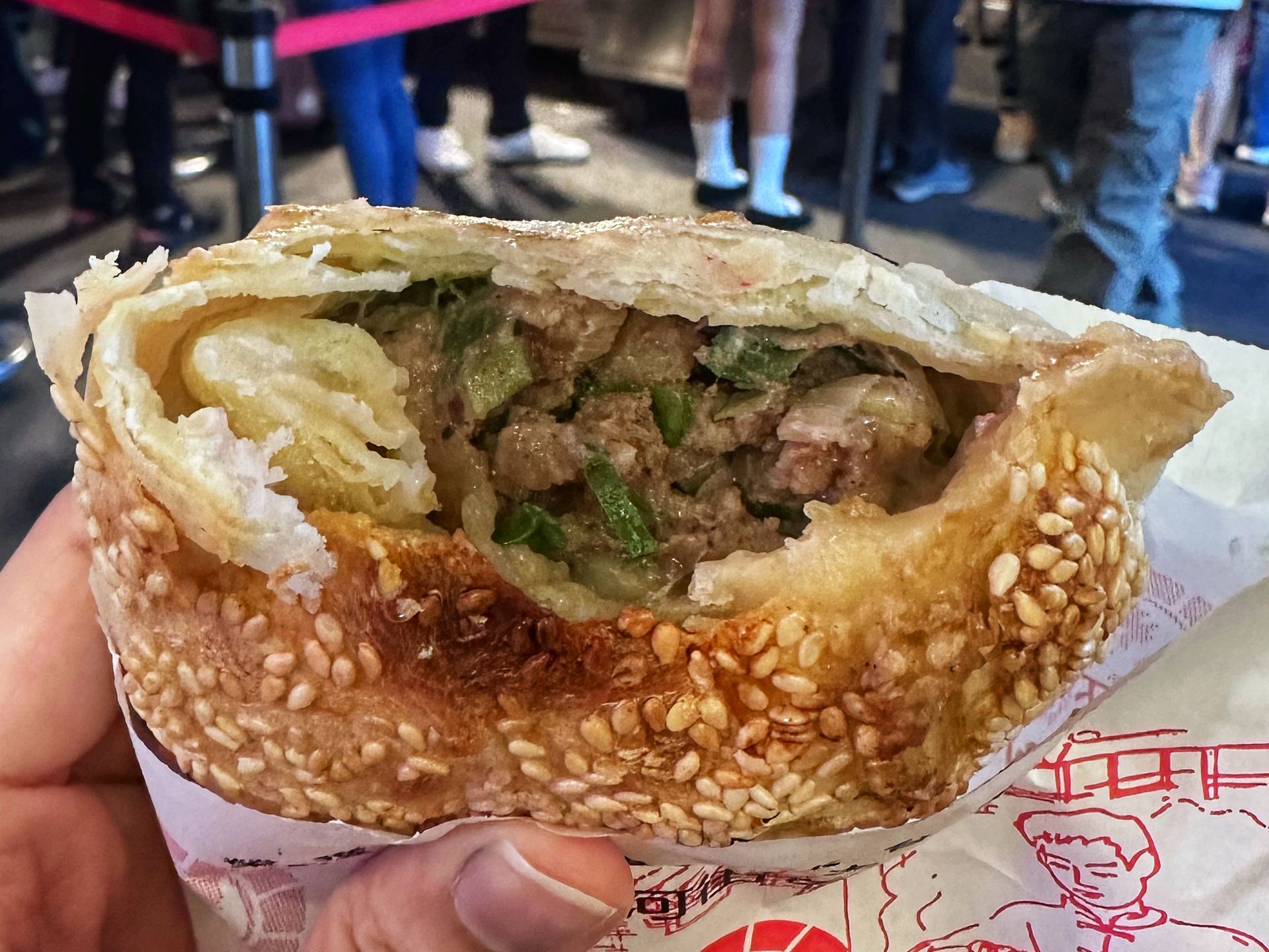
Possibly the most viral savoury item on the list, a flaky black pepper bun (hújiāo bǐng, 胡椒饼,胡椒餅) with sesame seeds sprinkled on top, filled with fresh spring onions and, of course, juicy marinated pork. The buns are baked in a charcoal clay oven by sticking the dough onto the inner walls, crisping the outside and trapping the juices inside.
The most famous place to get black pepper buns in Taiwan is ‘Fuzhou Pepper Buns’ in Raohe Night Market. Located next to the main entrance, this stall has won multiple Michelin Bib Gourmand awards. No. 253號, Raohe St, Ciyou Village, Songshan District, Taipei City.
Tanghulu
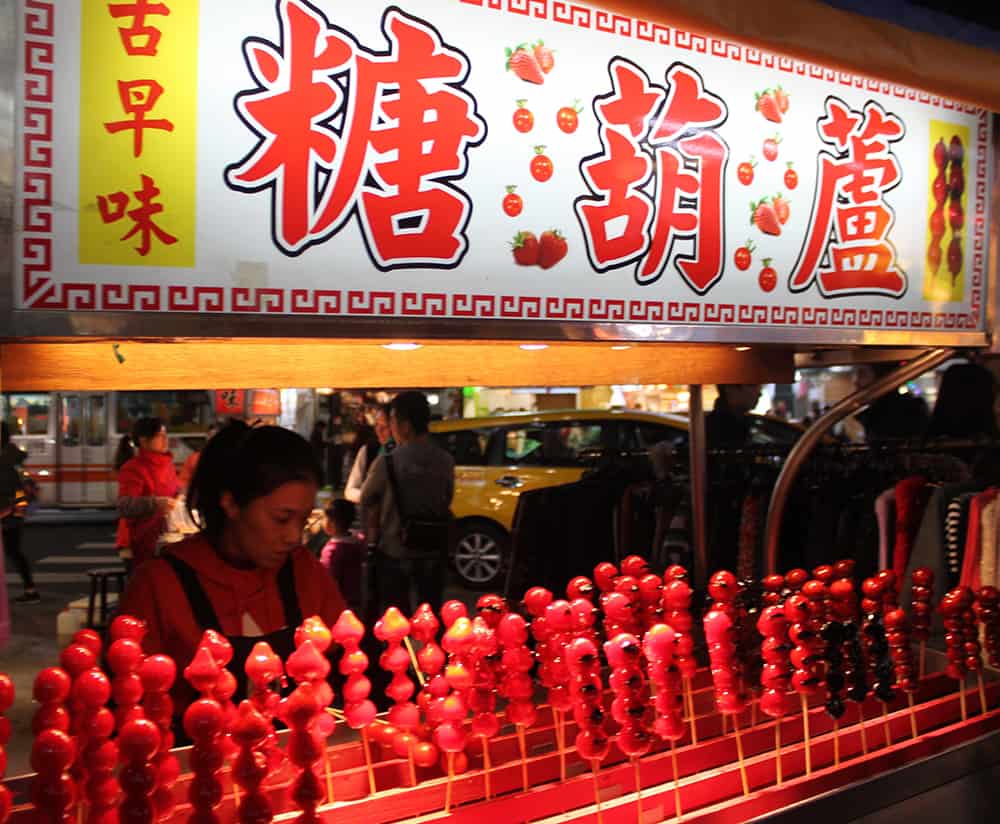
Tánghúlu (糖葫芦, or bīngtanghúlu, 冰糖葫芦) are candied fruit skewers made by boiling sugar in water until it forms a sticky syrup, which is carefully coated to create a hard, crunchy outer shell, hence the name bīngtang (冰糖), which means crystal sugar. Traditionally, tanghulu was made with sour hawthorn berries, but you can also find grapes, strawberries, oranges and even tomatoes at night market stalls.
Taiwanese ice cream rolls
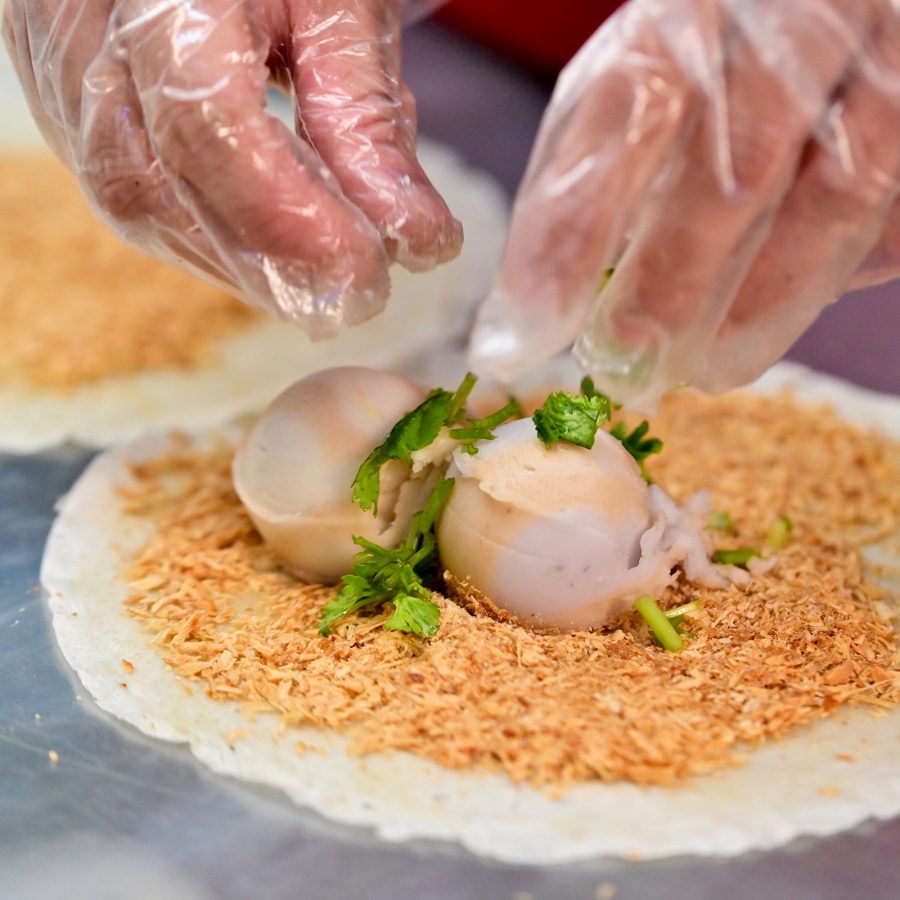
This popular dessert, huāshēng juǎn bīngqílín (花生卷冰淇淋,花生捲冰淇淋), contains scoops of ice cream (usually from a choice of vanilla, taro and peanut) paired with shaved peanut brittle and coriander wrapped in a thin flour crepe, originating from Yilan in Taiwan. The ice cream is called bāpū (叭噗), an onomatopoeia for the sound the vendor’s cart horns would make. It is made from starch or tapioca, which creates a denser, chewier texture in comparison to dairy ice cream. It’s a nutty dessert that mixes sweet and savoury; however, you can also opt out of coriander.
Boba Milk Tea
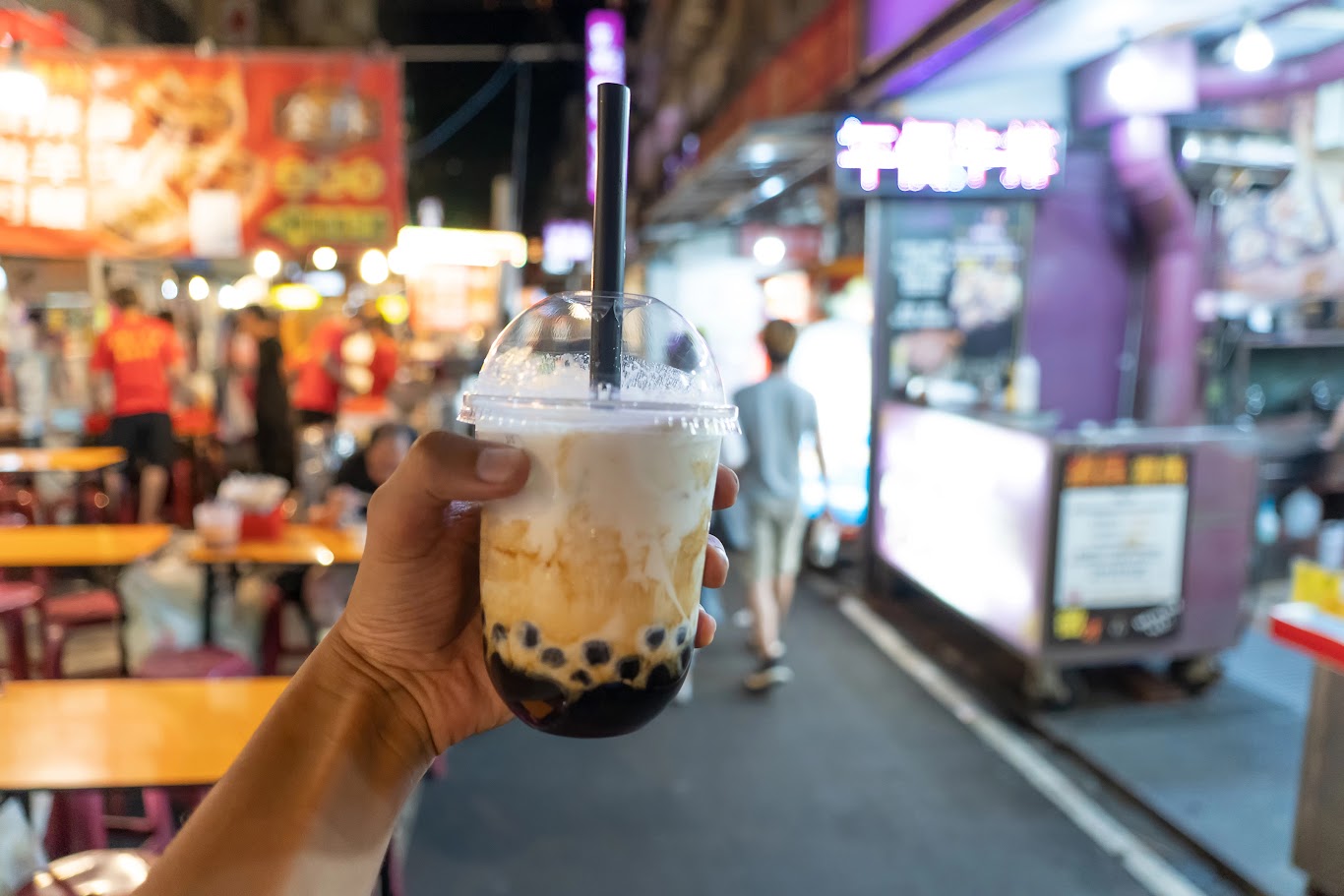
How could we not add boba milk tea to the list? Zhēnzhū nǎichá (珍珠奶茶) is a sweet, fragrant milk tea with warm, chewy brown sugar tapioca pearls. You can customise your drink by selecting the tea base, sugar and ice level. The most famous version to get is the brown sugar tapioca (also known as pearls) milk tea. Be careful when drinking, as you will be given a wide straw to suck up the tapioca, which can be chewed. If you don’t like milk tea, you can try a QQ fruit tea, which contains boba, jelly (usually coconut) and sometimes pudding (a fan favourite is the passionfruit green tea QQ). Bubble tea is the perfect way to end your night market feast, and you can enjoy it on your journey home (just don’t drink it on public transport!).
Gua Bao
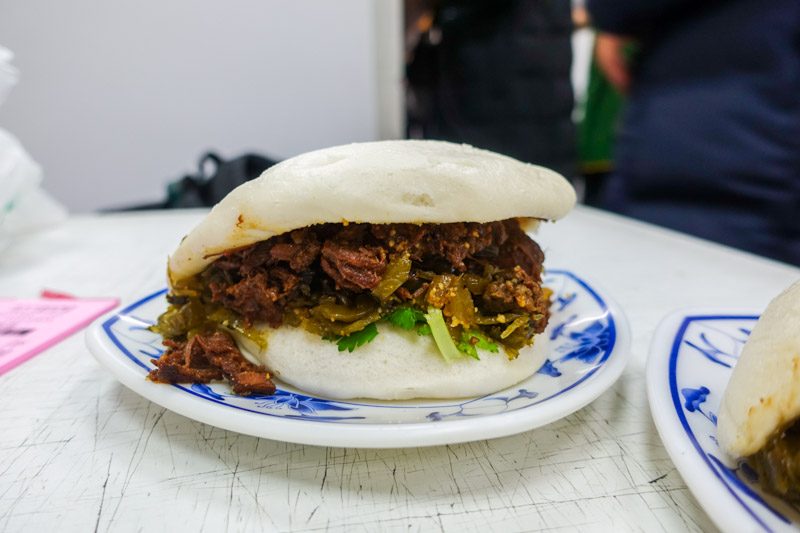
Guà bāo (刈包,割包) are soft, fluffy steamed buns filled with melt-in-your-mouth braised pork belly topped with pickled mustard greens, coriander, crushed peanuts and sugar. It is a traditional Hokkien dish similar to the Chinese ròu jiā mó (肉夹馍, 肉夾饃) and was often eaten by Northern Taiwanese to celebrate Lunar New Year because its shape resembled gold ingots, which was thought to bring wealth in the new year.
TIP: Although this isn’t on the night market list, another Taiwanese staple you must try is pineapple cake! You can find out more here: Why is Taiwan Obsessed with Pineapple Cakes?
Night Market Vocabulary
| Chinese | Pinyin | English |
|---|---|---|
| 夜市 | Yèshì | Night market |
| 小吃 | Xiǎochī | Street food/ snacks |
| 多少钱? | Duōshao qián? | How much is this |
| 小分 | Xiǎo fèn | Small portion |
| 大份 | Dà fèn | Big portion |
| 小杯 | Xiǎo bēi | Small cup |
| 中杯 | Zhōng bēi | Medium / regular cup |
| 大杯 | Dà bēi | Big cup |
| 布拉 | Bù là | No spice |
| 微辣 | Wéi là | A little bit spicy |
| 中辣 | Zhōng là | Medium spice / mild |
| 大辣 | Dà là | Very spicy |
| 特辣 | Tè là | Extra spicy |
| 不要香菜 | Bú yào xiāng cài | I don’t want coriander |
Need help figuring out where to go in Taipei? Check out ‘7 Best Night Markets in Taipei – Where To Go & What to Eat’
FAQ
The majority of vendors do not accept credit or debit card payments. Instead, cash is preferred. If you do not have any cash on you, you can find ATMs in every MRT station or at a nearby convenience store. You can also use your Easy Card (travel card) to pay.
Night markets are popular amongst tourists and locals. It’s best to go on a weekday during the first 1-2 hours from opening; make sure to stay close to your friends as they can get extremely busy.
Yes, you can take photos of the food, but if you want to take a close-up photo of stalls, please respect the staff as they are working. It’s always best to double-check whether they are comfortable being in your photos, out of respect and politeness
Of course you can! The whole point of night markets is to browse stalls and snack at the same time. Eating and walking isn’t impolite, and you’ll see many people doing it. However, please do not litter or make a mess. It can be hard to find rubbish bins in Taiwan, so you can bring a plastic bag to put all your wrappers and uneaten food inside, which you can then throw away later.

Alice O'Connor
Alice is a UK-based writer and University of Leeds graduate in Asia Pacific Studies and Chinese. From her time living and studying abroad in Taipei she combines her studies with firsthand experiences to cover contemporary Chinese culture, trends, and Mandarin learning. Through her writing and storytelling, Alice helps readers connect with Chinese related topics.