
Language is never politically neutral — and nowhere is that more visible than in how a culture names identity, love, and the people it includes or excludes.
Chinese has a rich, layered, and rapidly evolving vocabulary around LGBTQ+ identities and experience. Some of it is formal and clinical. Some of it is reclaimed slang, coined by queer communities themselves. Some of it exists in mainland China in a legal and social grey zone. And some of it thrives most openly in Taiwan — the first place in Asia to legalise same-sex marriage.
This guide covers the essential LGBTQ+ vocabulary in Chinese: what the words mean, where they came from, how they're used, and what the cultural landscape looks like in 2026 across the Chinese-speaking world.
The Core Vocabulary
同性恋 (tóngxìngliàn) — Homosexuality / Gay / Lesbian
The most widely used formal term for homosexuality in Chinese. It's a compound of 同 (same) + 性 (sex/gender) + 恋 (love/attraction). Neutral and clinical in register — used in medical, legal, and journalistic contexts.
| Character | Pinyin | Meaning |
|---|---|---|
| 同性恋 | tóngxìngliàn | homosexuality; gay/lesbian person |
| 男同性恋 | nán tóngxìngliàn | gay man |
| 女同性恋 | nǚ tóngxìngliàn | lesbian |
| 同性恋者 | tóngxìngliànzhě | a homosexual person |
In everyday speech, these are often shortened:
| Colloquial term | Pinyin | Meaning |
|---|---|---|
| 同志 | tóngzhì | literally "comrade" — reclaimed as a term for gay/queer people |
| 男同 | nán tóng | gay man (informal) |
| 女同 | nǚ tóng | lesbian (informal) |
| 拉拉 | lālā | lesbian (affectionate/community term) |
The reclamation of 同志 (tóngzhì, comrade) as a gay-friendly term is one of the most celebrated linguistic acts in Chinese queer history. The word — once the standard form of address under Mao — was playfully adopted by Hong Kong activists in the 1990s and spread across the Chinese-speaking world. Its double meaning became a quiet act of resistance and solidarity: saying 同志 in a mixed context was simultaneously ordinary and, to those who knew, a signal of community.
双性恋 (shuāngxìngliàn) — Bisexuality
双 (double/two) + 性 (sex/gender) + 恋 (love). Neutral and direct.
| Character | Pinyin | Meaning |
|---|---|---|
| 双性恋 | shuāngxìngliàn | bisexuality / bisexual person |
| 双性恋者 | shuāngxìngliànzhě | a bisexual person |
| 双 | shuāng | bi (shorthand, used in community contexts) |
跨性别 (kuàxìngbié) — Transgender
跨 (to cross / to span) + 性别 (gender). The standard, widely accepted term.
| Character | Pinyin | Meaning |
|---|---|---|
| 跨性别 | kuàxìngbié | transgender |
| 跨性别者 | kuàxìngbiézhě | a transgender person |
| 跨儿 | kuàr | trans (informal/community shorthand) |
| 性别认同 | xìngbié rèntóng | gender identity |
| 性别表达 | xìngbié biǎodá | gender expression |
酷儿 (kùr) — Queer
A phonetic borrowing from English "queer" — 酷 (kù) also means "cool" in Chinese, giving the transliteration a double resonance. Used as an umbrella term by younger, more internationally connected communities, particularly in urban mainland China, Hong Kong, and Taiwan.
| Character | Pinyin | Meaning |
|---|---|---|
| 酷儿 | kùr | queer (umbrella term) |
| 酷儿理论 | kùr lǐlùn | queer theory |
| 酷儿文化 | kùr wénhuà | queer culture |
出柜 (chū guì) — Coming Out
A direct calque of the English "coming out of the closet." 出 (to come out) + 柜 (cabinet/closet). The metaphor translated perfectly and the term is now fully naturalised in Chinese.
| Character | Pinyin | Meaning |
|---|---|---|
| 出柜 | chū guì | to come out (of the closet) |
| 出柜了 | chū guì le | (I/they) came out |
| 还没出柜 | hái méi chū guì | not out yet |
| 向父母出柜 | xiàng fùmǔ chū guì | to come out to one's parents |
Coming out in Chinese culture carries particular weight because of the centrality of family relationships and filial piety (孝顺, xiàoshùn). The expectation to marry and produce grandchildren is significant in many families — and coming out to one's parents is often described as one of the hardest conversations imaginable in Chinese social context.
LGBTQ+ as an Acronym in Chinese
The English acronym LGBT is widely used in Chinese contexts, often rendered as:
- LGBT (used as-is in mainland China and Taiwan)
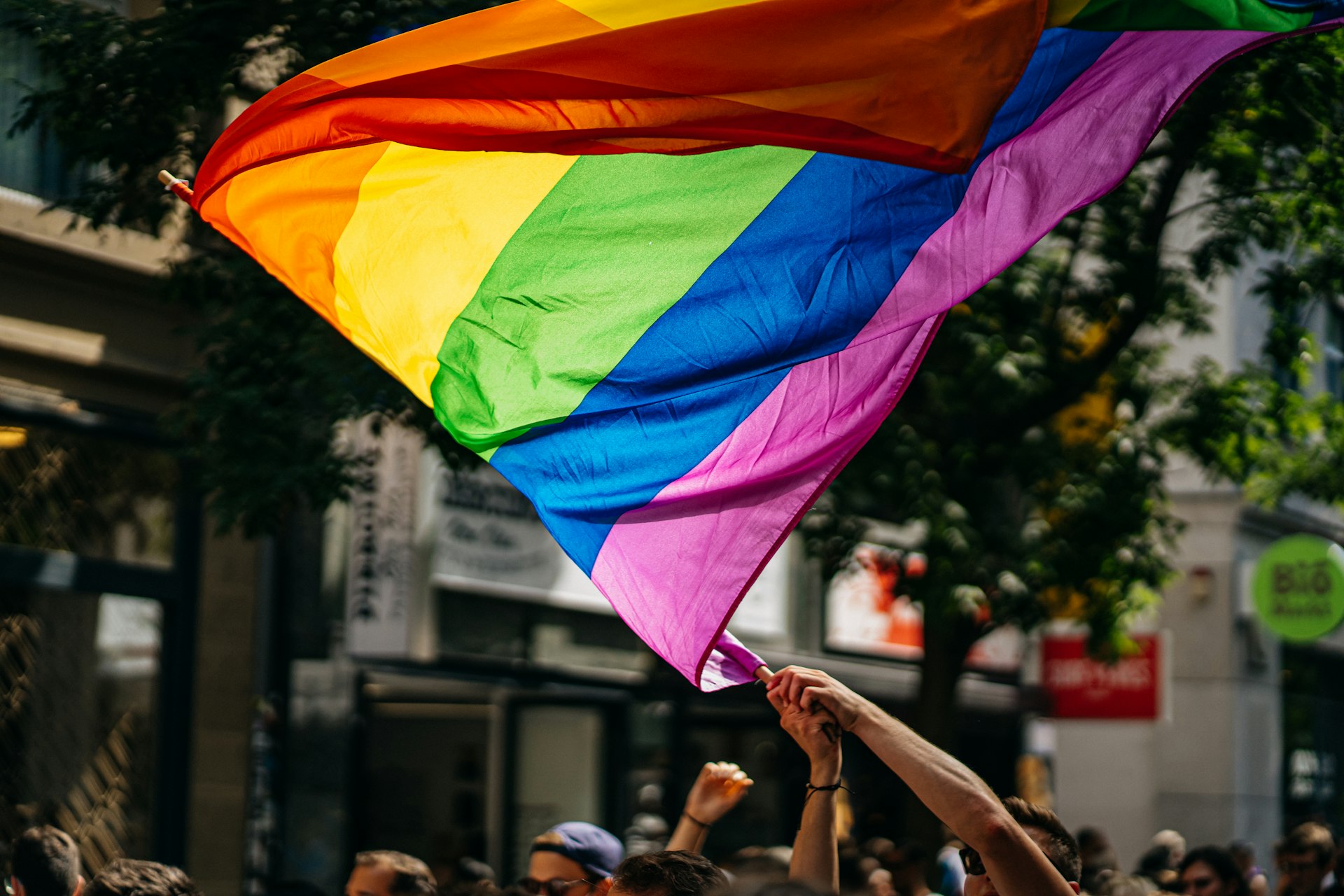
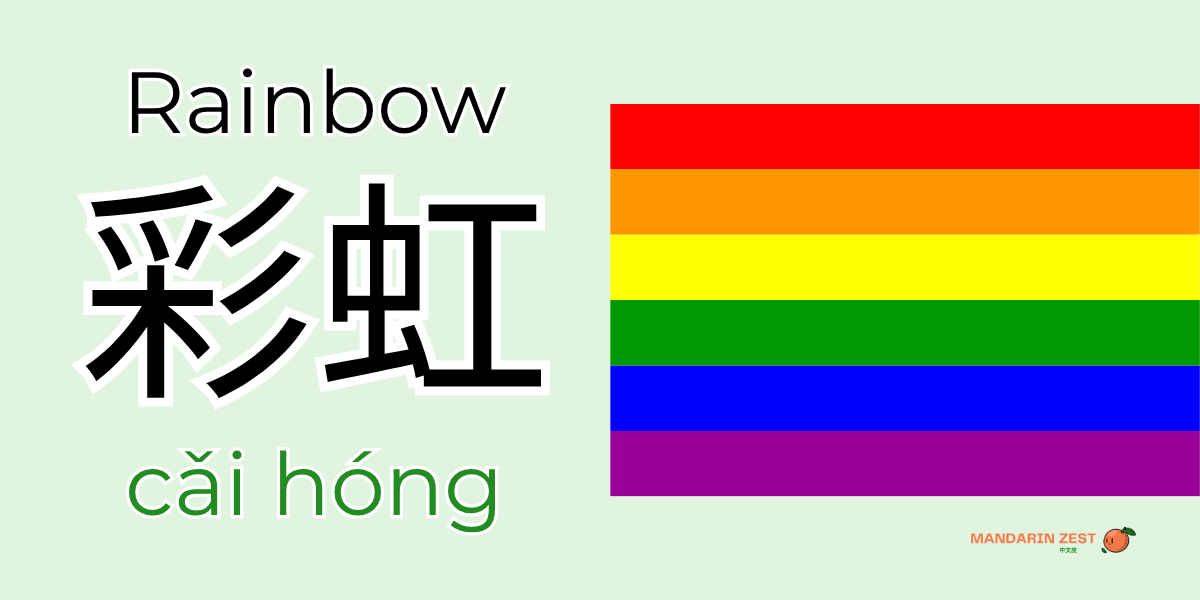
- 彩虹 (cǎihóng, rainbow) — used as a symbol and sometimes shorthand for LGBTQ+ community and spaces
- 性少数 (xìng shǎoshù) — "sexual minority" — a formal, neutral umbrella term used in academic and policy contexts
Pride and Community Vocabulary
| Expression | Pinyin | Meaning |
|---|---|---|
| 骄傲 | jiāo'ào | pride |
| 骄傲游行 | jiāo'ào yóuxíng | Pride parade |
| 彩虹旗 | cǎihóng qí | rainbow flag |
| 彩虹 | cǎihóng | rainbow |
| LGBTQ+社群 | LGBTQ+ shèqún | LGBTQ+ community |
| 性别平等 | xìngbié píngděng | gender equality |
| 同性婚姻 | tóngxìng hūnyīn | same-sex marriage |
| 婚姻平权 | hūnyīn píngquán | marriage equality |
| 平等权利 | píngděng quánlì | equal rights |
| 歧视 | qíshì | discrimination |
| 反歧视 | fǎn qíshì | anti-discrimination |
| 包容 | bāoróng | inclusivity, tolerance |
| 多元 | duōyuán | diversity |
| 支持 | zhīchí | to support |
Relationship and Identity Vocabulary
| Expression | Pinyin | Meaning |
|---|---|---|
| 伴侣 | bànlǚ | partner (romantic, gender-neutral) |
| 男友 / 女友 | nányǒu / nǚyǒu | boyfriend / girlfriend |
| 爱人 | àirén | spouse / beloved (gender-neutral, common in mainland) |
| 他们 | tāmen | they (plural) — also used as gender-neutral singular, increasingly |
| TA | tā | gender-neutral third person singular (used in writing) |
| 非二元 | fēi èryuán | non-binary |
| 无性恋 | wúxìngliàn | asexual |
| 泛性恋 | fànxìngliàn | pansexual |
| 间性人 | jiānxìng rén | intersex person |
A note on pronouns: Standard written Chinese uses 他 (tā, he) and 她 (tā, she) — pronounced identically, distinguished only in writing. A gender-neutral written pronoun TA has been adopted in online and community contexts, though it hasn't entered formal standard usage. In spoken Chinese, the identical pronunciation of 他 and 她 means gender isn't marked in speech at all — a subtle linguistic feature with interesting implications for gender expression.
The Cultural Landscape: Mainland China
The situation for LGBTQ+ people in mainland China in 2026 is, to use an apt metaphor, a grey area — both literally and metaphorically.
What is and isn't the case:
Homosexuality was decriminalised in China in 1997 and removed from the official list of mental disorders in 2001. There is no law explicitly banning same-sex relationships. At the same time, same-sex marriage is not legal, same-sex couples have no legal relationship recognition, and LGBTQ+ content faces increasingly stringent censorship on social media and streaming platforms.
The word 同志 still circulates. Pride events were held in Shanghai and Beijing for years before facing increasing restrictions in the 2010s. The first openly LGBTQ+-themed films and novels achieved mainstream visibility in the 1990s and 2000s. Online communities — particularly on Weibo, Bilibili, and smaller platforms — have been a significant space for LGBTQ+ expression and community-building, though content moderation has intensified.
The general position of official Chinese discourse is a combination of legal tolerance and cultural discouragement: not illegal, but not supported; not criminalised, but not celebrated.
For LGBTQ+ Mandarin learners, understanding this landscape matters — not to be discouraged from the language or culture, but to engage with it honestly, and to recognise the communities within Chinese culture that have built remarkable resilience and creativity under constraint.
Taiwan: A Different Chapter
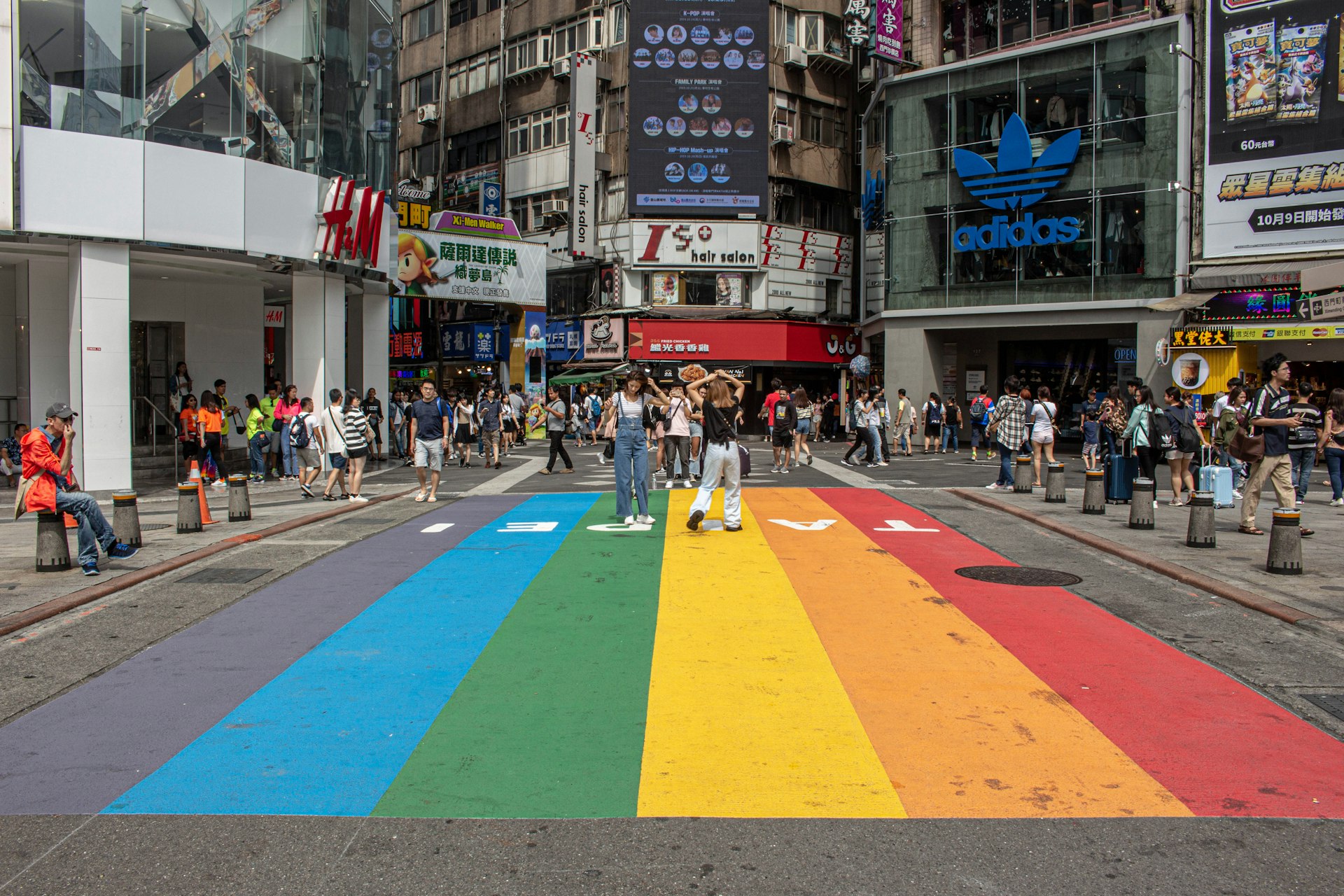
Taiwan represents a genuinely different story. In 2019, Taiwan became the first country in Asia to legalise same-sex marriage — a watershed moment celebrated across the Chinese-speaking world and beyond.
Taipei's annual Pride parade (台灣同志遊行, Táiwān Tóngzhì Yóuxíng) is one of the largest in Asia, drawing hundreds of thousands of participants each year. LGBTQ+ culture is visible, legal, and celebrated.
The vocabulary is the same — but the social and legal context in which it exists is fundamentally different. A 同志 in Taipei can legally marry their partner. In Shanghai, they cannot.
This divergence matters for language learners: Mandarin is one language spoken across enormously different political and social contexts. Taiwan demonstrates what Chinese-speaking LGBTQ+ culture looks like with legal recognition and social support. Mainland China shows a community navigating constraint with ingenuity and persistence.
Both are authentic parts of the Chinese-speaking world.
Chinese Internet Slang and Community Terms
Chinese LGBTQ+ communities — particularly online — have developed a rich vernacular that doesn't appear in dictionaries.
| Term | Pinyin | Meaning / Origin |
|---|---|---|
| 基友 | jīyǒu | close male friends; also used for gay male friends — from English "gay" + 友 (friend) |
| 弯的 | wān de | gay/queer — literally "bent" (vs 直的, zhí de, straight) |
| 直的 | zhí de | straight/heterosexual — literally "straight" |
| CP | CP | couple; used for real or fictional pairings — from "coupling" |
| BL | BL | Boys' Love — genre of romantic content featuring male couples |
| GL | GL | Girls' Love — equivalent for female couples |
| 耽美 | dānměi | BL fiction/aesthetic — literally "indulgent beauty"; an enormously popular genre in China |
| 攻/受 | gōng / shòu | dominant/submissive roles in a BL relationship — from classical literature |
| 柜子 | guìzi | the closet — from 出柜 |
| 彩虹家庭 | cǎihóng jiātíng | rainbow family — same-sex parent family |
耽美 (dānměi) deserves particular mention. This genre of fiction — romantic and often explicit content featuring male-male relationships — has become one of the most popular fiction genres in China, with a predominantly young, female readership. Major danmei novels have been adapted into massively popular mainstream TV dramas (with same-sex relationships implied rather than stated, due to censorship). The genre represents a fascinating cultural phenomenon: LGBTQ+ stories reaching tens of millions of mainstream Chinese readers through creative framing.
Useful Phrases and Sentences
Learning vocabulary in context is always more effective than lists alone. Here are some sentences using the vocabulary above:
Talking about identity:
- 我是同性恋。(Wǒ shì tóngxìngliàn.) — I am gay.
- 我是双性恋。(Wǒ shì shuāngxìngliàn.) — I am bisexual.
- 我是跨性别者。(Wǒ shì kuàxìngbiézhě.) — I am transgender.
- 我的伴侣叫... (Wǒ de bànlǚ jiào...) — My partner's name is...
Coming out:
- 我已经出柜了。(Wǒ yǐjīng chū guì le.) — I've already come out.
- 我还没向家人出柜。(Wǒ hái méi xiàng jiārén chū guì.) — I haven't come out to my family yet.
Talking about rights and support:
- 我支持婚姻平权。(Wǒ zhīchí hūnyīn píngquán.) — I support marriage equality.
- 每个人都值得被爱和尊重。(Měi gè rén dōu zhídé bèi ài hé zūnzhòng.) — Everyone deserves to be loved and respected.
- 你不孤单。(Nǐ bù gūdān.) — You are not alone.
A Note on Inclusive Language in Chinese
Chinese is grammatically simpler than many European languages when it comes to gender — nouns have no gender, adjectives don't agree with gender, and most vocabulary is gender-neutral. The complexity lies in pronouns (他/她/它) and certain vocabulary choices.
For learners who want to use inclusive, gender-neutral Chinese:
- 伴侣 (bànlǚ, partner) is gender-neutral and widely used
- 爱人 (àirén, beloved/spouse) is gender-neutral and common in mainland Chinese
- TA in writing signals gender-neutral third person
- 他们 (tāmen) is increasingly used as a gender-neutral singular "they" in progressive contexts
Learning Chinese?
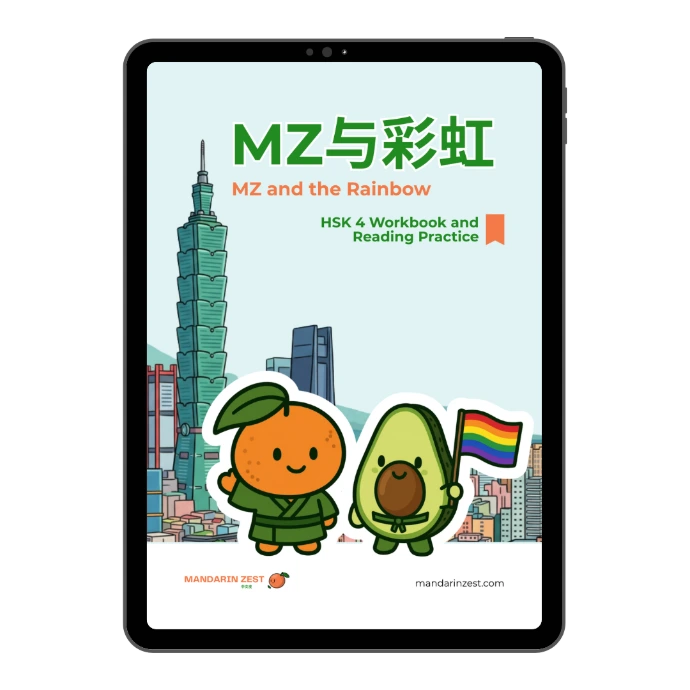
Get our HSK 4 workbook on the topic.
Learn about LGBTQ rights in China while improving your reading and writing skills!
Final Thoughts
Language reflects culture — and Chinese LGBTQ+ vocabulary reflects a community that has shown enormous creativity, resilience, and humour in naming itself under constraint. The reclamation of 同志, the playfulness of 弯的 and 直的, the cultural phenomenon of 耽美, the legal triumph in Taiwan — these are all part of what the Chinese-speaking world looks like in 2026.
For Mandarin learners, engaging with this vocabulary is part of engaging with the full richness of the language and the people who speak it. Chinese is not a monolith. It's spoken by communities with diverse identities, experiences, and ways of being in the world — and all of them are part of what makes the language worth learning.
骄傲。(Jiāo'ào.) Pride.
FAQ
No — homosexuality was decriminalised in 1997. There is no law criminalising same-sex relationships in mainland China. However, same-sex marriage is not legally recognised, and LGBTQ+ content faces significant censorship on media platforms. The legal position is tolerance without recognition.
Yes — Taiwan legalised same-sex marriage in 2019, the first place in Asia to do so. Hong Kong, Macau, and mainland China do not currently legally recognise same-sex partnerships, though the Hong Kong courts have made some incremental rulings on partnership rights.
Dānměi is a genre of Chinese fiction (and its adaptations) featuring romantic relationships between male characters — written primarily by and for women. It has become enormously popular across China and internationally, with major danmei novels adapted into hit TV dramas. The genre exists in a complex space: same-sex content is censored on Chinese platforms, but adapted dramas use implied rather than explicit framing, reaching mainstream audiences of tens of millions.
Through a combination of coded language, platform-switching, private groups, and overseas platforms. The Chinese internet has a long history of creative circumvention — LGBTQ+ communities are resourceful. Offline, particularly in cities like Shanghai, Beijing, Chengdu, and Guangzhou, LGBTQ+ spaces, bars, and community organisations exist and have been resilient through various regulatory pressures.
The vocabulary here is neutral, educational, and widely used in Chinese media, academic contexts, and everyday conversation. Discussing LGBTQ+ identity in private conversation is not illegal. Public advocacy, organised events, and online content creation in this space face more complex regulatory considerations.